How Startups Can Win Big with Mobile Apps in 2025 and Beyond
Table of Contents
- Digging Deeper: Startups’ Dependency on Mobile Apps to Achieve Scalability
- How Mobile Apps Align with Evolving Consumer Behavior?
- Navigating Technical Complexities in Mobile App Development
- The Competitive Edge: Hiring Mobile App Developers
- Hiring Mobile App Developers: Things to Consider
- What’s Next in Mobile App Development: Trends and Technologies in 2025 and Beyond
- End Note
By the end of 2025, mobile apps are projected to generate $935 billion in revenue globally, a clear indication of the growing demand for app-based solutions. Users increasingly prefer mobile platforms for everything, from shopping and healthcare to banking and entertainment. This shift also implies that mobile apps are not just a touchpoint but the core of their business model. Subscription-based platforms, eCommerce ventures, and even B2B services are using mobile apps to provide real-time access, prompt notifications, personalized experiences, and convenience that traditional websites simply cannot match.
For startups looking to capitalize on this progressing market, the need for specialized mobile app development expertise cannot be understated. Whether by outsourcing to professional service providers or by hiring dedicated mobile app developers, having the right talent and skills does make all the difference. Read on to see how.
Digging Deeper: Startups’ Dependency on Mobile Apps to Achieve Scalability
For startups, achieving traction and securing investor confidence are non-negotiable. Mobile apps are a proven channel of fast scalability. Through them, startups can:
- Expand Customer Reach: Mobile apps provide instant access to a vast audience, enabling startups to scale beyond local boundaries and enter into national or global markets.
- Enable Data-Driven Growth: Apps equipped with AI-powered analytics and tracking tools offer valuable insights into user behavior, allowing startups to optimize their offerings and marketing strategies in real-time.
- Operational Efficiency: Mobile apps also streamline operations by automating processes such as payments, bookings, and customer interactions, freeing up resources to focus on innovation and growth.
- Revenue Generation: With features such as in-app purchases, ads, and subscription models, startups can diversify revenue streams and accelerate revenue growth.
How Mobile Apps Align with Evolving Consumer Behavior?
Consumer behavior in 2025 is driven by convenience, personalization, and speed. Apps have become the primary interface for engagement, with users demanding seamless experiences that cater to their individual needs. Startups that go for custom app development are in a better position to tap into this trend by creating solutions tailored to specific consumer pain points, such as securing payments, personalizing experiences, etc.
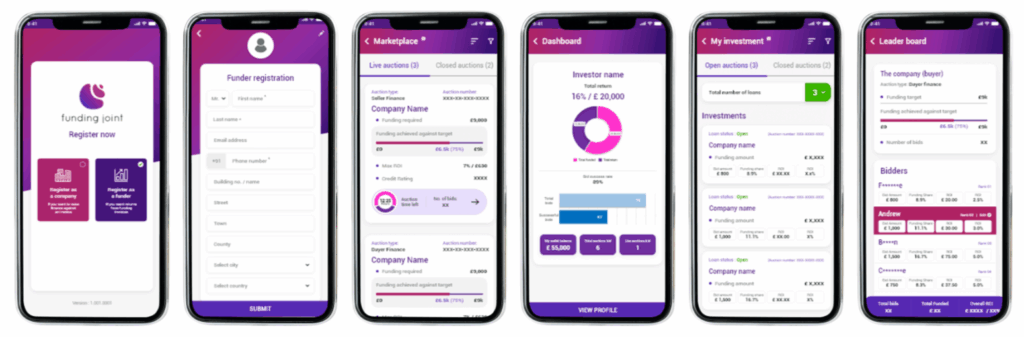
For instance, FinTechs are building crowdfunding apps to connect businesses with investors. These apps streamline every stage of the process, from bidding and payment flows to transactions and post-auction management.
Check out one of our similar projects: A P2P (Peer-to-Peer) Crowdfunding Platform
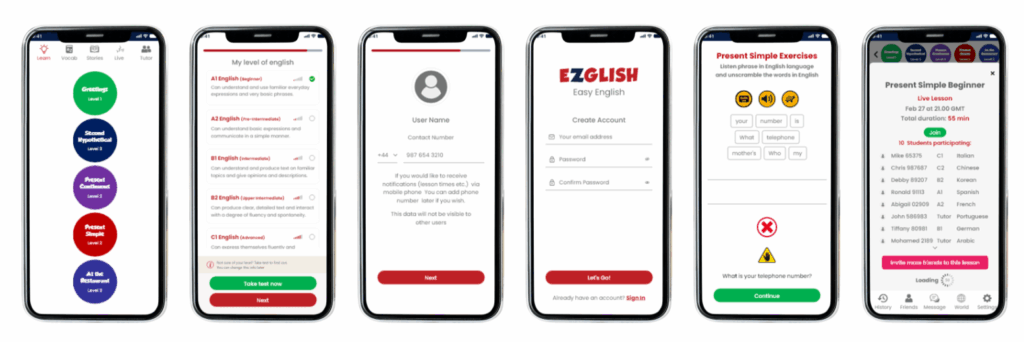
Similarly, for those seeking a handy learning management solution (LMS), EdTech companies are venturing into mobile apps that deliver personalized, self-paced learning solutions. These apps make it easier to onboard global learners, promote resources, and monetize eLearning.
Here is a similar eLearning app that our mobile app developers have built: Easy Ezglish
A well-designed app doesn’t just meet consumer expectations—it shapes them. Features like push notifications, integrated AI chatbots, and location-based services align with behaviors such as on-the-go shopping, instant customer support, and contextual relevance, ensuring startups stay ahead of evolving trends.
Navigating Technical Complexities in Mobile App Development
Tech Debt Accumulation and its Long-Term Impact
One of the significant challenges startups face when developing mobile apps is the accumulation of tech debt. In the early stages, cutting corners by hiring inexperienced developers or generalists might seem like a cost-saving strategy. However, this often leads to short-term fixes or suboptimal code that can severely hinder the app’s scalability, performance, and ease of future updates. This tech debt grows over time, making subsequent development phases costly and time-consuming.
Not only expensive, but failing to fix these issues can also damage the brand’s reputation. Hence, when considering to hire app developers, businesses must factor in their skills, specialization, and experience; not just the hiring cost.
Lost Opportunities Due to Poor UI/UX and Performance
An inadequately developed app, one with poor UX/UI, slow load times, or bugs, fails to meet user expectations, leading to high uninstall rates, negative reviews, and a steady loss of users to competitors offering more polished, seamless experiences. This is because today, users demand more than just basic functionality; they expect apps that anticipate their needs, adapt to their behavior, and offer a fast, intuitive experience at all times.
Consequently, features like AI-driven personalization, gesture controls, and adaptive layouts are no longer luxuries; they are expected standards.
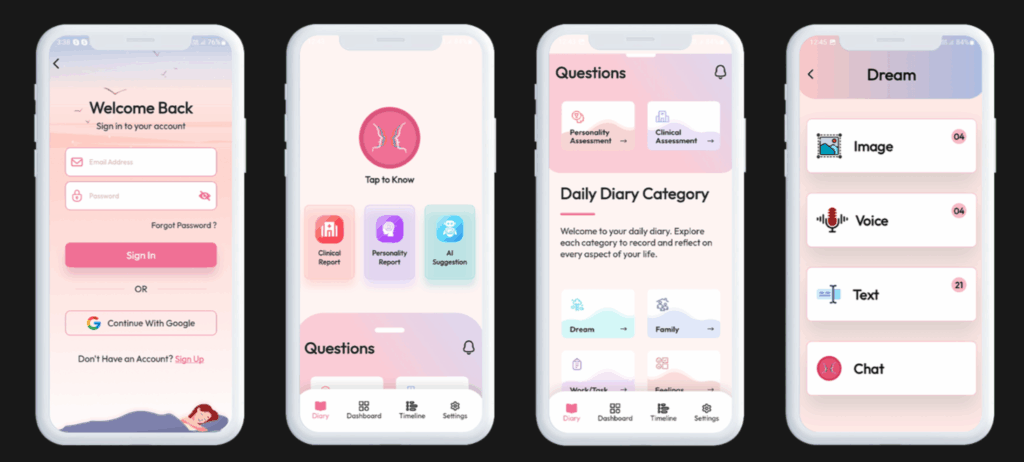
For instance, a startup offering mental wellness services may struggle if its app offers only basic functionalities like logging mood or writing daily entries. In today’s market, users expect more, such as personalized recommendations based on their emotional patterns or mindfulness practices tailored to their needs.
Contrarily, an app that delivers all these insights attracts a wider audience. Check it out in action:
Our mobile app developers designed and developed an AI-powered digital diary app that uses NLP (natural language processing) and predictive ML (machine learning) algorithms to analyze user inputs, detect emotional patterns, and provide actionable recommendations.
The Competitive Edge: Hiring Mobile App Developers
With several AI in software development, many startups are tempted to take a quick, cost-effective shortcut and build their apps using AI-integrated Low-Code/No-Code tools. However, while these tools can help build basic apps, they often fall short when it comes to creating innovative, personalized, and scalable experiences. To truly meet modern user expectations and offer an interconnected, long-term solution, startups need more than just automated app builders; they need technical expertise, a working knowledge of business logic, and an understanding of user behavior.
Having the right expertise and skills on board will ensure they not only meet these modern expectations but also offer an interconnected experience, fostering long-term user engagement and growth.
Hiring mobile app developers is a proven way to do so. When they hire dedicated app developers, they gain a strategic partner who understands the unique challenges of scaling in one of the most dynamic markets. Experienced developers (in similar domains) provide a critical edge by offering solutions that are not only technologically advanced but also aligned with startup growth trajectories.
Long-Term Vision and Iteration
Mobile app developers for startups don’t just build apps—they build them with a long-term vision. Mobile app developers understand that the app development process is iterative. They not only build the initial MVPs or prototypes, but also collaborate with you to continuously evolve your app based on user feedback, market trends, and emerging technologies. This ongoing partnership ensures that your app remains relevant and competitive in a fast-paced environment where expectations and technological advancements evolve rapidly.
Customization Beyond Templates
While AI-integrated LC/NC tools are efficient for building basic apps, they often rely on templates and pre-configured components that may limit customization. Dedicated mobile app developers, on the other hand, can create truly tailored apps designed to meet the unique needs of your business, integrating complex workflows, custom features, and advanced functionalities that LC/NC platforms simply cannot provide.
Bridging Global Standards and Local Market Needs
Experienced developers who work with startups seamlessly blend global development best practices with insights into local consumer behavior. For example, they can integrate geo-specific features that resonate with US audiences, such as region-specific payment systems, compliance with local regulations (like ADA or CCPA), and cultural design elements. This ensures your app doesn’t just work—it thrives in your target market.
Expertise in Complex Integrations
AI-powered LC/NC tools are powerful, but they fall short when it comes to integrating your app with third-party APIs, legacy systems, or complex databases. Dedicated mobile app developers bring deep expertise in ensuring seamless integrations with these systems. Whether it’s integrating AI-powered features, real-time data syncing, or enterprise-level software, developers ensure these integrations are smooth, reliable, and scalable, something AI and LC/NC tools often can’t execute at the required level of complexity.
Deep Specialization in Emerging Technologies (Agentic AI, IoT, AR/VR)
Mobile app developers often possess niche expertise in emerging technologies like Agentic Artificial Intelligence (AI), context-aware vector databases, Internet of Things (IoT), and Augmented/Virtual Reality (AR/VR).
- Agentic AI systems they develop enable apps to make independent, real-time decisions based on user behavior.
- Context-aware databases function based on factors like location, user activity, device usage, and environmental conditions.
- Expertise in IoT enables apps to interact seamlessly with connected devices.
- AR/VR knowledge helps mobile app developers create immersive, interactive experiences.
Adaptability to Fast-Evolving Startup Needs and Timelines
Hiring dedicated mobile app developers also enhances development flexibility and agility, aligning with the fast-paced nature of startups. Experienced developers are familiar with Agile methodologies and implement DevOps practices, enabling quick iterations, rapid prototyping, and shorter development cycles. Whether it’s pivoting to accommodate a new feature or scaling a product to meet sudden user demand, they are equipped to adapt without slowing down progress.
Hiring Mobile App Developers: Things to Consider
Beyond Portfolios: Identifying Innovation-Focused Developers
A portfolio alone isn’t enough to gauge a developer’s potential. Besides validating core expertise, startups must assess whether developers are updated with the recent mobile app development trends and aligned with their business goals. Look for evidence of:
- Experience with the use of contemporary technologies like AI/ML in past projects.
- Proven solutions (delivered by them) that solve real-world challenges uniquely.
- Experience with startup-centric processes like wireframing, MVP development, and iterative scaling.
- Strong problem-solving capabilities with examples of how they’ve addressed complex issues and delivered on unique requirements.
- User-centric design thinking to ensure they prioritize inclusive and accessible UX/UI design principles and can create intuitive, engaging user experiences.
- Assess whether the developers have a history of building apps with scalability in mind.
What’s Next in Mobile App Development: Trends and Technologies in 2025 and Beyond
Staying ahead means building applications that don’t just meet current demands but anticipate future trends. Future-proofing your app ensures longevity, adaptability, and competitiveness in a market that values constant innovation.
Sustainability in App Development
Modern users and investors are increasingly drawn to applications that prioritize sustainability. This extends beyond environmental considerations to include long-term code maintainability, energy-efficient scaling, and accessible app designs. This includes emphasizing:
- Energy-efficient code to reduce battery consumption.
- Green cloud hosting and data centers powered by renewable energy.
- Efficient data usage to minimize data transfer and storage needs.
- Eco-friendly app design, like dark mode and minimalism, to save energy.
- Reduced digital waste through optimized app lifecycles and disposal.
Vibe Coding: AI-Assisted Development
A new software development approach, Vibe Coding or VibeOps, is also proliferating in the mobile app segment. It involves developers using AI tools to generate the majority of the boilerplate code through conversational interactions and custom prompts. While this fastens the development process and cuts down the time from weeks to days, it also raises significant concerns around code reliability.
On-Device AI
As mobile apps evolve, on-device AI is becoming a major trend, enabling apps to leverage AI/ML capabilities directly on users’ devices. This shift is driven by the need to eliminate the need for cloud-based processing, offering faster real-time performance, enhanced privacy, and reduced latency, particularly in regions with limited connectivity.
Besides AI, many startups are also integrating on-device LLMs to enable apps to handle more complex interactions, entirely offline.
Web3 Integration
The transition to a decentralized internet (Web3) is reshaping how apps operate. Features like blockchain-based authentication, decentralized finance (DeFi), and tokenized rewards offer users increased security and transparency. For startups, integrating Web3 technologies can open doors to new revenue models and provide a future-focused competitive edge.
End Note
In a crowded market with millions of mobile applications, startups venturing into this market must think strategically and beyond the ordinary. Their apps not only have to compete against thousands of others, but they also have to keep pace with emerging technologies, user expectations, and compliance environments.
Which is why they need more than AI-driven tools that speed up development; they need expertise, creativity, and an innovative mindset. They need mobile app developers who understand not just the tech, but the market dynamics, user behavior, and long-term scalability. If you’re on the lookout for such global talent, reach out to our mobile app development company and get matched within a few days. Our application consultants will hand-pick the most suitable candidates and share shortlisted profiles for your review.
Let’s talk more at info@suntecindia.com.


Murli Pawar, VP - Technology
Murli Pawar is the Vice President of TechnoScore (the dedicated Digital Engineering Division of SunTec India), leading enterprise-wide technology innovation and solution delivery. With over 20 years of experience, he specializes in software architecture, automation, AI integration, and digital modernization, helping global enterprises enhance agility, scalability, and business value through advanced technology solutions.