
AI Training Data Services for IT & SaaS Companies

Get Custom Training Data Pipelines for AI-Enhanced and Native AI Applications

Domain-specific, deployment-ready, compliant training datasets built for complex IT & SaaS ecosystems.

Get Your AI Training Data Proposal

Success Stories

...it's all about results

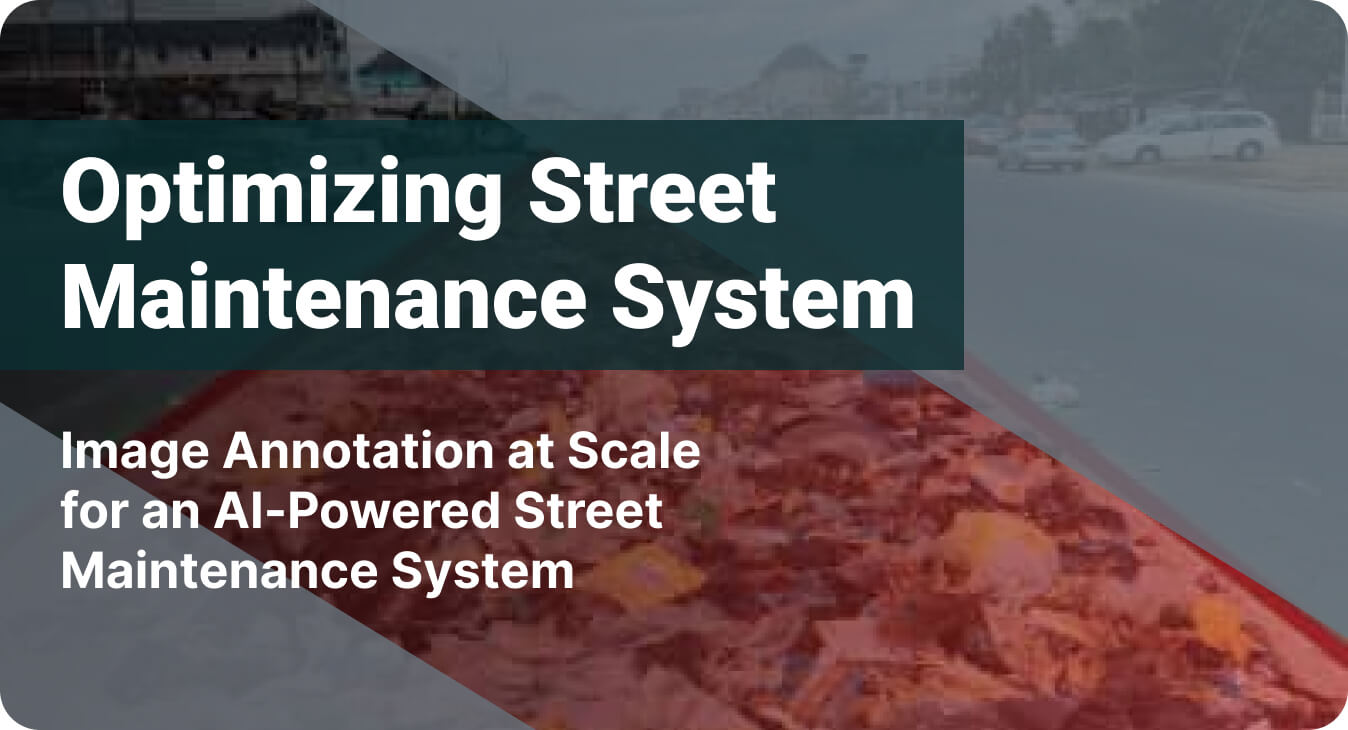
SMART CITY INFRASTRUCTURE

SMART CITY INFRASTRUCTURE

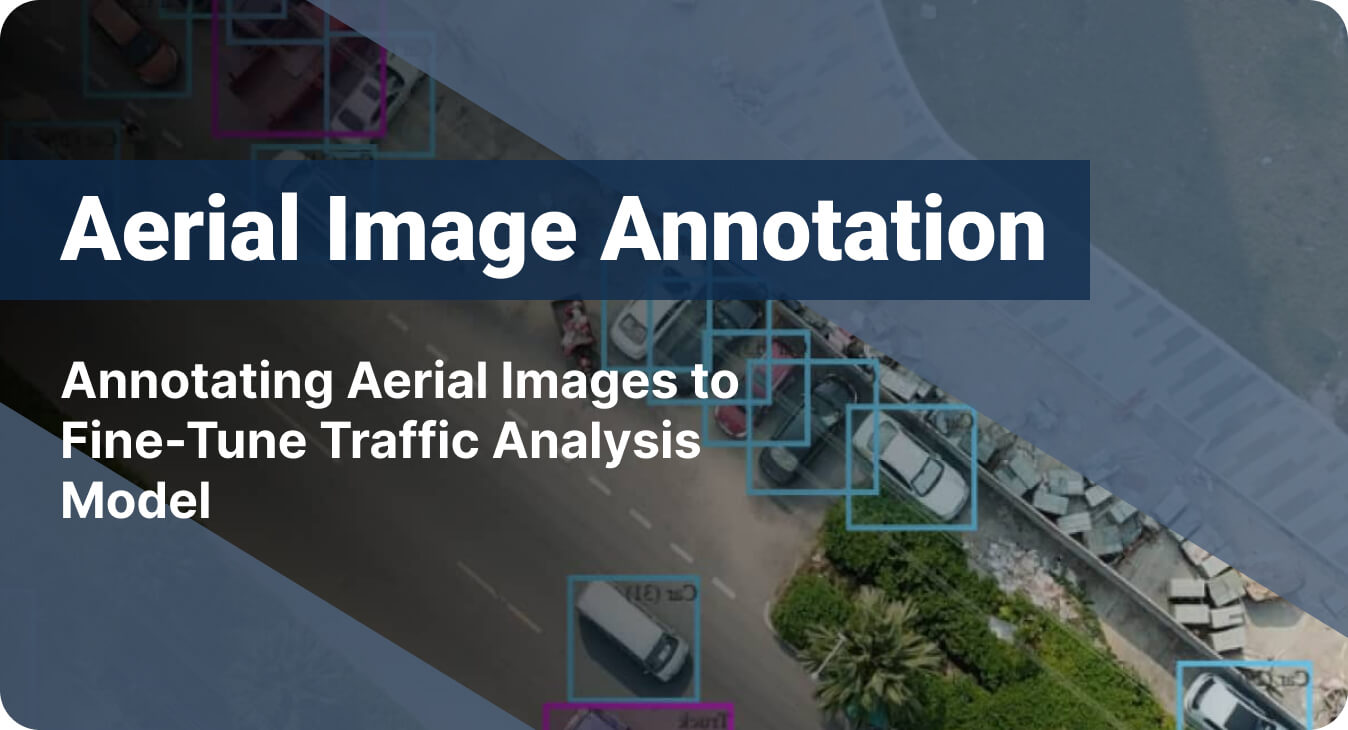
Improving Object Detection Accuracy by 45% for an AI-Powered Street Maintenance Model

Read More

AI TRAINING DATA FOR IT & SAAS COMPANIES

Powering SaaS Innovation with Precision-Engineered AI Training Data

Errors in any software products – a misclassified support ticket, a hallucinated chatbot response, or a recommendation engine surfacing irrelevant results – become customer-facing defects that erode retention, damage trust, and surface in churn conversations.

The root cause is usually the data. Machine learning training data for IT and SaaS platforms lives scattered across CRM systems, billing engines, support desks, product telemetry, and code repositories — with different schemas, owners, and update cycles. Preparing this data for model training requires a unified pipeline that covers data consolidation, normalization, schema alignment, and labeling under one quality standard.

Our AI training data services for IT & SaaS companies are customized to deliver exactly this pipeline — data collection, preprocessing, annotation, LLM fine-tuning, and model validation coordinated as a single workflow. We help engineering teams meet those unique training data demands with domain-specific, deployment-ready datasets.

Proven Domain Expertise

Hands-on experience in preparing IT and SaaS AI training data, such as document processing and annotation for enterprise software platforms, GPT model training data, and AI-driven brand protection datasets.

Scale without Sacrificing Quality

Established operational workflows, in-house subject matter experts, and a large workforce with the flexibility to scale teams up or down based on your project's demands.

Security & Compliance

Your proprietary datasets and product data are protected at every stage with NDAs, strict internal access governance, data encryption, ISO, HIPAA, and GDPR compliance.

Flexible Engagement Models

Whether you need a short-term pilot (free sample available), a dedicated annotation team for an ongoing program, or burst capacity for a seasonal project, we configure the engagement to your requirements.

AI TRAINING DATA FOR IT & SAAS COMPANIES: SERVICES

Streamline AI Lifecycle with a Unified Training Data Pipeline

SaaS training data passes through multiple transformation stages before it is model-ready — and an error introduced at any stage propagates into every stage that follows. For instance, a schema mismatch during preprocessing becomes a labeling inconsistency during annotation. That labeling inconsistency leads to flaws in fine-tuning datasets, which eventually cause production failures. Our AI training data services are designed to prevent this compounding of errors through a unified data pipeline with built-in quality control.

AI Data Collection for IT & SaaS

  • Gather technical documentation from developer forums, published benchmarks, product reviews, and open-source datasets from publicly available sources.
  • Aggregate and integrate client-provided datasets (support transcripts, CRM exports, product usage logs, knowledge base articles) into the training pipeline alongside externally sourced data.
View MoreAI Data Collection Services

Data Preprocessing for IT & SaaS

  • Clean, normalize, and transform raw IT and SaaS data into a unified, training-ready "Golden Dataset" with consistent schemas.
  • Includes deduplication, format conversion, PII masking where applicable, and enrichment with SaaS-specific features like product taxonomy, usage telemetry, and behavioral signals.
View MoreData Preprocessing Services

IT & SaaS Data Annotation

  • Annotate IT and SaaS data across text, image, audio, and video formats— with annotation teams trained on product-specific guidelines and edge-case handling.
  • Teams that work natively across prominent data labeling tools, such as CVAT, Labelbox, Label Studio, and V7, as well as client-proprietary annotation platforms.
View MoreData Annotation Services

LLM Fine-Tuning for IT & SaaS AI

  • Supervised fine-tuning data (prompt-response pairs grounded in your product's domain knowledge) for open-source (LLaMA, Mistral, Qwen) and proprietary (OpenAI, Anthropic) models.
  • RLHF annotation to align model outputs with domain-specific expectations, brand tone, and human preferences.
  • Adversarial red team testing to catch hallucinated recommendations, unsafe outputs, and policy violations.
View MoreLLM Fine-Tuning Services

AI Model Validation for IT & SaaS

  • Human-in-the-Loop validation of your IT and SaaS AI model's outputs against domain-expert ground truth.
  • Subject matter expert review to catch edge cases (misclassified support tickets, false-positive fraud flags, hallucinated chatbot responses).
  • Bias audits to ensure your model performs across varying conditions. Consensus-based accuracy checks with multi-annotator agreement measurement.
View MoreAI Model Validation Services

DATA ANNOTATION TYPES WE SUPPORT

Advanced Labeling Workflows for High-Stakes Software Automation

The applications of AI in the IT and SaaS domains are extremely varied, ranging from fraud detection systems scanning thousands of transactions per second to document extraction tools parsing invoices in dozens of formats to visual QA models inspecting every pixel of your interface. Depending on their intended capability, all these tools carry diverse learning requirements and demand different labeling precision — here's what we deliver across that spectrum.

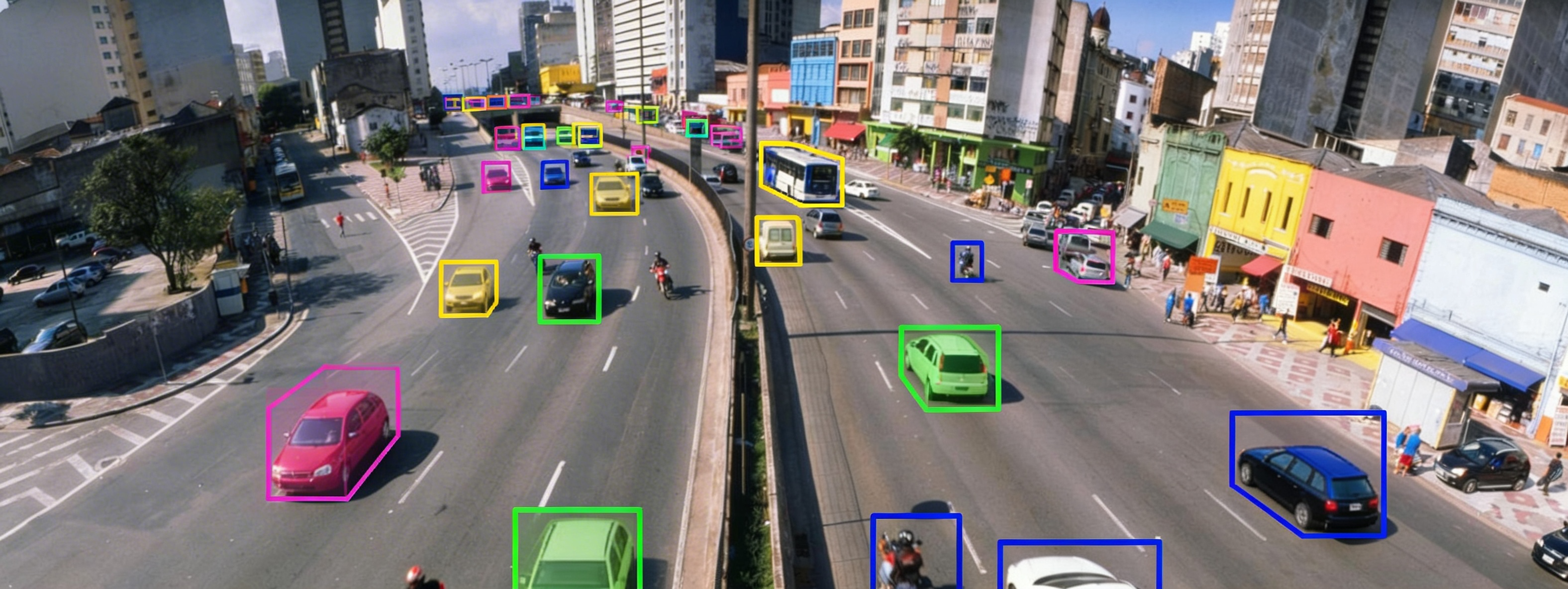
Bounding Boxes (2D/3D)

Drawing rectangles or cuboids around UI elements, product images, or dashboard components so models know what to detect and where.

Polygon Annotation

Tracing precise outlines around irregular shapes — custom icons, non-standard UI layouts, or overlapping interface elements.

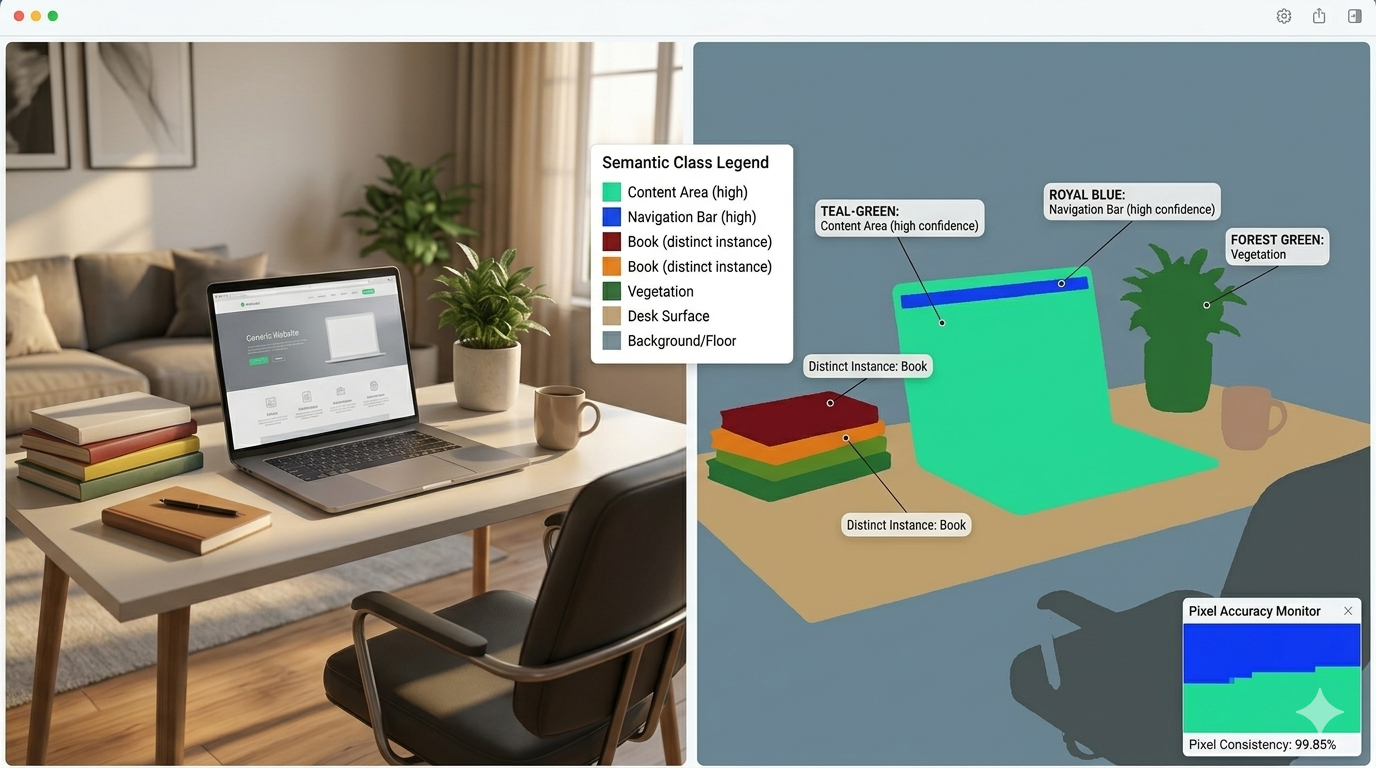
Semantic Segmentation

Classifying every pixel by category, like distinguishing navigation bars from content areas or backgrounds from interactive elements, so the model understands at the granular level.

Instance Segmentation

Identifying individual objects within the same category — not just "there are buttons" but "there are five distinct buttons with different functions."

Keypoint & Landmark Annotation

Pinpointing specific positions — facial features for identity verification, cursor tracking for UX heatmaps, or gesture recognition for touchless interfaces.

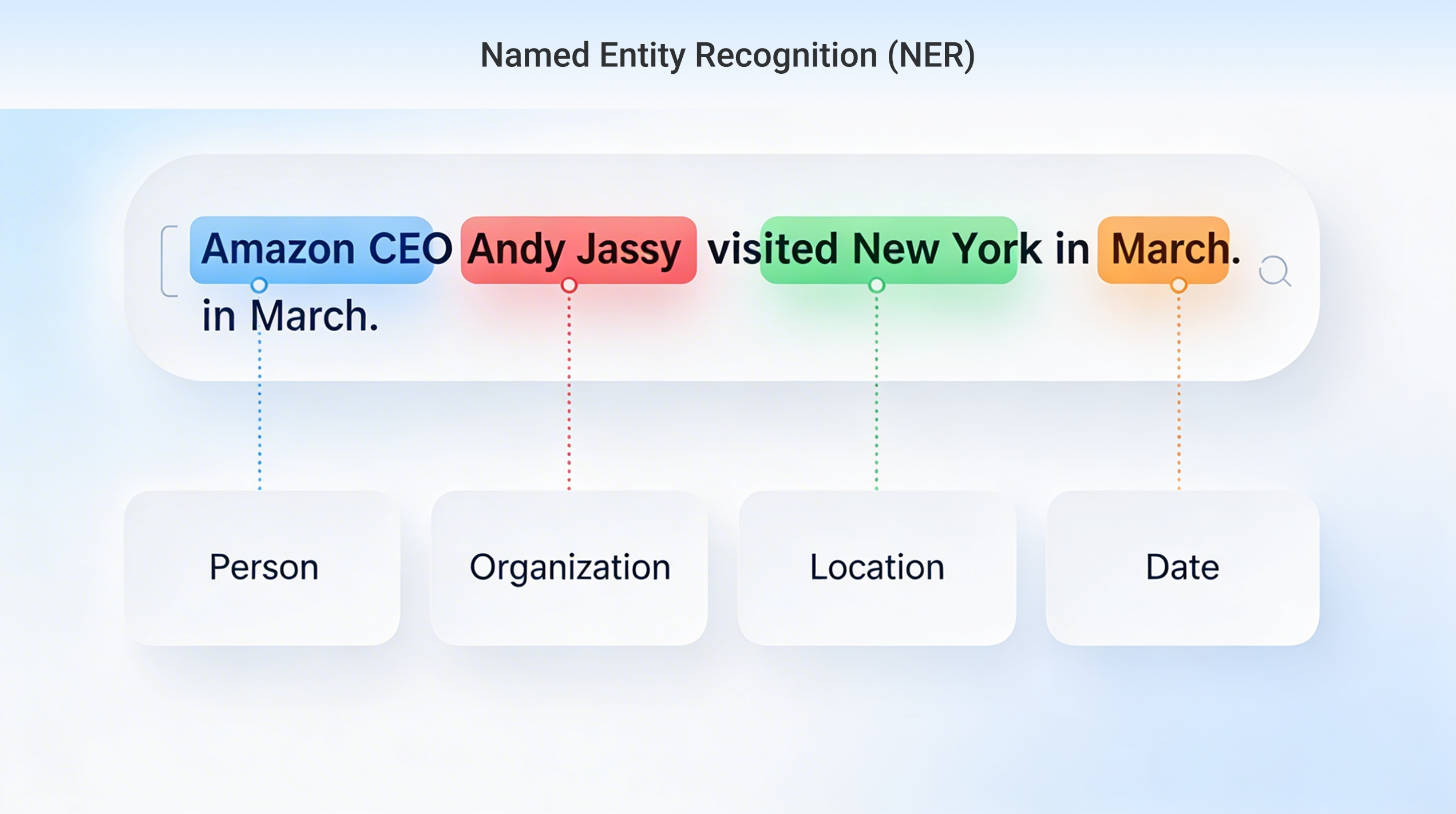
Named Entity Recognition (NER)

Tagging names, dates, product tiers, and organization names within support tickets, contracts, CRM records, and user-generated content.

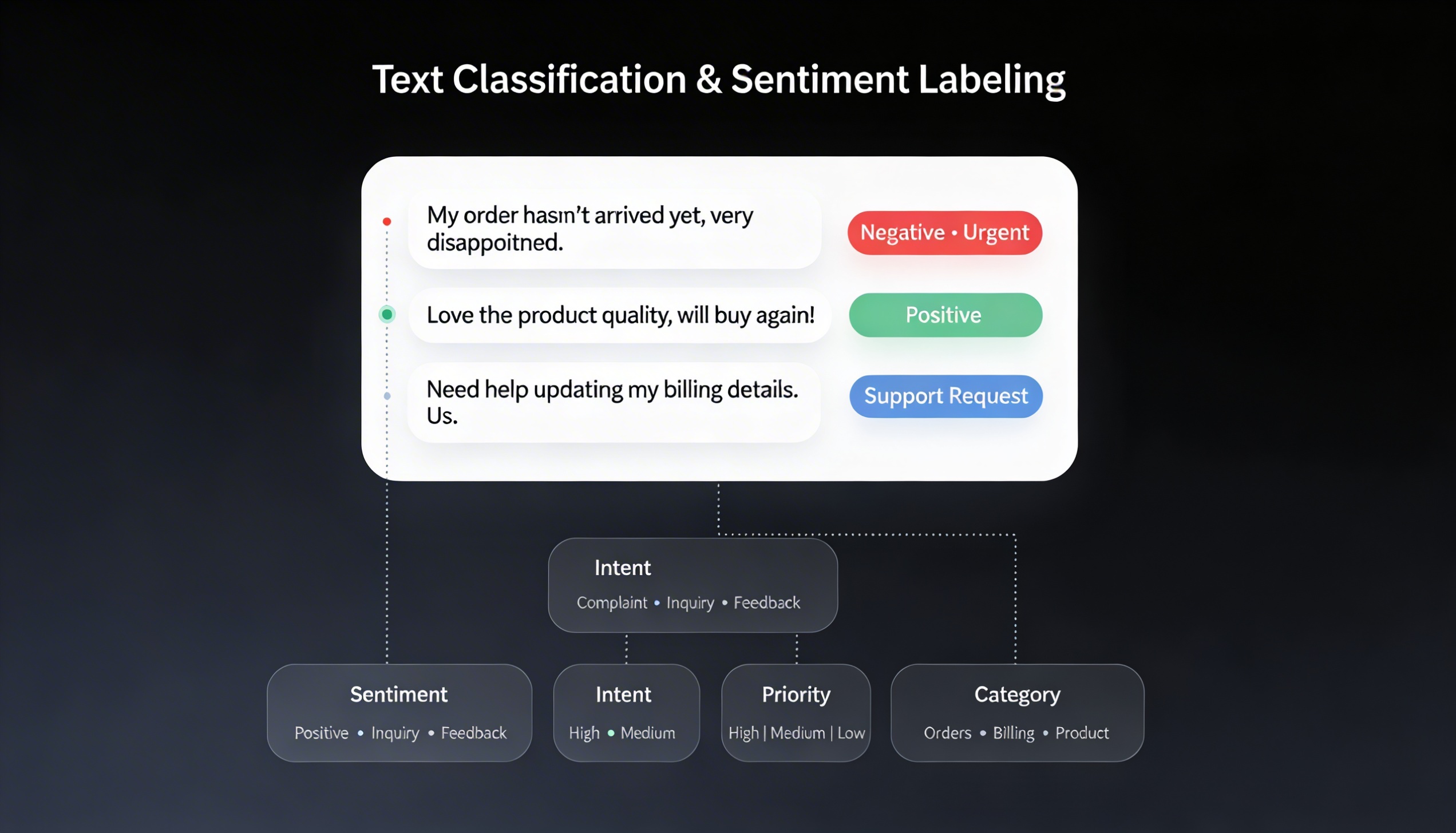
Text Classification & Sentiment Labeling

Categorizing feedback, support tickets, or in-app reviews by topic, intent, urgency, or sentiment to power routing and escalation models.

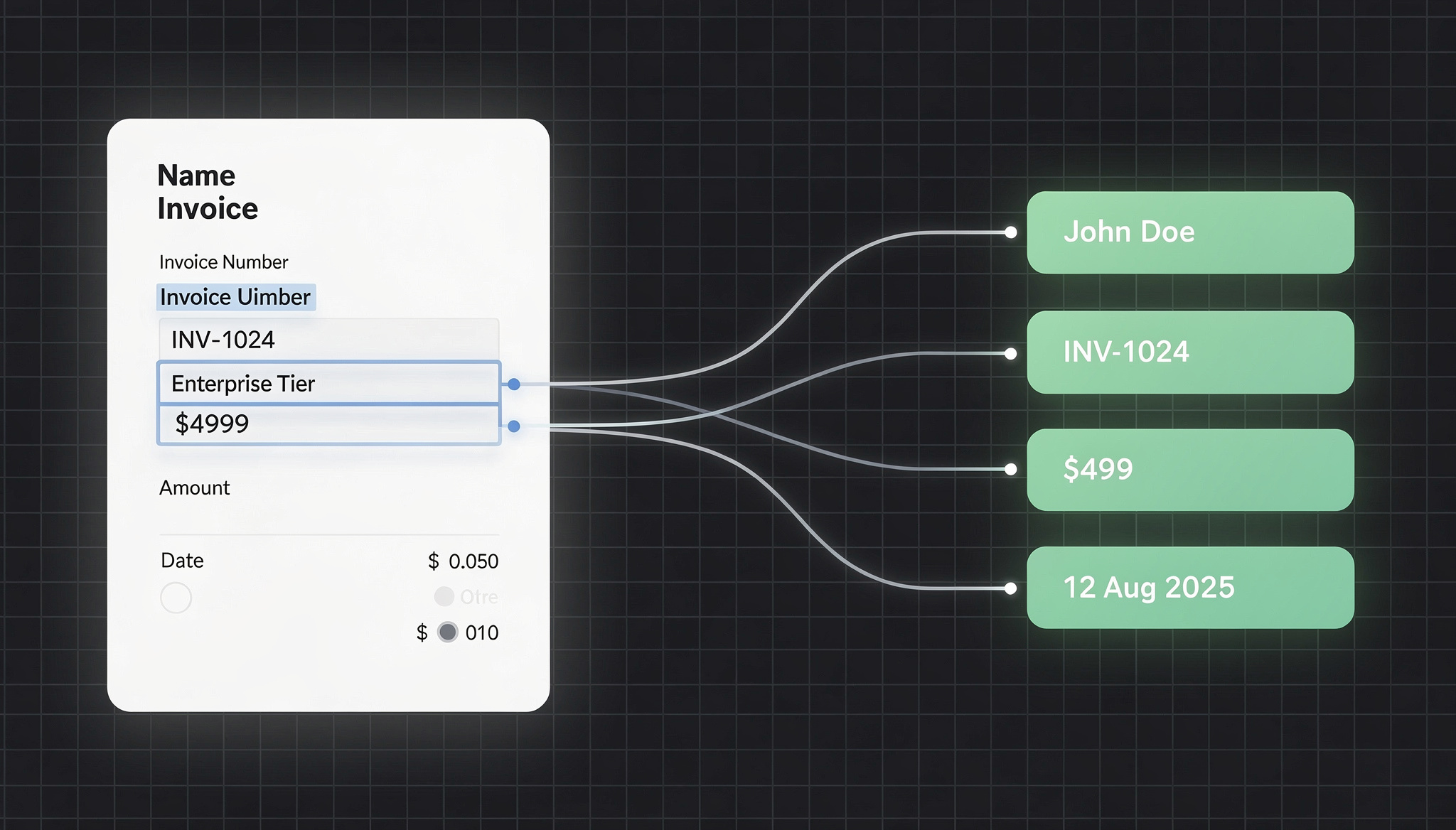
Key-Value Pair Extraction

Mapping fields to values in invoices, onboarding forms, and compliance documents — linking "Subscription Tier" to "Enterprise" so extraction models work on your real paperwork.

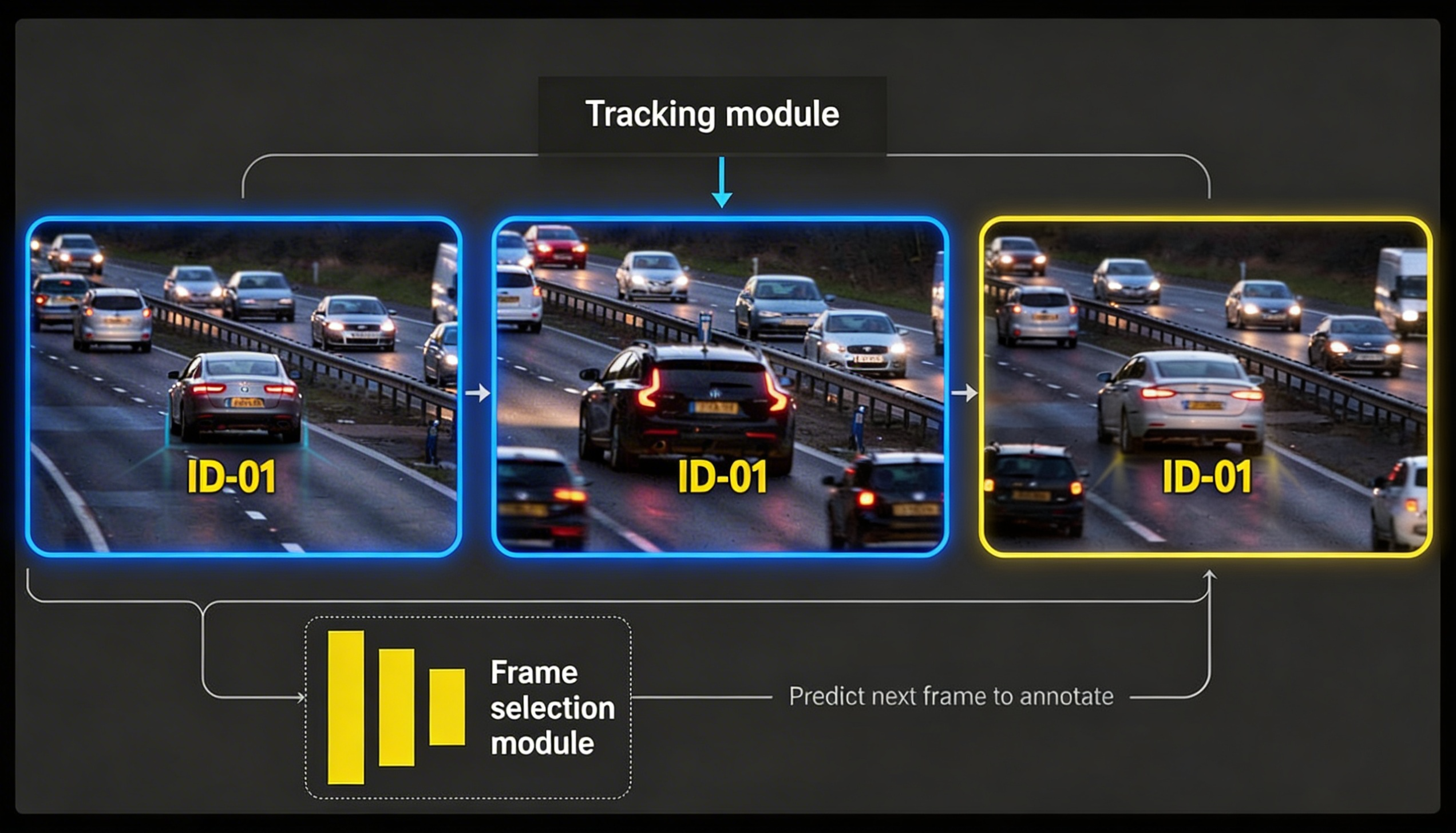
Temporal / Video Frame Annotation

Tracking objects with consistent IDs across video frames — for security feeds, warehouse monitoring, session replay analysis, or drone footage.

Drawing rectangles or cuboids around UI elements, product images, or dashboard components so models know what to detect and where.

Tracing precise outlines around irregular shapes — custom icons, non-standard UI layouts, or overlapping interface elements.

Classifying every pixel by category, like distinguishing navigation bars from content areas or backgrounds from interactive elements, so the model understands at the granular level.

Identifying individual objects within the same category — not just "there are buttons" but "there are five distinct buttons with different functions."

Pinpointing specific positions — facial features for identity verification, cursor tracking for UX heatmaps, or gesture recognition for touchless interfaces.

Tagging names, dates, product tiers, and organization names within support tickets, contracts, CRM records, and user-generated content.

Categorizing feedback, support tickets, or in-app reviews by topic, intent, urgency, or sentiment to power routing and escalation models.

Mapping fields to values in invoices, onboarding forms, and compliance documents — linking "Subscription Tier" to "Enterprise" so extraction models work on your real paperwork.

Tracking objects with consistent IDs across video frames — for security feeds, warehouse monitoring, session replay analysis, or drone footage.

MACHINE LEARNING TRAINING DATA FOR IT & SAAS PLATFORMS: USE CASES

We Prepare Training Data for the Exact Problem Your AI Product Is Solving

Every SaaS product has a different AI ambition — intelligent search, automated support, fraud detection, code assistance, churn prediction, and more. The training data requirements for each are different, and getting them wrong means wasted compute, delayed launches, and AI features that underperform the moment real users interact with them. That is why our AI training data services for IT companies do not deliver one-size-fits-all datasets — we build training data around the specific use case your model is solving.

Document Intelligence & Automated Data Extraction

AI Capability

Extract structured data — names, dates, amounts, line items — from invoices, contracts, onboarding forms, and compliance documents at scale.

Training Data Gap

Models trained on clean templates collapse against real-world document diversity (varying layouts, handwritten fields, scanned PDFs, merged cells, and rotated scans).

Our Approach

We collect relevant and representative document datasets from publicly available sources, preprocess them, and annotate with field-level labels, including bounding boxes, key-value pairs, and table-extraction tags. Extraction accuracy is validated against human-verified ground truth before delivery.

Sentiment Analysis & Customer Feedback Mining

AI Capability

Understand what users feel about specific features, pricing, and onboarding at aspect-level granularity — beyond binary positive/negative classification.

Training Data Gap

Sentiment is context-dependent. "This is fast" means something different in a page-load review versus a complaint about rushed support. The training data must have such product-specific nuances labeled correctly.

Our Approach

We collect product reviews from open-source platforms and label customer sentiments about product features. Then we train AI models to understand sentiment in the context of your product, using your vocabulary.

Conversational AI & Chatbot Training

AI Capability

Maintain context across multi-turn conversations, handle ambiguity, and match your brand tone — consistently, at scale — for support, sales, onboarding, or in-app guidance purposes.

Training Data Gap

Real conversations are messy. Users misspell, switch topics mid-sentence, ask compound questions, and express frustration in ways clean training data never captures.

Our Approach

We build domain-specific conversational datasets — prompt-response pairs, dialogue flows, and intent-entity mappings — tailored to your product. We prepare LLM fine-tuning datasets for SaaS chatbots using RLHF to align responses for accuracy, empathy, and brand tone. Scenario-based human review validates output quality before deployment.

Computer Vision for SaaS Applications

AI Capability

Power visual intelligence in your SaaS product, such as UI testing automation, visual search, identity verification, document scanning, or product image classification.

Training Data Gap

A generic image dataset does not cover the visual vocabulary that such AI models have to deal with, like screenshots, dashboards, form fields, buttons, and product thumbnails

Our Approach

We train our teams on your product and UI taxonomy, and label image datasets with bounding boxes, polygon segmentation, keypoint tagging, and classification labels. The annotation guidelines are designed by specialists who understand how digital interfaces are structured and how users move through them.

Object Detection & Tracking

AI Capability

Detect, classify, and track objects across frames in real time for security SaaS, surveillance platforms, warehouse management, or drone analytics.

Training Data Gap

Tracking persistence is where annotation quality breaks down at scale. Maintaining consistent object IDs through thousands of frames with occlusion, lighting shifts, and camera motion gets complicated.

Our Approach

Our video labeling team leverages automated interpolation, AI-assisted Re-ID for occlusions, sensor fusion annotation, and multi-stage human QC to ensure consistent object IDs across complex, large-scale video datasets.

Defect & Anomaly Detection Model Training

AI Capability

Reliably distinguish normal from abnormal — in images, system logs, network traffic, or transactions — for manufacturing QC SaaS, cybersecurity platforms, or IT monitoring tools.

Training Data Gap

In production, anomalies are rare (often <1% of data). This extreme class imbalance means models often over-fit to 'normal' behavior, leading to catastrophic false negatives.

Our Approach

We specifically annotate the minority class cases with class-balanced sampling strategies and apply geometric transformations (flip, rotate, crop, or change the lighting in images/videos, synonym replacement or back-translation in text) to create "new" examples of the minority class.

Recommendation Engine Optimization

AI Capability

Surface the right product, feature, or content at the right moment — personalized to user behavior and context — for e-commerce SaaS, content platforms, or B2B marketplaces.

Training Data Gap

Raw clickstream data is noisy. Not every click is a preference — users misclick, rage-click, browse passively, or bounce. A model trained on raw interaction data treats all of these as equal signals, so recommendations end up reflecting accidents as much as intent.

Our Approach

We aggregate interaction data from client-provided sources, annotate data with a confidence score based on the quality of the interaction. engineer predictive features (click-through patterns, session depth, content affinity scores), and validate recommendation relevance through human evaluation against your product's engagement metrics.

Fraud Detection & Anomaly Classification

AI Capability

Catch fraudulent transactions and suspicious behavior without blocking legitimate users — for fintech SaaS, payment platforms, or identity verification systems.

Training Data Gap

Fraud signals are varied and may span transaction manipulation, account takeovers, identity spoofing, and more. A single fraud/not-fraud label isn't enough for a model that needs to tell them apart.

Our Approach

We preprocess transaction and event data, engineer risk-specific features (transaction velocity, geolocation patterns, device fingerprints), and validate model precision to balance detection sensitivity against false-positive rates.

Intelligent Code Review & DevOps Automation

AI Capability

Review code, detect bugs, flag security vulnerabilities, suggest improvements, and automate CI/CD pipeline decisions for AI-assisted developer tools.

Training Data Gap

Code quality is not binary. A function can be "correct" but poorly structured, insecure, or unmaintainable. Training data that only labels code as right or wrong misses the dimensions that actually matter to developers.

Our Approach

We collect open-source code repositories, commit histories, pull request reviews, and bug reports. We annotate with multi-dimensional quality labels (correctness, security, readability, performance), create prompt-response pairs for code-assist LLMs, and validate model suggestions against expert developer review.

Predictive Analytics & Churn Modeling

AI Capability

Identify at-risk accounts weeks before cancellation — based on subtle patterns across usage, support interactions, billing behavior, and engagement data.

Training Data Gap

Churn signals sit fragmented across product analytics, CRM, billing, and support systems, and look different for every segment. A declining login rate might signal churn in one product; a drop in feature adoption might signal it in another.

Our Approach

We preprocess and unify client-provided data into a single training-ready dataset, then engineer the predictive features that matter, such as login recency, support ticket frequency, feature adoption trends, and revenue trajectory.

AI Capability

Extract structured data — names, dates, amounts, line items — from invoices, contracts, onboarding forms, and compliance documents at scale.

Training Data Gap

Models trained on clean templates collapse against real-world document diversity (varying layouts, handwritten fields, scanned PDFs, merged cells, and rotated scans).

Our Approach

We collect relevant and representative document datasets from publicly available sources, preprocess them, and annotate with field-level labels, including bounding boxes, key-value pairs, and table-extraction tags. Extraction accuracy is validated against human-verified ground truth before delivery.

AI Capability

Understand what users feel about specific features, pricing, and onboarding at aspect-level granularity — beyond binary positive/negative classification.

Training Data Gap

Sentiment is context-dependent. "This is fast" means something different in a page-load review versus a complaint about rushed support. The training data must have such product-specific nuances labeled correctly.

Our Approach

We collect product reviews from open-source platforms and label customer sentiments about product features. Then we train AI models to understand sentiment in the context of your product, using your vocabulary.

AI Capability

Maintain context across multi-turn conversations, handle ambiguity, and match your brand tone — consistently, at scale — for support, sales, onboarding, or in-app guidance purposes.

Training Data Gap

Real conversations are messy. Users misspell, switch topics mid-sentence, ask compound questions, and express frustration in ways clean training data never captures.

Our Approach

We build domain-specific conversational datasets — prompt-response pairs, dialogue flows, and intent-entity mappings — tailored to your product. We prepare LLM fine-tuning datasets for SaaS chatbots using RLHF to align responses for accuracy, empathy, and brand tone. Scenario-based human review validates output quality before deployment.

AI Capability

Power visual intelligence in your SaaS product, such as UI testing automation, visual search, identity verification, document scanning, or product image classification.

Training Data Gap

A generic image dataset does not cover the visual vocabulary that such AI models have to deal with, like screenshots, dashboards, form fields, buttons, and product thumbnails

Our Approach

We train our teams on your product and UI taxonomy, and label image datasets with bounding boxes, polygon segmentation, keypoint tagging, and classification labels. The annotation guidelines are designed by specialists who understand how digital interfaces are structured and how users move through them.

AI Capability

Detect, classify, and track objects across frames in real time for security SaaS, surveillance platforms, warehouse management, or drone analytics.

Training Data Gap

Tracking persistence is where annotation quality breaks down at scale. Maintaining consistent object IDs through thousands of frames with occlusion, lighting shifts, and camera motion gets complicated.

Our Approach

Our video labeling team leverages automated interpolation, AI-assisted Re-ID for occlusions, sensor fusion annotation, and multi-stage human QC to ensure consistent object IDs across complex, large-scale video datasets.

AI Capability

Reliably distinguish normal from abnormal — in images, system logs, network traffic, or transactions — for manufacturing QC SaaS, cybersecurity platforms, or IT monitoring tools.

Training Data Gap

In production, anomalies are rare (often <1% of data). This extreme class imbalance means models often over-fit to 'normal' behavior, leading to catastrophic false negatives.

Our Approach

We specifically annotate the minority class cases with class-balanced sampling strategies and apply geometric transformations (flip, rotate, crop, or change the lighting in images/videos, synonym replacement or back-translation in text) to create "new" examples of the minority class.

AI Capability

Surface the right product, feature, or content at the right moment — personalized to user behavior and context — for e-commerce SaaS, content platforms, or B2B marketplaces.

Training Data Gap

Raw clickstream data is noisy. Not every click is a preference — users misclick, rage-click, browse passively, or bounce. A model trained on raw interaction data treats all of these as equal signals, so recommendations end up reflecting accidents as much as intent.

Our Approach

We aggregate interaction data from client-provided sources, annotate data with a confidence score based on the quality of the interaction. engineer predictive features (click-through patterns, session depth, content affinity scores), and validate recommendation relevance through human evaluation against your product's engagement metrics.

AI Capability

Catch fraudulent transactions and suspicious behavior without blocking legitimate users — for fintech SaaS, payment platforms, or identity verification systems.

Training Data Gap

Fraud signals are varied and may span transaction manipulation, account takeovers, identity spoofing, and more. A single fraud/not-fraud label isn't enough for a model that needs to tell them apart.

Our Approach

We preprocess transaction and event data, engineer risk-specific features (transaction velocity, geolocation patterns, device fingerprints), and validate model precision to balance detection sensitivity against false-positive rates.

AI Capability

Review code, detect bugs, flag security vulnerabilities, suggest improvements, and automate CI/CD pipeline decisions for AI-assisted developer tools.

Training Data Gap

Code quality is not binary. A function can be "correct" but poorly structured, insecure, or unmaintainable. Training data that only labels code as right or wrong misses the dimensions that actually matter to developers.

Our Approach

We collect open-source code repositories, commit histories, pull request reviews, and bug reports. We annotate with multi-dimensional quality labels (correctness, security, readability, performance), create prompt-response pairs for code-assist LLMs, and validate model suggestions against expert developer review.

AI Capability

Identify at-risk accounts weeks before cancellation — based on subtle patterns across usage, support interactions, billing behavior, and engagement data.

Training Data Gap

Churn signals sit fragmented across product analytics, CRM, billing, and support systems, and look different for every segment. A declining login rate might signal churn in one product; a drop in feature adoption might signal it in another.

Our Approach

We preprocess and unify client-provided data into a single training-ready dataset, then engineer the predictive features that matter, such as login recency, support ticket frequency, feature adoption trends, and revenue trajectory.

CLIENT SUCCESS STORIES

It's all about results.

The Proof is in the Pipeline

Discover how we’ve helped businesses across 50+ nations bridge the gap between "lab-ready" and "market-ready" AI/ML applications by solving their most complex training data challenges.

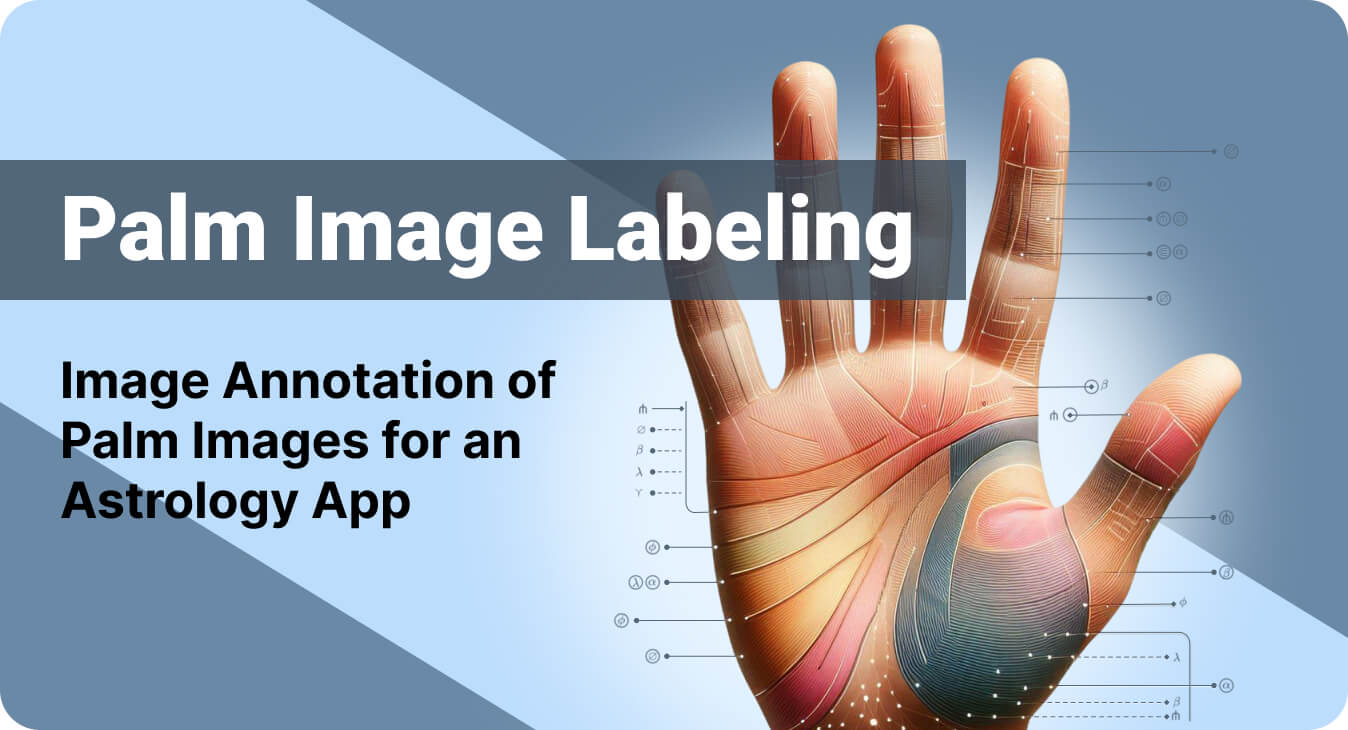
palm image labeling for astrology

Helping an Al-powered astrology app improve palm reading accuracy by 25% through accurate image annotation
25%

Accuracy Boost in Application's Performance

10000+

Images Labeled For AI Model's Refinement
  • Service Image Annotation Polygon & Polyline Annotaton Image Segmentation
  • Platform LabelBox
  • Industry Astrology
optimizing street maintenance system

Improved urban waste management by enhancing the object detection accuracy of street maintenance system through image labeling

45%

Improvement in Object Detection Accuracy

30%

Reduction in Operational Costs

3000+

Images Annotated with Precision
  • Service Image Annotation Bounding Box Annotation Image Segmentation
  • Platform CVAT
  • Industry Government Sector
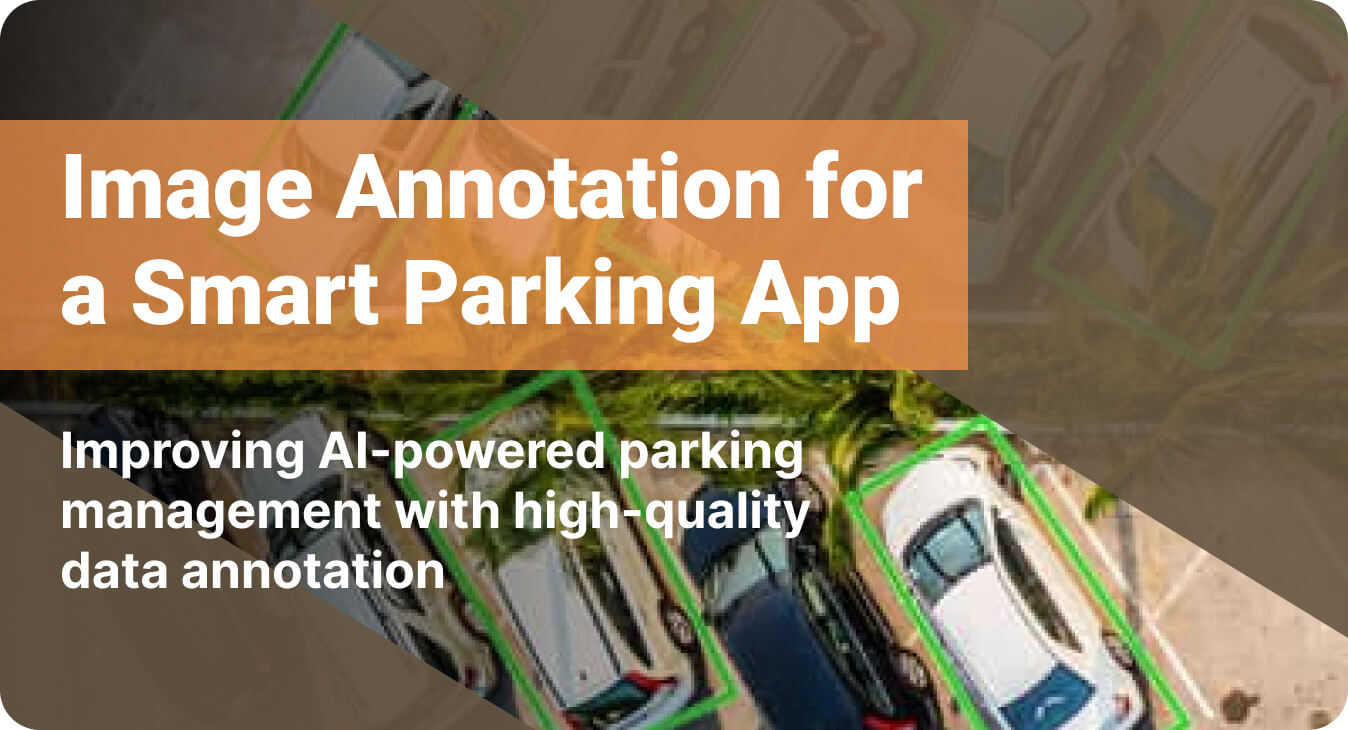
image-annotation-for-smart-parking

Helping a European firm improve AI-based parking predictions for optimized experience through real-time image labeling

Succesful Model

Development with High-Quality Training Datasets

Profitable Operations

in Multiple Regions
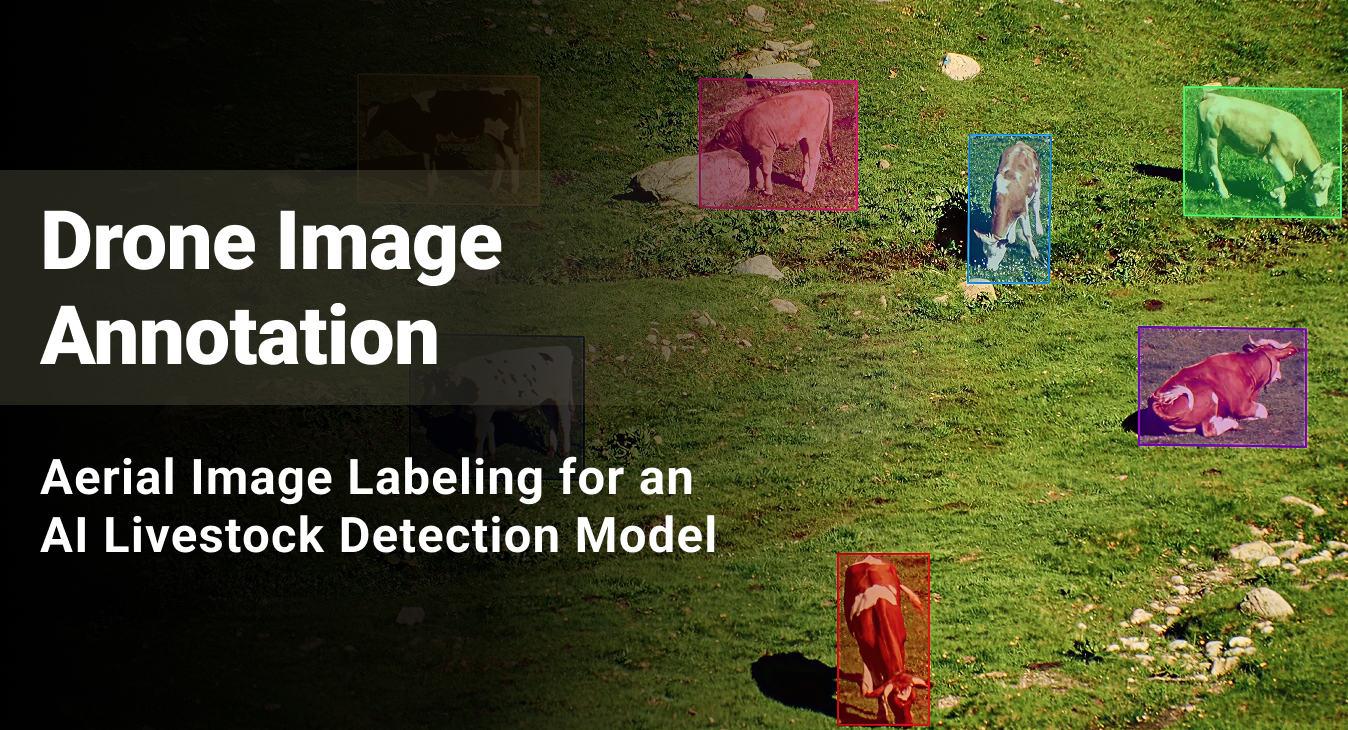
Drone Image Annotation

Labeled and validated over 10,000 high-resolution drone images monthly using QuPath to train an AI-powered livestock detection model, delivering 95%+ annotation accuracy.

10K+

Images Annotated Monthly

95%+

Labeling Accuracy
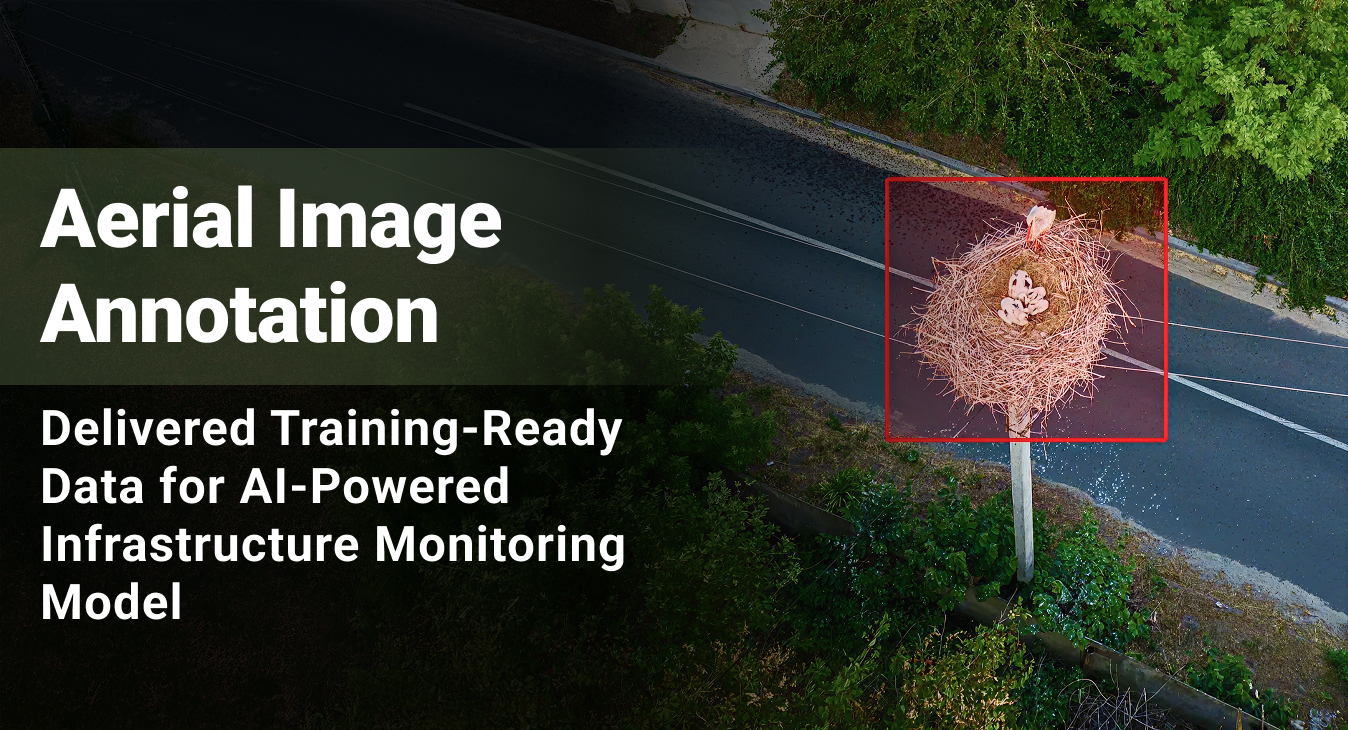
Aerial Image Annotation

Large-scale image annotation services for a drone-based infrastructure monitoring company developing an automated bird nest detection system on power grids.

15,000+

Images Annotated

95%+

Annotation Accuracy
aerial image annotation

Helping a government agency improve urban traffic flow by boosting the accuracy of their AI system through aerial image labeling

35%

Increase in Model Accuracy

20%

Improvement in Traffic Flow Monitoring
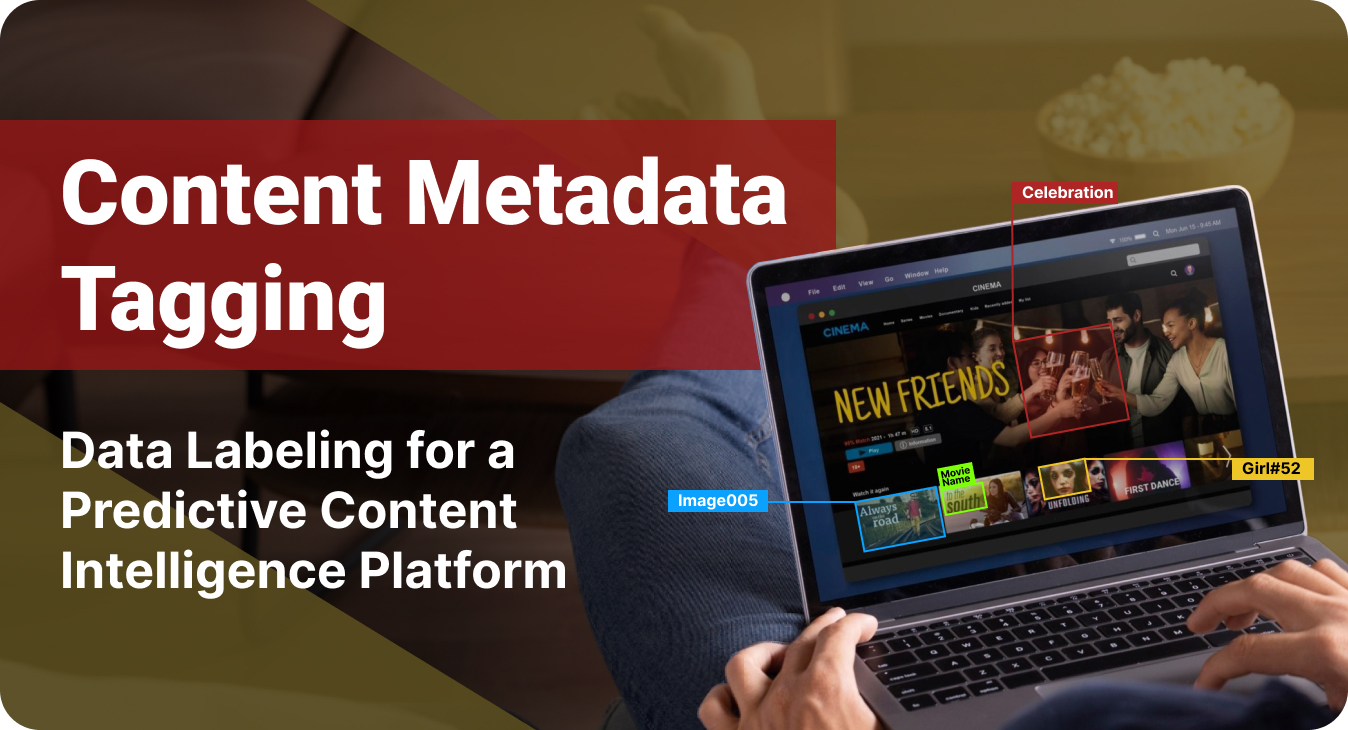
Data Labeling for a Predictive Content Intelligence Platform

Labeled over 2500 entertainment content (Movies, TV Series, Trailers) monthly to enable the accurate prediction of the target audience engagement rates and response.

65%

Improved AI Model Accuracy

60%

Less Content Categorization Errors

4-Month

Faster Model Development

View All

Security and Compliance

Your data security is our priority

ISO
Certified

HIPAA
compliance

GDPR

GDPR
adherence

Regular
security audits

Encrypted data
transmission

Secure
cloud storage

CONTACT US

Start with a Pilot on Your Actual Data

Evaluate our annotation accuracy, domain understanding, and turnaround before any commitment. Send us a sample dataset from your IT or SaaS product, and our team will annotate it using the same workflows, QA standards, and domain-trained specialists that we deploy on full-production engagements.

Ready to close the gap between your AI roadmap and your data reality? Get in touch with our team.

FAQ - Frequently Asked Questions

AI Training Data Services for IT & SaaS Companies

When it comes to creating AI training data for IT and SaaS companies, we start with a structured onboarding and calibration process. We begin by developing project-specific annotation guidelines in collaboration with your team — covering product taxonomy, intent classification schemas, NER entity definitions, sentiment labeling criteria, and edge cases unique to your software (such as multi-tenant permission logic or API error categorization). Our annotators then complete calibration exercises on sample data, and their outputs are benchmarked against expert-labeled ground truth before production begins. Only annotators who meet accuracy thresholds move to production work. Once the project is live, our QA leads conduct ongoing quality reviews, inter-annotator agreement (IAA) measurement, and periodic recalibration as your product taxonomy evolves with each release, ensuring that our AI data annotation services for SaaS maintain consistency across the full project lifecycle, not just the first batch.

Yes. We offer both a free sample and a paid pilot — depending on how much validation you need before committing. If you want a quick read on output quality and annotation style, request a free sample, and we'll process a small batch of your data so you can evaluate our work firsthand. If you want to validate the full workflow — tooling compatibility, delivery format, turnaround, and quality at scale — we can initiate a paid pilot that runs on your actual IT and SaaS data within your real environment. That includes annotation, LLM fine-tuning, or AI model validation, depending on what your pipeline requires. Write to us at info@suntecindia.com to get started.

When preparing machine learning training data for IT & SaaS platforms, we handle mid-project changes through a structured recalibration process:

  • Update the annotation guidelines
  • Retrain affected annotators on the revised taxonomy
  • Run a fresh calibration exercise on sample data to verify consistency
  • Audit previously labeled data to determine whether re-annotation is needed or whether the existing labels can be mapped to the new schema

Our goal is to absorb the change without restarting the project and without letting revised labels introduce inconsistency with the training data you've already received.

Yes. We understand that IT and SaaS AI projects rarely have flat, predictable data volumes — product launches, funding rounds, and feature releases can spike requirements overnight. When you need additional capacity, we onboard and calibrate new annotators within one to two weeks — including project-specific training, guideline review, sample annotation exercises, and accuracy benchmarking against your existing ground truth. This means new annotators enter production at the same quality standard as your current team.

All annotated datasets, raw data, and project-specific annotation guidelines developed during the engagement are the client's intellectual property upon project completion. We do not retain copies, reuse client data to serve other clients, or repurpose your annotation guidelines for other projects.

Turnaround depends on dataset volume, annotation complexity (for example, bounding boxes are faster than multi-label intent classification), number of label categories, and your QA requirements. We share a detailed project plan with milestone-level delivery dates before work begins, so you know exactly what to expect and when. We can also handle expedited timelines by structuring the team and workflow to match your sprint cadence.

Our annotators are trained to flag ambiguous instances rather than guess the labels. Flagged cases are escalated to the project's QA lead, who either resolves them using the existing annotation guidelines or — if the case falls outside what the guidelines cover — routes them to your team for a definitive ruling. For example, a support ticket that reads "I can't access my dashboard" could be a login failure, a permissions issue, a billing block, or a system outage — rather than force-labeling it, the annotator flags it for expert review. That ruling is then documented, added to the project's annotation guidelines as a new reference example, and communicated back to the full annotation team to prevent recurrence.

Yes. We regularly work with client-provided annotation platforms — whether that's your own Labelbox or CVAT instance, Label Studio, or any proprietary internal tool your team has standardized on. We export annotated datasets in the format your ML pipeline requires — COCO, YOLO, Pascal VOC, or custom specifications — and integrate with cloud storage for direct pipeline delivery, so your engineering team can ingest the data without additional conversion steps.

Yes. We source IT and SaaS data from publicly available sources — developer forums (Stack Overflow, GitHub Discussions), product review platforms (app store reviews), published benchmarks, technical documentation, and open-source conversation datasets — filtered by your specific model requirements (text classification, NER, sentiment analysis, conversational AI, code review). If you also have proprietary data (support transcripts, CRM exports, product usage logs, billing records, code repositories), we integrate it with publicly sourced data through schema unification, PII masking, and feature engineering to build custom AI training datasets for SaaS that neither source could produce on its own.

We prepare LLM fine-tuning datasets for IT companies using domain-specific prompt-response pairs tailored to your use case — support chatbots, product documentation assistants, code tools, or in-app copilots. Supervised fine-tuning (SFT) aligns the model with your product knowledge. RLHF tunes behavioral outputs for tone, accuracy, and brand voice. Red team testing and hallucination auditing are performed before any customer-facing deployment to reduce real-time failures.