LLM Fine-Tuning Services

Domain-Specialized. Task-Specific. Instruction-Based.

Stop ‘prompt engineering’ your way around generic AI model limitations. We bake your institutional/domain knowledge directly into the LLM model’s weights, creating a proprietary, specialized asset.

Get Your LLM Fine-Tuning Proposal

Success Stories

...it's all about results

Claude Fine-Tuning

Claude Fine-Tuning

Aviation-Specific LLM Fine-Tuning with 40% Faster Response Times

Read More
Chatbot Fine-Tuning

Chatbot Fine-Tuning

Sales AI Chatbot Training with 30% Higher Conversions

Read More
Environmental Monitoring

Environmental Monitoring

Bounding Box Image Annotation to Enable AI-Powered River Monitoring

Read More
Large Infrastructure Monitoring

Large Infrastructure Monitoring

Drone Image Annotation with 95%+ Labeling Accuracy

Read More
Traffic Management

Traffic Management

35% Accuracy Improvement in Traffic Management System via Aerial Image Annotation

Read More

LLM FINE-TUNING SERVICES

Generic LLM Models Give Generic Results

Your Business Deserves Better

Off-the-shelf Large Language Models (LLMs) are powerful, but they're built for everyone—which means they're optimized for no one. Our LLM fine-tuning services change that. We transform a general-purpose AI into a specialized tool that understands your domain, speaks the language of your market, and delivers precisely what you need, just faster, accurately, and consistently—giving you a competitive advantage.

  • Open-source LLM fine-tuning support (LlaMa, Mistral, Falcon, Qwen)
  • Fine-tune proprietary foundation LLM models based on your data (OpenAI, Google, Anthropic)
  • Adapt an already fine-tuned LLM to new tasks, languages, or data without losing the skills it has already learned
  • Develop custom prompts to fine-tune the LLM for fresh use cases
  • Rate specific question-answer pairs to compare multiple LLMs

SERVICES

Custom LLM & AI Fine-Tuning that Actually Solves Business Problems

Everyone Has Access to GPT, Gemini, and Claude, BUT We are Your Competitive Advantage

By systematically fine-tuning machine learning models on your data, workflows, and requirements, we create proprietary AI solutions that your competitors simply can't replicate—even when they start with the same base model. All you need to do is identify which type of specialization your business needs. We've mapped six distinct large language model fine-tuning services to address common business challenges. Find yours below, and allow our domain experts to build AI that actually differentiates your offering.

Task-Based LLM Fine-Tuning Services

Turn your LLM into a specialist that excels at one critical function with unmatched accuracy and speed. Perfect for businesses that need consistent, reliable outputs for repetitive, high-stakes tasks.

Use Cases:

  • Sentiment classification: Identify customer emotions in reviews, support tickets, or social media
  • Named entity recognition: Extract people, organizations, locations, and custom entities from documents
  • Contract clause extraction: Extract key terms, obligations, and dates from legal agreements quickly
  • Code debugging: Detect bugs, suggest fixes, and optimize code quality in development

Instruction-Based LLM Fine-Tuning Services

Create an intelligent assistant that adapts to varied user requests, switches context seamlessly, and handles multiple responsibilities without losing performance quality.

Use Cases:

  • General assistant (ChatGPT-style): Conversational AI that answers questions, provides recommendations, and assists with everyday tasks
  • Multi-task helper: Deploy one model that handles research, writing, analysis, and problem-solving across departments
  • Task-specific Conversational AI: Customer service bots, virtual agents, and interactive support systems that understand natural dialogue

Domain-Based LLM Fine-Tuning Services

Train your LLM with industry-specific terminology, concepts, and knowledge frameworks to turn generic responses into expert-level insights.

Use Cases:

  • Medical LLM: For medical literature summarization, clinical documentation, and radiology report analysis
  • Legal LLM: For contract review, legal research, compliance monitoring, document discovery, due diligence reporting
  • Financial LLM: For investment research, risk assessment, regulatory compliance reporting, fraud detection, compliance requirements, and financial analysis

Preference-Based AI Model Fine-Tuning Services

Shape your model's decision-making behaviour to align with your organization's values, ethics, safety requirements, and quality benchmarks through Reinforcement Learning from Human Feedback(RLHF) techniques.

Use Cases:

  • Safety training: Prevent harmful, inappropriate, or risky outputs while maintaining helpfulness
  • Helpfulness optimization: Train models to provide more useful, actionable, and contextually appropriate responses
  • Reducing bias: Mitigate demographic, cultural, and systemic biases to ensure fair and equitable AI interactions

Brand Tone-Specific LLM Fine-Tuning Services

Make your AI an authentic extension of your brand voice by training it to communicate in a sophisticated, formal, friendly, or conversational tone- whatever reflects your unique brand identity.

Use Cases:

  • Brand voice consistency: Maintain a unique brand personality across all AI-generated content, from marketing copy to customer communications
  • Formal vs. casual tone: Adapt communication style to match different audiences, channels, or contexts
  • Professional communication standards: Ensure all AI outputs meet your organization's quality, compliance, and professionalism requirements

Multi-Modal AI Fine-Tuning Services

Expand beyond text-only AI. Our multi-modal fine-tuning services help optimize vision-language models to interpret, analyze, and generate insights across different data formats simultaneously.

Use Cases:

  • Visual product search and recommendation: Image-based searches with relevant product suggestions and descriptions.
  • Automated content moderation: Detect inappropriate content in images, videos, and text for platform safety
  • Document intelligence: Extract and understand data from documents with charts, graphs, and text
  • Video content summarization: Generate summaries, transcripts, and highlights from videos

PROCESS

Get the Complete LLM Fine-Tuning Service Stack

With Subject Matter Experts in the Loop, Ensuring Reliability

AI labs such as OpenAI/Google/Anthropic provide fine-tuning via APIs, including infrastructure and compute power, API documentation, and basic support. This creates the impression that fine-tuning is straightforward: upload data, call the API, deploy the model. However, they do not provide the data engineering support needed for successful LLM fine-tuning. We bridge that gap. Our end-to-end LLM fine-tuning process takes care of data curation, prompt generation, response pair creation, LLM comparison, and every other related data requirement that is essential to ensure appropriate, goal-specific LLM fine-tuning.

01

Technical Assessment

  • Evaluate your use case
  • Determine optimal base model (GPT-4, Claude API, Llama 3, Mistral, etc.)
  • Assess data availability and perform quality gap analysis
  • Benchmark baseline LLM performance on your specific tasks
02

Data Engineering

  • Source data from existing repositories or licensed third-party datasets
  • Extract and structure data from your internal knowledge bases
  • Curate domain-specific corpora (medical literature, legal documents, etc.)
03

Data Annotation

  • Create (input, output) training pairs
  • Generate multiple model responses per prompt
  • Rank responses on your quality criteria
  • Create 5-15% of the dataset as verified "ground truth"
  • Inter-annotator agreement & expert review cycles with feedback loops
04

Data Formatting

  • Clean, deduplicate, and standardize training/fine-tuning data
  • Optimize for target platform (OpenAI API, Hugging Face, etc.)
  • Ensure privacy compliance, like PII removal, anonymization
05

Alignment Validation

  • Verify model responses as per the set expectations
  • Validate response tone appropriateness
  • Assess factual accuracy and hallucination rates
  • Curate data for re-tuning the model accordingly

USE CASES – LLM FINE-TUNING SERVICES

Refined LLMs for Particular Enterprise Objectives

Get More Out of Your AI Investments

Whether you need assistance with ChatGPT fine-tuning, supervised LLM fine-tuning for OpenAI, Anthropic, or Meta models, or help in deciding between LLM fine-tuning vs prompt engineering approaches for your particular AI problem, our team can assist you. Here are some real-world applications where we have helped train specialized models to achieve specific business goals, minimizing manual effort, reducing errors, and scaling expertise.

Customer Service Chatbots

Legal Document Processing

Medical Report Generator

Product Recommendation Bot

Claims Processing Assistants

Claims Processing Assistants

Virtual Bank Tellers

Virtual Bank Tellers

Research Assistants

Research Assistants

Radiology Report Analyzers

Radiology Report Analyzers

Investment Analyzers

Investment Analyzers

SEO Content Generators

SEO Content Generators

Resume Screening Systems

Resume Screening Systems

Automated Essay Graders

Automated Essay Graders

Test Case Generators

Test Case Generators

Risk Assessment Tools

Risk Assessment Tools

Enterprise Policy Checker

Enterprise Policy Checker

CLIENT SUCCESS STORIES

It's all about results.

The Proof is in the Pipeline

Discover how we’ve helped businesses across 50+ nations bridge the gap between "lab-ready" and "market-ready" AI/ML applications by solving their most complex training data challenges.

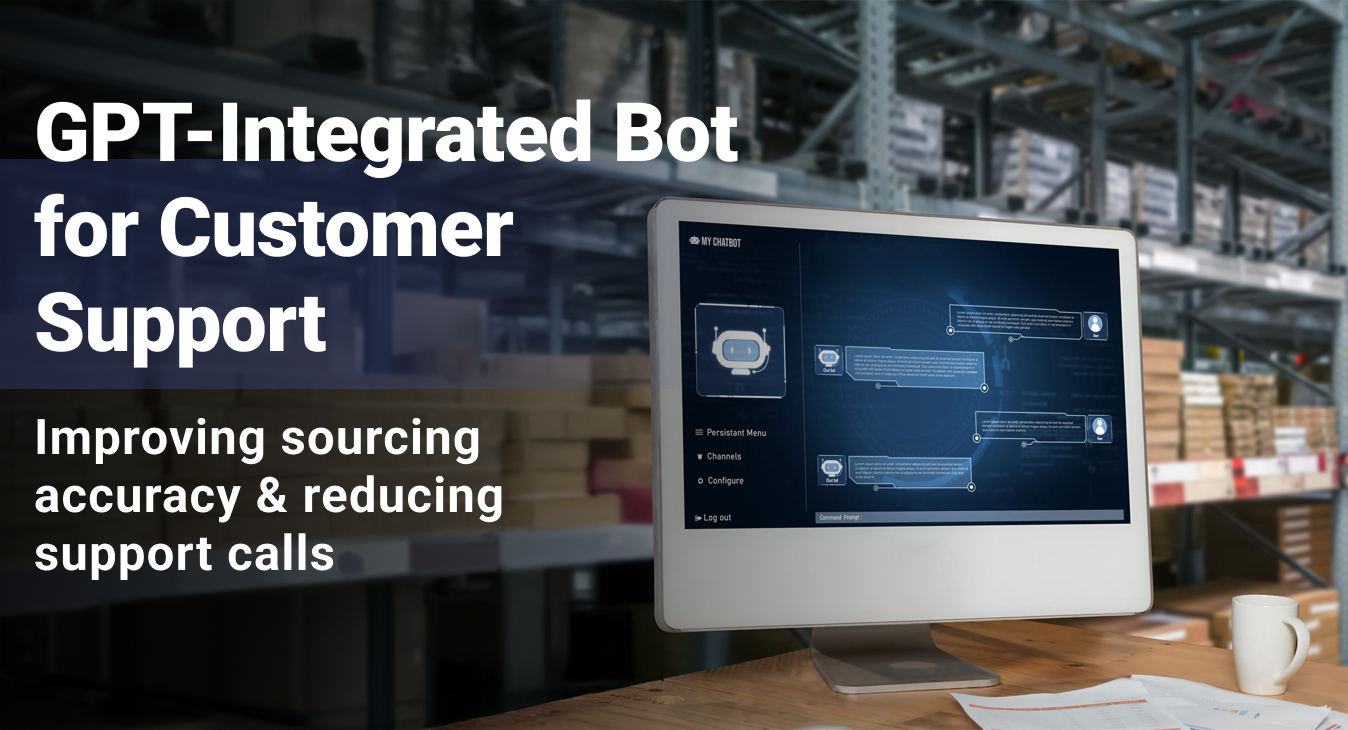
GPT-Integrated Services

See how our AI specialists designed and developed a custom GPT bot for an aviation parts supplier.

50%

Reduced Support Calls

40%

Faster Response Times

98%

Matching Accuracy
HealthCore

Our AI/ML experts improved response accuracy by training a GPT model according to specific client requirements.

80%

Improvement in Response Accuracy

45%

Reduced Consumer Bounce Rate

30%

Higher Conversions
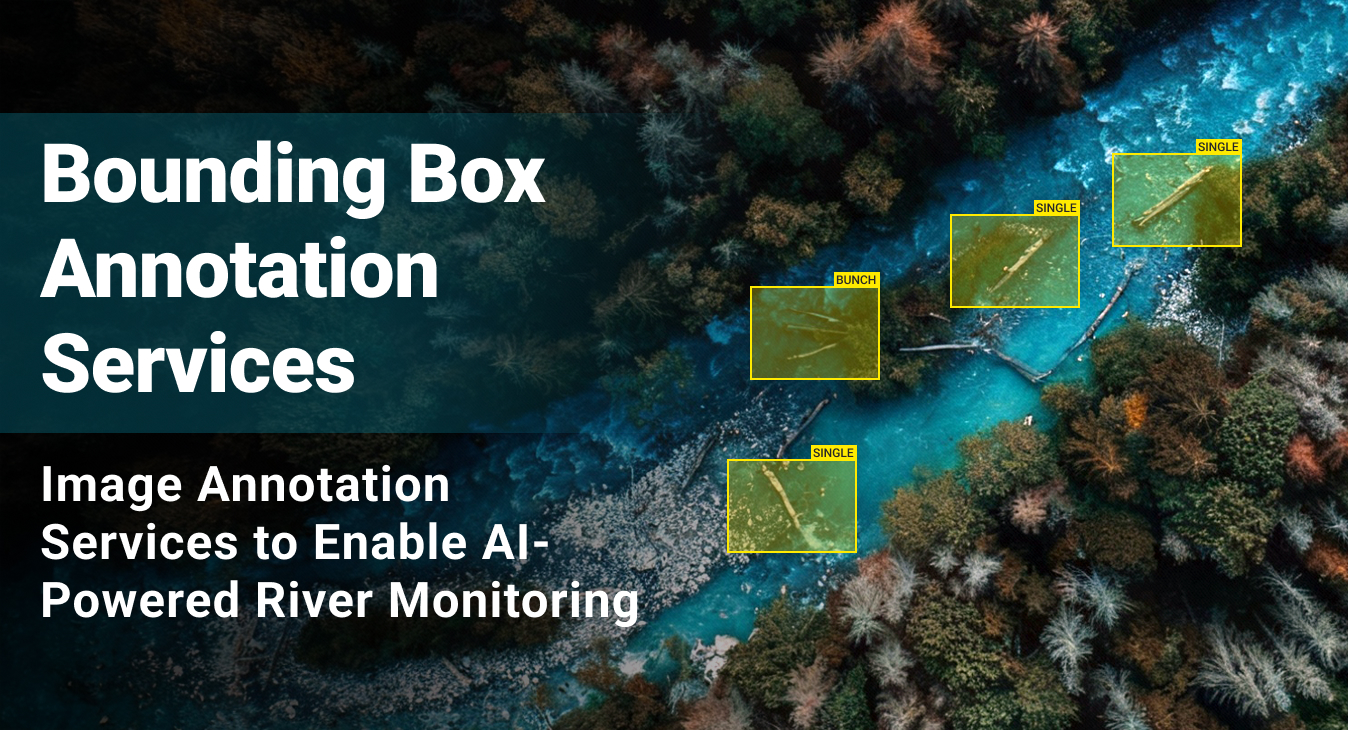
Bounding Box Annotation Services

Precise bounding box annotation for high-resolution aerial river images to train an AI-powered river flow obstruction detection system using the client’s proprietary data annotation tool.

1,500 to 2,000

Images Labeled per Week

98%

Labeling Accuracy Rate Maintained

<1%

Revision/Rework Rate
  • Service Image Annotation
  • Platform Client’s Proprietary Annotation Platform
  • Industry Environmental Monitoring / Forestry
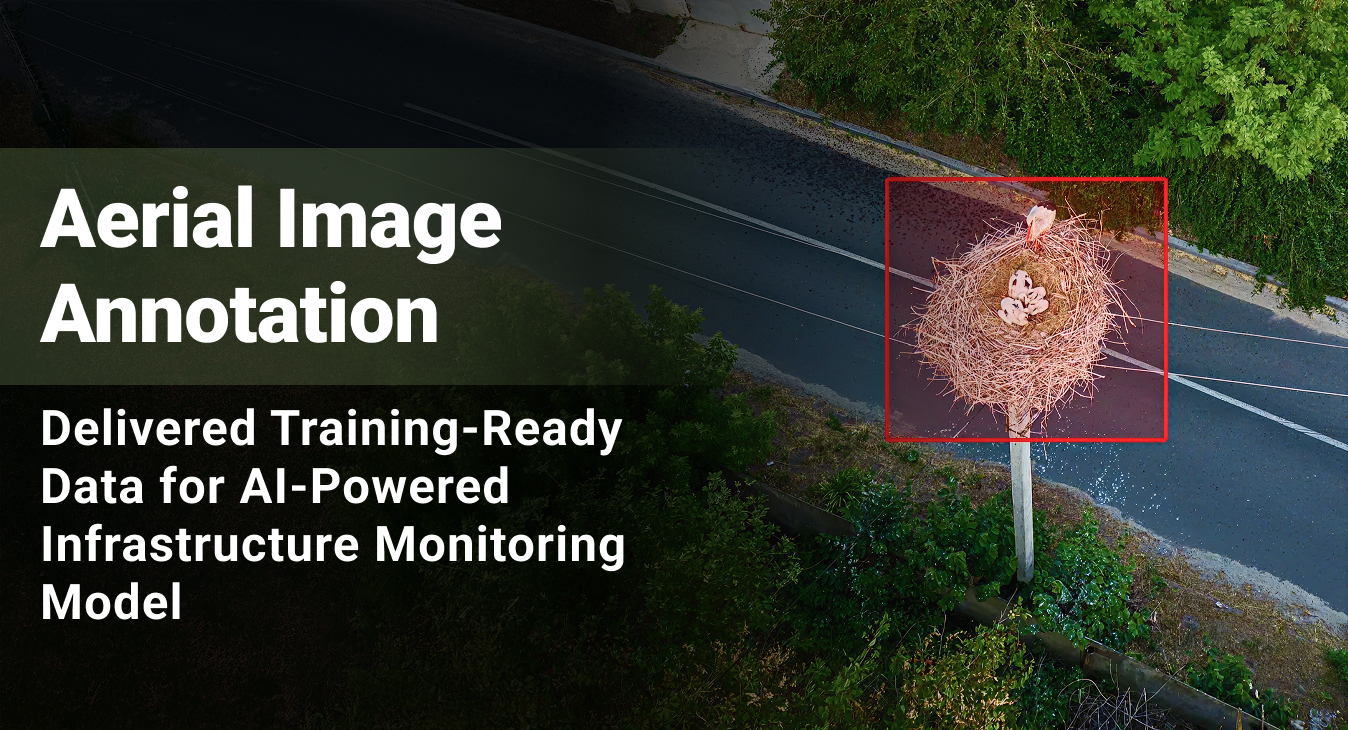
Aerial Image Annotation

Large-scale image annotation services for a drone-based infrastructure monitoring company developing an automated bird nest detection system on power grids.

15,000+

Images Annotated

95%+

Annotation Accuracy
aerial image annotation

Helping a government agency improve urban traffic flow by boosting the accuracy of their AI system through aerial image labeling

35%

Increase in Model Accuracy

20%

Improvement in Traffic Flow Monitoring

View All

LLM FINE-TUNING TECHNIQUES

A Systematic, Hybrid LLM Fine-Tuning Methodology

Curated for Your Specific Enterprise Use Cases

Generic LLMs are trained on billions of parameters across the entire internet. Therefore, a single approach to fine-tuning AI rarely creates the expected outcomes. We combine LLM fine-tuning techniques​, such as supervised learning for task-specific optimization, reinforcement learning from human feedback (RLHF) for quality and safety alignment, parameter-efficient fine-tuning for cost management, and domain-adaptive pre-training for deep industry knowledge. These hybrid LLM fine-tuning approaches enable our team to rewire the AI's neural pathways to align with your business objectives and act as a specialist.

Supervised Fine-Tuning (SFT)

Training LLMs on Specific Behaviors, Formats, or Domain Knowledge

Our team creates input-output or question-answer pairs with clear, correct responses to train LLMs on specific behaviors, formats, or domain knowledge. We can also systematically train your model using parameter-efficient methods (LoRA, QLoRA) or full fine-tuning based on your performance requirements and budget.

Best for:

  • Data extraction and classification tasks requiring high accuracy, like contract clause extraction, named entity recognition, and sentiment analysis
  • Domain-specific applications needing specialized terminology, like medical documentation, legal research, and financial analysis
  • Structured output generation, like report creation, form filling, and code generation, that follows specific patterns
  • Repetitive specialized tasks where consistency matters more than creativity, like document review, compliance checking, and quality control automation
RLHF (Reinforcement Learning from Human Feedback)

Aligning LLM models with Subjective Quality and Human Values

To help AI models identify and judge tone, appropriateness, safety, brand alignment, quality standards, etc., our experts rank multiple AI responses to the same prompt (marking which response is more helpful, safer, more appropriate.

Best for:

  • Customer-facing applications where quality is subjective, like support chatbots, advisory systems, and conversational agents
  • Safety-critical systems requiring alignment with human values, like content moderation, mental health support interfaces, and educational platforms
  • Brand-aligned content generation, like marketing copy, social media responses, and customer communications
  • Applications with competing objectives that require nuanced trade-offs, like being concise yet thorough, friendly yet professional, or helpful yet safe
DPO (Direct Preference Optimization)

For Simpler, Faster LLM Fine-Tuning without RLHF's Complexity

For low-stakes projects with tight timelines and budgets, we offer a simpler alternative to reinforcement learning from human feedback. Our team optimizes preferences directly by curating preference pairs (which response is better and why), so your model can be directly optimized without the need to train a reward model.

Best for:

  • Projects testing AI before full deployment, like pilot programs for new chatbots and proof-of-concept conversational tools
  • Time-sensitive launches with compressed development cycles, like seasonal campaign support tools and product launch assistants with fixed deadlines
  • Iterative development projects requiring frequent experimentation, like A/B testing brand voice implementations
  • Mid-complexity applications where RLHF would be overkill, like internal knowledge base assistants, departmental productivity tools, and specialized content generators
Constitutional AI

Fine-Tuning AI for Safety, Ethics, and Brand Values

Train an LLM to critique and revise its own outputs based on a written set of rules and values - a constitution. Our team creates a set of concrete, testable rules (based on enterprise values, safety requirements, behavioral standards, and edge cases) that your AI should follow, evaluates the responses, and monitors ongoing alignment with your constitution.

Best for:

  • Regulated Industries with compliance requirements, like healthcare, financial services, legal, and government
  • Brand-sensitive customer-facing applications, like customer service chatbots, marketing AI, and social media agents
  • Multi-stakeholder platforms with diverse safety needs, like social networks, marketplaces, and community forums
  • Enterprise AI with complex operational policies, like internal productivity tools, HR systems, and knowledge management systems

Training LLMs on Specific Behaviors, Formats, or Domain Knowledge

Our team creates input-output or question-answer pairs with clear, correct responses to train LLMs on specific behaviors, formats, or domain knowledge. We can also systematically train your model using parameter-efficient methods (LoRA, QLoRA) or full fine-tuning based on your performance requirements and budget.

Best for:

  • Data extraction and classification tasks requiring high accuracy, like contract clause extraction, named entity recognition, and sentiment analysis
  • Domain-specific applications needing specialized terminology, like medical documentation, legal research, and financial analysis
  • Structured output generation, like report creation, form filling, and code generation, that follows specific patterns
  • Repetitive specialized tasks where consistency matters more than creativity, like document review, compliance checking, and quality control automation

Aligning LLM models with Subjective Quality and Human Values

To help AI models identify and judge tone, appropriateness, safety, brand alignment, quality standards, etc., our experts rank multiple AI responses to the same prompt (marking which response is more helpful, safer, more appropriate.

Best for:

  • Customer-facing applications where quality is subjective, like support chatbots, advisory systems, and conversational agents
  • Safety-critical systems requiring alignment with human values, like content moderation, mental health support interfaces, and educational platforms
  • Brand-aligned content generation, like marketing copy, social media responses, and customer communications
  • Applications with competing objectives that require nuanced trade-offs, like being concise yet thorough, friendly yet professional, or helpful yet safe

For Simpler, Faster LLM Fine-Tuning without RLHF's Complexity

For low-stakes projects with tight timelines and budgets, we offer a simpler alternative to reinforcement learning from human feedback. Our team optimizes preferences directly by curating preference pairs (which response is better and why), so your model can be directly optimized without the need to train a reward model.

Best for:

  • Projects testing AI before full deployment, like pilot programs for new chatbots and proof-of-concept conversational tools
  • Time-sensitive launches with compressed development cycles, like seasonal campaign support tools and product launch assistants with fixed deadlines
  • Iterative development projects requiring frequent experimentation, like A/B testing brand voice implementations
  • Mid-complexity applications where RLHF would be overkill, like internal knowledge base assistants, departmental productivity tools, and specialized content generators

Fine-Tuning AI for Safety, Ethics, and Brand Values

Train an LLM to critique and revise its own outputs based on a written set of rules and values - a constitution. Our team creates a set of concrete, testable rules (based on enterprise values, safety requirements, behavioral standards, and edge cases) that your AI should follow, evaluates the responses, and monitors ongoing alignment with your constitution.

Best for:

  • Regulated Industries with compliance requirements, like healthcare, financial services, legal, and government
  • Brand-sensitive customer-facing applications, like customer service chatbots, marketing AI, and social media agents
  • Multi-stakeholder platforms with diverse safety needs, like social networks, marketplaces, and community forums
  • Enterprise AI with complex operational policies, like internal productivity tools, HR systems, and knowledge management systems

Security and Compliance

Your data security is our priority

ISO
Certified

HIPAA
compliance

GDPR

GDPR
adherence

Regular
security audits

Encrypted data
transmission

Secure
cloud storage

RELATED SERVICES

Beyond LLM Fine-Tuning Services: Custom AI Model Training Data Support

From Raw Web Data Collection to Training Dataset Delivery & Model Evaluation

AI Data Collection Services

Multi-modal data collection via targeted web scraping

Read More

Data Annotation Services

Labeling image, text, and video data

Read More

Domain-Specific AI Training Data Services

AI Training Data for diverse use cases

Read More

CONTACT US

Stop Settling for the Same AI Capabilities Everyone Else has Access to

Differentiate and Disrupt with Specialized LLMs

Whatever you need (from task-specific precision, domain expertise, brand alignment, or safety compliance), our LLM fine-tuning services can deliver.

Start with a free consultation where we’ll assess your use case and technical requirements. You can also share a sample dataset for LLM fine-tuning.

FAQ - Frequently Asked Questions

LLM Fine-Tuning Services

LLM fine-tuning is the process of taking a pre-trained foundation model (like GPT-4, Claude, or LLaMA) and training it further on specialized data to make it an expert in your specific domain or task. Instead of starting from scratch, we help you adapt an already-powerful AI to understand your industry terminology, follow your quality standards, and perform your exact workflows.

We curate a specialized dataset with examples of correct inputs and outputs, human-preference rankings, or constitutional principles, so the model can learn domain-specific terminology and formatting requirements and align with your quality standards. This targeted training is delivered through techniques such as supervised learning (teaching specific tasks), reinforcement learning from human feedback (aligning with preferences), or direct preference optimization (simpler, preference-based training), depending on your goals.

No one can guarantee zero hallucinations—it's an unsolved research problem. However, we can:

  • Significantly reduce hallucination rates through subject matter expert involvement in LLM fine-tuning
  • Implement confidence scoring and uncertainty communication
  • Use RAG to ground responses in real data
  • Train the model to acknowledge when it doesn't know
  • Red Team to find and fix problematic patterns

We offer data support for general AI model fine-tuning (i.e., for adapting any pre-trained model), which includes data annotation services (image, text, video labeling), AI data management & processing services (flipping or resizing images, creating “synthetic” data by rotating, zooming, or adjusting the contrast/brightness etc. in videos, removing noise like HTML tags or weird emojis from text), and evaluating model responses with the help of domain experts.

We can work with OpenAI (GPT), Google (Gemini), Anthropic (Claude), open-source models such as LLaMA (Meta), Mistral, and Falcon, and custom deployment environments.

We assess three key factors: knowledge requirements, task complexity, and output consistency needs. Complex enterprise systems often benefit from fine-tuned base behavior, RAG for knowledge access, and prompt engineering for request routing and output formatting.

  • Prompt engineering is most effective when the base model already has the necessary knowledge, and you simply need to structure queries effectively.
  • RAG (Retrieval-Augmented Generation) is useful when you need the model to access specific, up-to-date, or proprietary information that wasn't in its training data—such as internal documents, recent reports, or dynamic databases.
  • Fine-tuning is necessary when you need the model to fundamentally change its behavior, learn specialized terminology, adopt specific formatting patterns, or align with subjective quality standards that can't be achieved through prompts alone.

When the base model already understands your domain and task type, we recommend prompt engineering as a faster, more cost-effective alternative to fine-tuning. Our prompt engineering services focus on optimizing how you communicate with the model rather than retraining it. This includes designing structured prompts with clear instructions and examples, reformatting outputs to meet your exact specifications, implementing reasoning frameworks (such as chain-of-thought or step-by-step logic), and creating reusable prompt templates that better leverage the model's existing capabilities.

Our RAG services focus on connecting language models to your knowledge sources in real-time rather than embedding static information through training. This includes architecting retrieval systems that query your internal documents, databases, or knowledge bases; implementing semantic search to find the most relevant information for each query; optimizing chunking and indexing strategies for accurate retrieval; designing hybrid approaches that combine fine-tuned models with RAG for both behavioral consistency and current information access; and building evaluation frameworks to ensure retrieved context actually improves response quality and accuracy.