Text Annotation Services for NLP, AI/ML, & LLMs

Precise Training Datasets for Production-Grade NLP Systems and Generative AI Pipelines at Enterprise Scale

  • AI-Assisted Pre-Labeling via Tools like CVAT, V7, Labelbox, and Supervisely
  • Multi-Pass Human QA Conducted by Subject Matter Experts
  • Dedicated In-House Project Teams with Domain Expertise in AV, Agriculture, etc.
Get Your Text Annotation Proposal

Success Stories

...it's all about results

AUDIENCE RESPONSE PREDICTION

AUDIENCE RESPONSE PREDICTION

65% Improved AI Model Accuracy with Multilingual Content Metadata Tagging

Read More
TEXT CLASSIFICATION

TEXT CLASSIFICATION

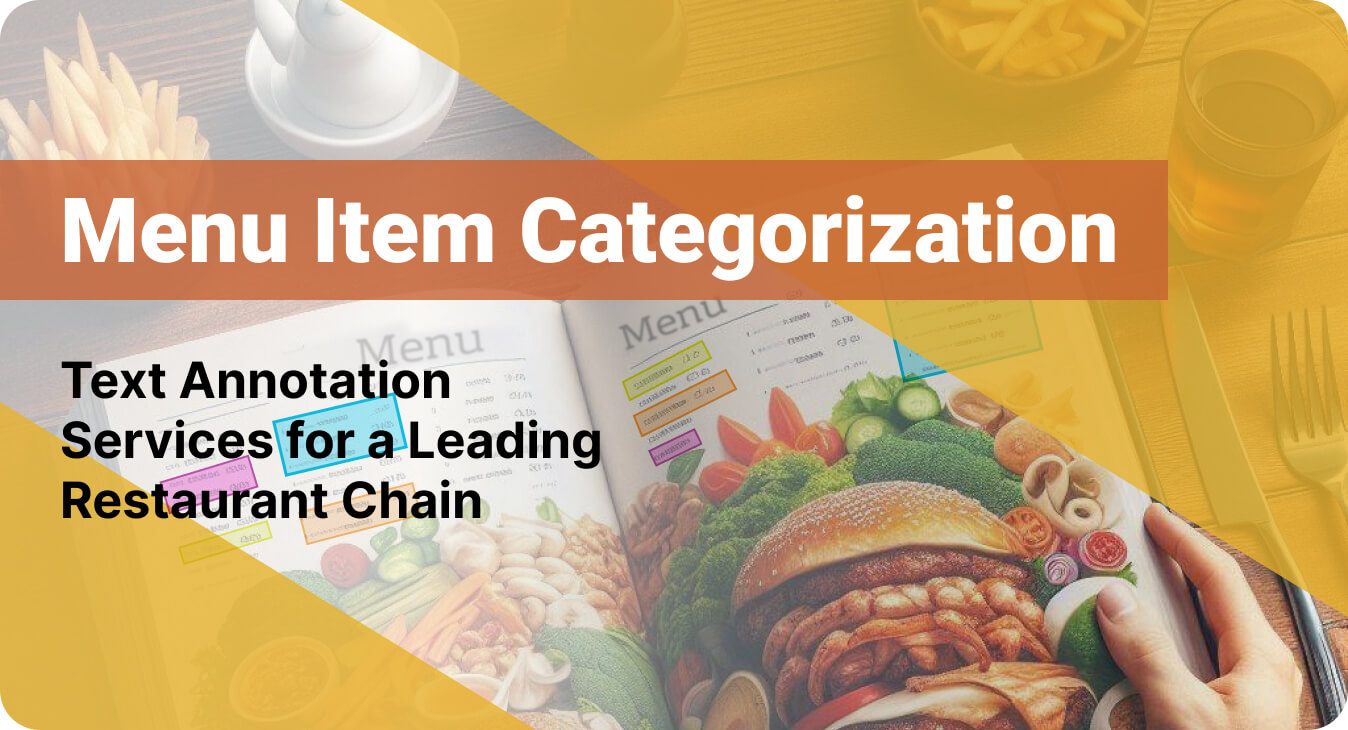
Annotated 50,000+ Menu Items for a National Restaurant Chain’s Menu Digitization Initiative.

Read More
Brand-Entity Attribution

Brand-Entity Attribution

Metadata Tagging for Retail Promotions with 98.5% Annotation Accuracy

Read More

TEXT ANNOTATION SERVICES

Is Your Text Annotation Pipeline Holding Your AI Models Back?

We Eliminate the Hidden Cost of Text Data Annotation with Ontology Design and IAA-Verified Delivery

The most common failure mode in labeling text data is not inaccuracy — it is semantic inconsistency. For instance, consider an annotator labeling legal documents but unable to distinguish an indemnification clause from a limitation of liability clause, or a medical annotator who confuses disease names with symptom descriptions. You get a dataset that is systematically wrong on complex text, essentially training a model to fail at exactly the cases that matter most.

SunTec India provides text annotation services with domain-specialist annotators to tackle this issue. We cater to a broad range of text labeling use cases while addressing the vulnerabilities of both purely automated and crowdsourced annotation pipelines. Combined with multi-tier quality validation and inter-annotator agreement (IAA) scoring, our text annotation company returns training-ready data that holds up under model evaluation.

Domain-Specialist Annotators

A text annotation team comprising professionals with industry backgrounds in healthcare, legal, finance, and technology

LLM and RLHF Annotation

Instruction tuning datasets, reward model preference pairs, SFT data, and constitutional AI alignment annotation

Multi-Tier Quality Validation

Internal review, inter-annotator agreement (IAA) scoring, senior auditor sign-off, and audit-ready quality reports

Multilingual Text Annotation

Native-speaker annotators across various languages with linguistic quality control, overcoming the flaws of purely machine-translated text

SERVICES

Text Annotation Services Built for Production NLP

We Cover Every Text Annotation Technique Your NLP and LLM Pipeline Requires

Annotation quality is the biggest bottleneck in achieving enterprise NLP models that generalize reliably across domains and produce calibrated outputs under distribution shift. Our text labeling services are designed to eliminate that hurdle, with domain-specialist annotators, ISO-certified workflows, and end-to-end support.

Named Entity Recognition (NER) Annotation
Named Entity Recognition

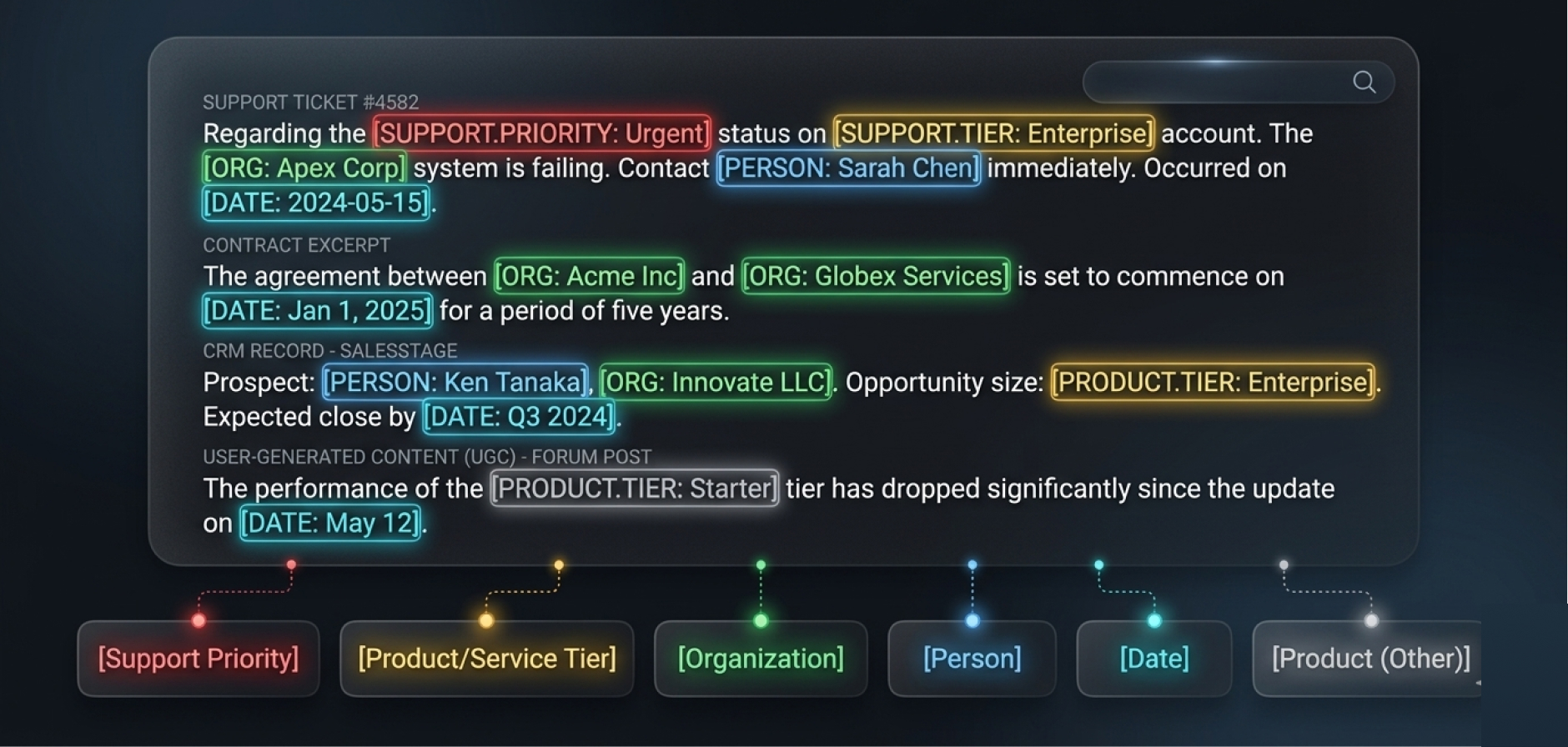
Standard NER annotation fails when entity types are ambiguous, nested, or domain-specific. We handle standard entity types and custom entity taxonomies specific to your model's requirements, with nested entity support and entity linking for knowledge graph construction.

  • Standard NER annotation: persons, organizations, locations, dates, products
  • Custom entity types labeling: medical conditions, drug names, legal clauses, financial instruments
  • Nested and overlapping entity annotation with disambiguation
  • Entity linking to external knowledge bases
Emotion & Sentiment Analysis Annotation
Sentiment Analysis Annotation

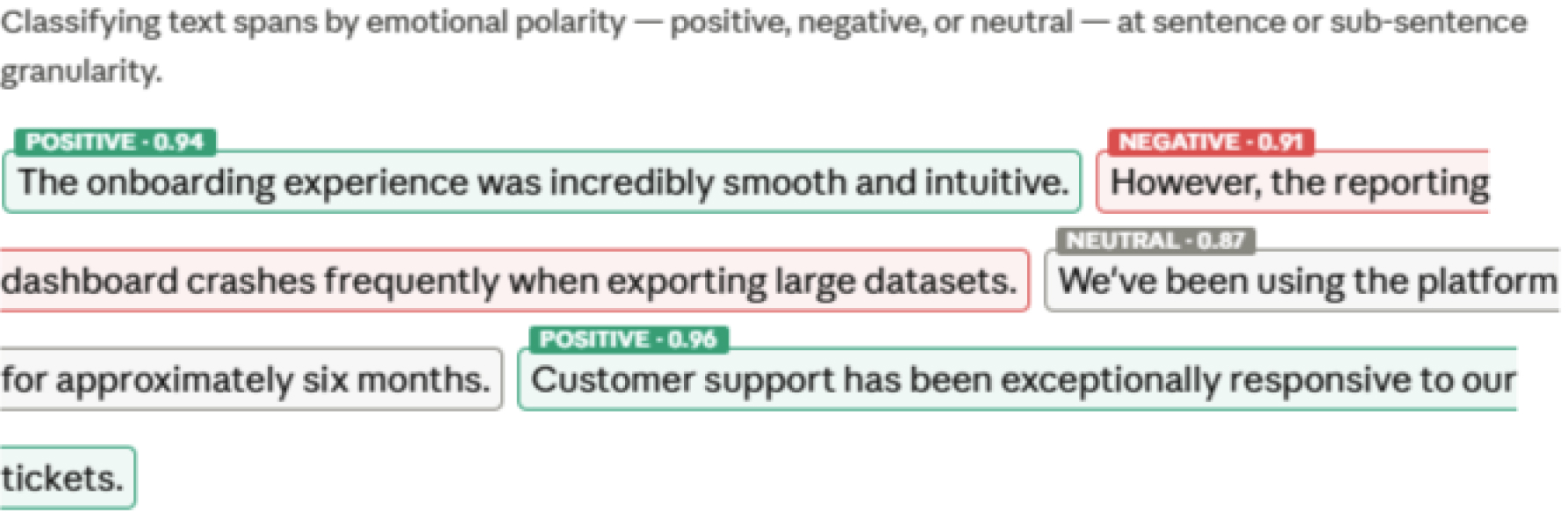
Binary positive/negative sentiment labels are insufficient for models that need to understand the emotional texture of customer feedback or support interactions. Our text annotation company delivers sentiment annotation for machine learning applications with aspect-level granularity.

  • Aspect-level sentiment annotation (positive, negative, neutral, mixed) for specific entities or topics within text
  • Emotion classification (anger, fear, joy, sadness) across expanded taxonomies
  • Opinion mining annotation (Opinion holder, opinion target, and stance annotation) for argument-level analysis
Intent Classification and Dialogue Annotation
Dialogue Annotation

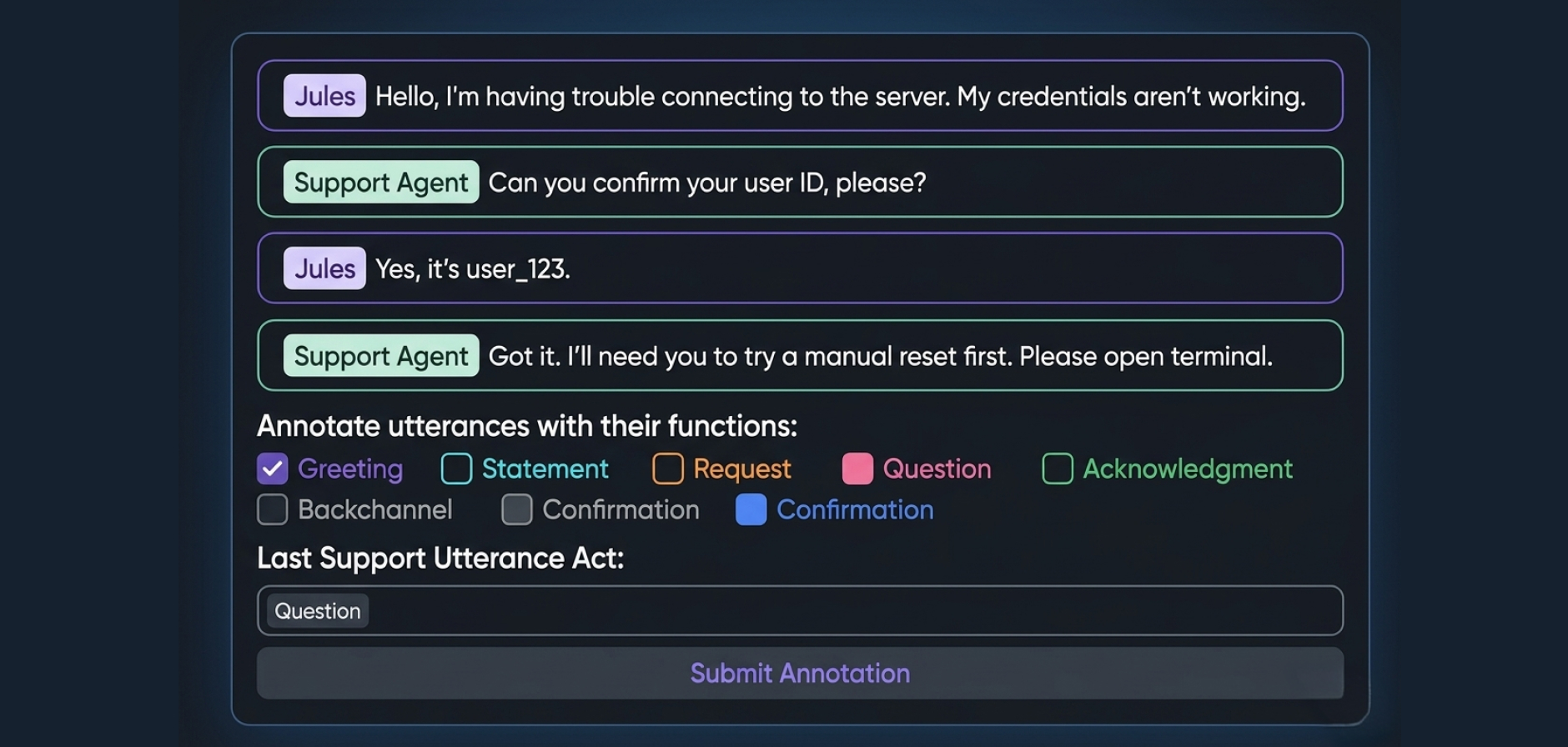
When intent labels are inconsistent or when dialogue datasets lack proper turn-level annotation, chatbots and conversation AI tools misfire on common inputs and cannot generalize across paraphrased variations. Our annotators are trained on your specific intent taxonomy and label intent/entity pairs to ensure consistency across high-volume datasets.

  • Intent classification for chatbot and virtual assistant training
  • Entity/slot annotation within conversational turns
  • Multi-turn dialogue annotation with context tracking
  • Dialogue act and speech act classification
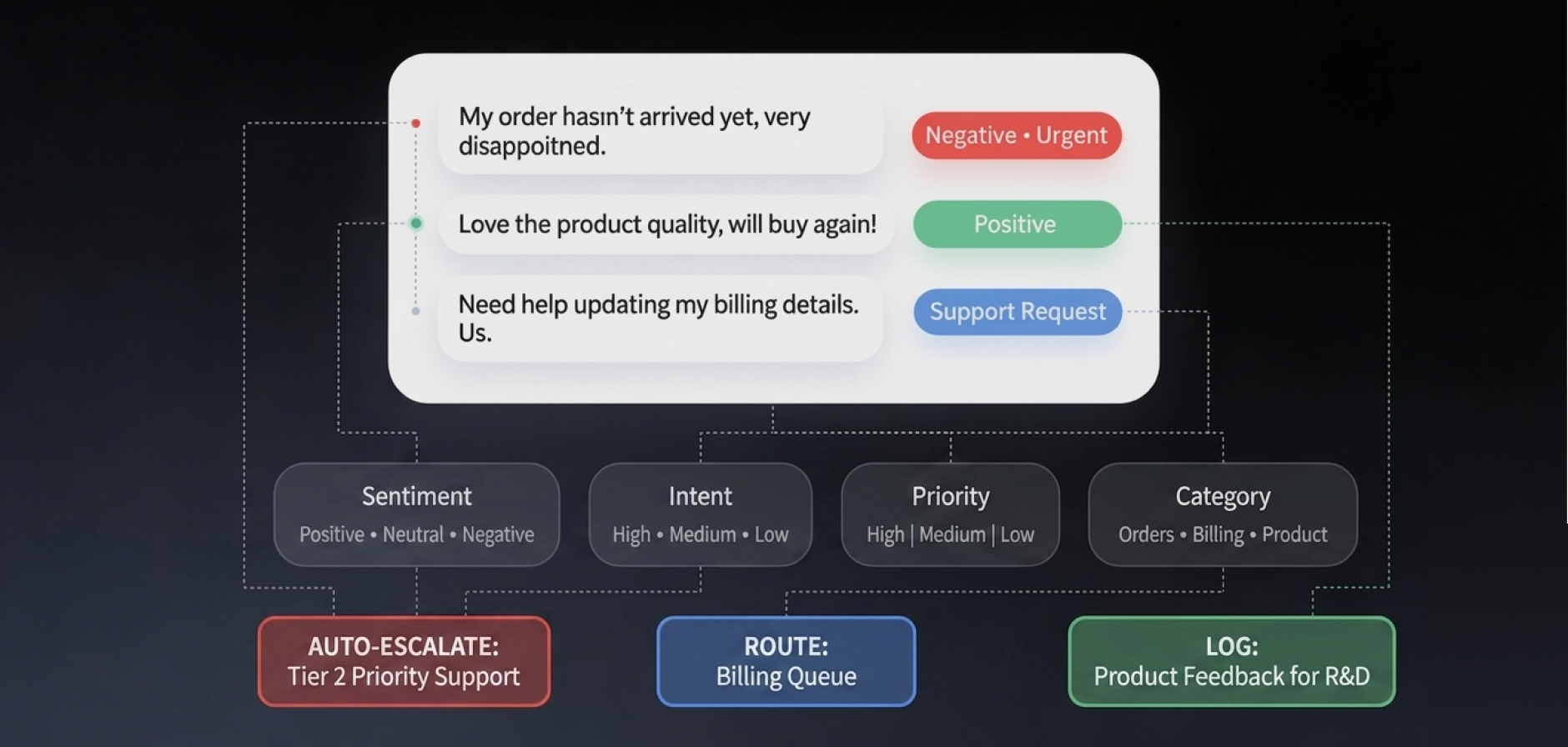
  • RLHF preference annotation for LLM fine-tuning
Text Classification and Topic Labeling
Text Classification

Our text data annotation service team is fully briefed on your label definitions and tested with a pilot on gold-standard samples. The labeled text datasets are monitored for IAA compliance throughout the process. This ensures that they understand the full label taxonomy and can apply it consistently across multi-class and multi-label text classification tasks.

  • Binary, multi-class, and multi-label classification at the document, paragraph, and sentence level
  • Hierarchical and flat taxonomy annotation
  • News, legal, medical, financial, and e-commerce document tagging
  • Topic modeling annotation and cluster labeling
  • Continuous IAA tracking and conflict resolution
Semantic and Relation Extraction Annotation
Semantic and Relation Extraction

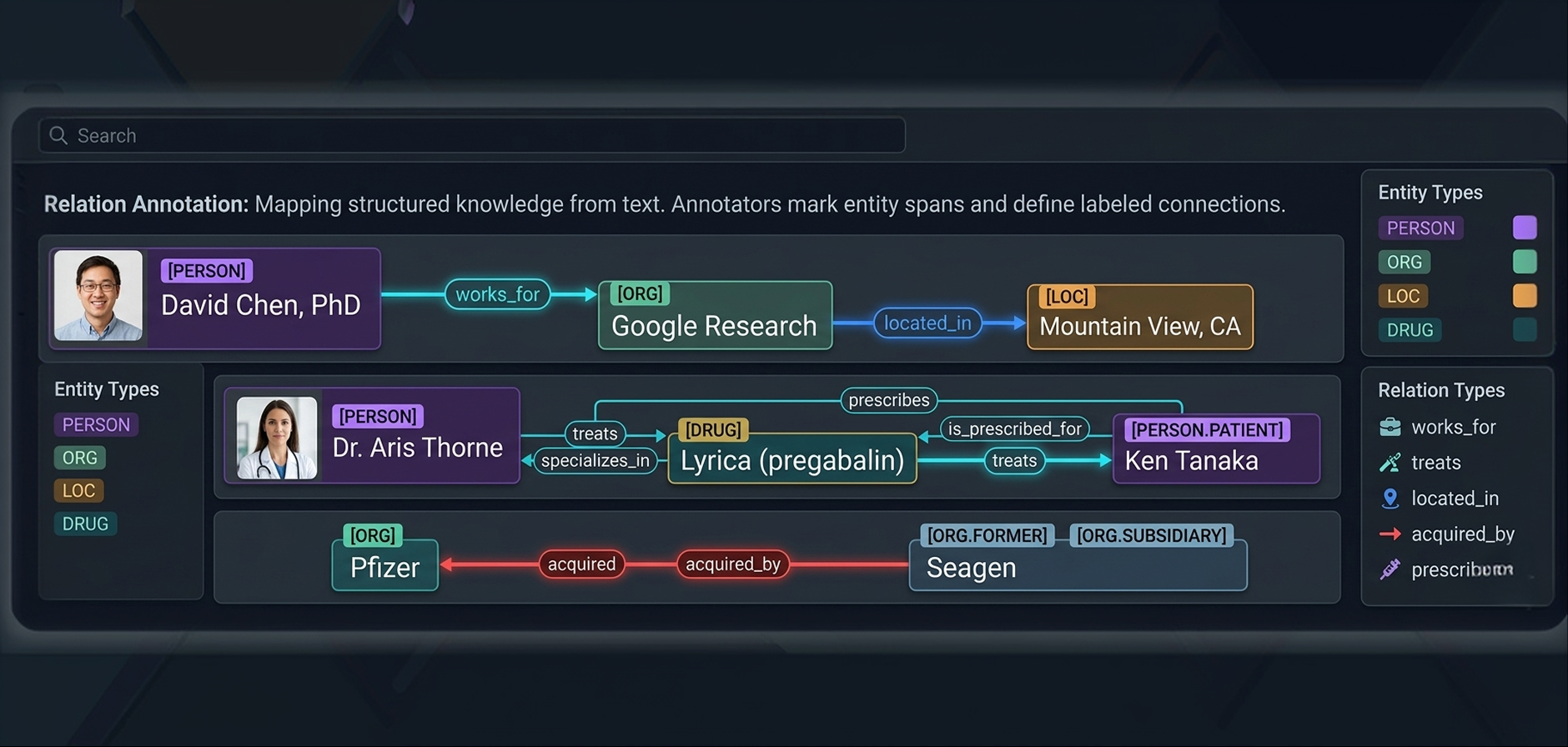
Relation extraction annotation (labeling explicit and implied semantic relationships between entities in complex text) is a very ambiguous task. We employ domain specialists for knowledge graph construction, semantic role labeling, event extraction, and causal relation tagging.

  • Semantic annotation: agents, patients, locations, instruments
  • Relation extraction: causal, temporal, part-of, and custom relation types
  • Event extraction and event argument annotation
  • Coreference resolution: pronoun and noun phrase co-reference chains
  • Knowledge graph construction annotation
LLM Training Data and RLHF Annotation

Our text annotation company operates in alignment with your model’s behavior objectives and quality goals. We train the team to recognize the subtle quality distinctions that determine whether RLHF training improves or degrades model performance, particularly for the use case you are building.

  • Instruction tuning dataset creation for LLM fine-tuning
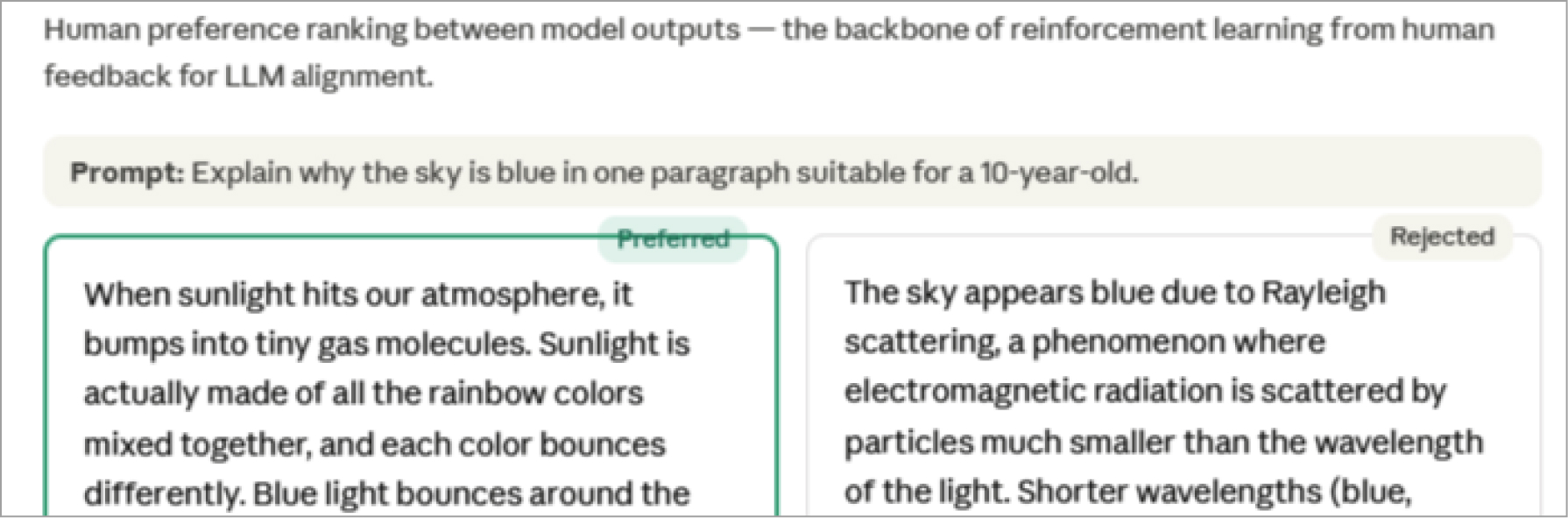
  • RLHF preference ranking pairs for reward model training
  • Supervised fine-tuning (SFT) dataset annotation
  • Constitutional AI and alignment annotation
  • LLM output evaluation: helpfulness, harmlessness, and honesty scoring
Linguistic Annotation

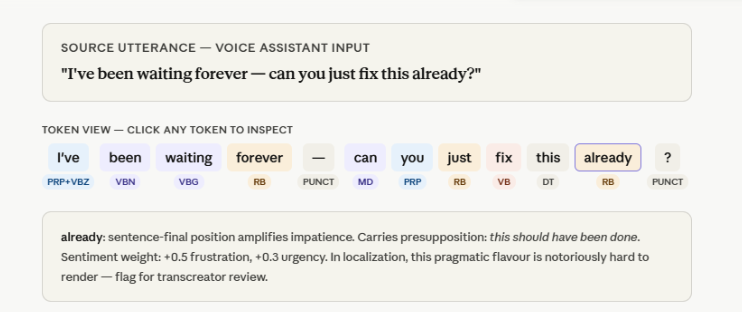
We go beyond simple translation when annotating data for specialized AI Models, such as voice assistants, conversational AI, localized chatbots, and such text-to-speech models. Our linguistic experts provide deep-dive analysis of grammar, dialect, and sentiment to ensure your AI communicates with natural, human-level fluency across.

  • Semantic & syntactic analysis to identify parts of speech, sentence structure, and how words relate to each other
  • Localization & transcreation so AI responses sound like native text with similar meaning as the original
  • Phonetic & morphological transcription using the International Phonetic Alphabet (IPA)
  • Sentiment & Intent Tuning: sarcasm, frustration, urgency, and the underlying goal of the speaker
  • Natural Language Generation (NLG) evaluation for fluency, coherence, and hallucination
OCR Post-Correction
OCR Post-Correction

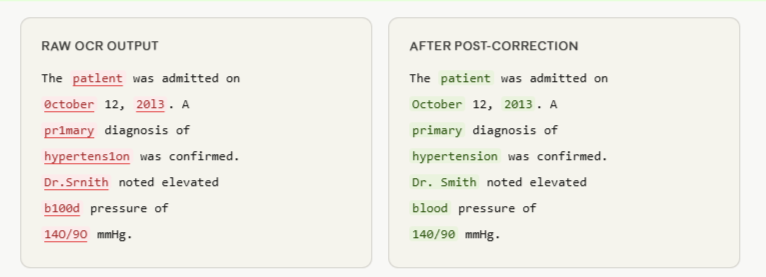
Optical character recognition output from scanned documents can contain character-level errors, introducing systematic noise into the training data that degrades model precision. We correct OCR output at the character, word, and sentence level, applying domain-specific vocabulary and context-aware correction for legal, medical, financial, and historical text.

  • Domain dictionaries created and maintained for medical terminology, legal vocabulary, and financial instruments
  • Form and table structure annotation from scanned documents and multi-page PDFs
  • Historical document transcription, normalization, and character-set correction
  • Integrated pipeline: OCR post-correction followed immediately by downstream NLP annotation

Named Entity Recognition (NER) Annotation

Standard NER annotation fails when entity types are ambiguous, nested, or domain-specific. We handle standard entity types and custom entity taxonomies specific to your model's requirements, with nested entity support and entity linking for knowledge graph construction.

  • Standard NER annotation: persons, organizations, locations, dates, products
  • Custom entity types labeling: medical conditions, drug names, legal clauses, financial instruments
  • Nested and overlapping entity annotation with disambiguation
  • Entity linking to external knowledge bases
Emotion & Sentiment Analysis Annotation

Binary positive/negative sentiment labels are insufficient for models that need to understand the emotional texture of customer feedback or support interactions. Our text annotation company delivers sentiment annotation for machine learning applications with aspect-level granularity.

  • Aspect-level sentiment annotation (positive, negative, neutral, mixed) for specific entities or topics within text
  • Emotion classification (anger, fear, joy, sadness) across expanded taxonomies
  • Opinion mining annotation (Opinion holder, opinion target, and stance annotation) for argument-level analysis
Intent Classification and Dialogue Annotation

When intent labels are inconsistent or when dialogue datasets lack proper turn-level annotation, chatbots and conversation AI tools misfire on common inputs and cannot generalize across paraphrased variations. Our annotators are trained on your specific intent taxonomy and label intent/entity pairs to ensure consistency across high-volume datasets.

  • Intent classification for chatbot and virtual assistant training
  • Entity/slot annotation within conversational turns
  • Multi-turn dialogue annotation with context tracking
  • Dialogue act and speech act classification
  • RLHF preference annotation for LLM fine-tuning
Text Classification

Our text data annotation service team is fully briefed on your label definitions and tested with a pilot on gold-standard samples. The labeled text datasets are monitored for IAA compliance throughout the process. This ensures that they understand the full label taxonomy and can apply it consistently across multi-class and multi-label text classification tasks.

  • Binary, multi-class, and multi-label classification at the document, paragraph, and sentence level
  • Hierarchical and flat taxonomy annotation
  • News, legal, medical, financial, and e-commerce document tagging
  • Topic modeling annotation and cluster labeling
  • Continuous IAA tracking and conflict resolution
Semantic and Relation Extraction

Relation extraction annotation (labeling explicit and implied semantic relationships between entities in complex text) is a very ambiguous task. We employ domain specialists for knowledge graph construction, semantic role labeling, event extraction, and causal relation tagging.

  • Semantic annotation: agents, patients, locations, instruments
  • Relation extraction: causal, temporal, part-of, and custom relation types
  • Event extraction and event argument annotation
  • Coreference resolution: pronoun and noun phrase co-reference chains
  • Knowledge graph construction annotation
LLM Training Data

Our text annotation company operates in alignment with your model’s behavior objectives and quality goals. We train the team to recognize the subtle quality distinctions that determine whether RLHF training improves or degrades model performance, particularly for the use case you are building.

  • Instruction tuning dataset creation for LLM fine-tuning
  • RLHF preference ranking pairs for reward model training
  • Supervised fine-tuning (SFT) dataset annotation
  • Constitutional AI and alignment annotation
  • LLM output evaluation: helpfulness, harmlessness, and honesty scoring
Linguistic Annotation

We go beyond simple translation when annotating data for specialized AI Models, such as voice assistants, conversational AI, localized chatbots, and such text-to-speech models. Our linguistic experts provide deep-dive analysis of grammar, dialect, and sentiment to ensure your AI communicates with natural, human-level fluency across.

  • Semantic & syntactic analysis to identify parts of speech, sentence structure, and how words relate to each other
  • Localization & transcreation so AI responses sound like native text with similar meaning as the original
  • Phonetic & morphological transcription using the International Phonetic Alphabet (IPA)
  • Sentiment & Intent Tuning: sarcasm, frustration, urgency, and the underlying goal of the speaker
  • Natural Language Generation (NLG) evaluation for fluency, coherence, and hallucination
OCR Post-Correction

Optical character recognition output from scanned documents can contain character-level errors, introducing systematic noise into the training data that degrades model precision. We correct OCR output at the character, word, and sentence level, applying domain-specific vocabulary and context-aware correction for legal, medical, financial, and historical text.

  • Domain dictionaries created and maintained for medical terminology, legal vocabulary, and financial instruments
  • Form and table structure annotation from scanned documents and multi-page PDFs
  • Historical document transcription, normalization, and character-set correction
  • Integrated pipeline: OCR post-correction followed immediately by downstream NLP annotation

PROCESS

Integrated Text Annotation Services: From Ontology Design to Validated Training Data Delivery

Here’s How Your Dataset Moves from Raw Text to Production-Ready Training Data

The most expensive mistake in a text annotation project is not a mislabeled entity. It is a miscalibrated annotator that produces 40,000 mislabeled entities before the error is discovered. The only reliable way to catch systematic annotation errors before they scale is to measure inter-annotator agreement before production begins, not after delivery. SunTec India's text annotation workflow is structured around this principle: calibration and IAA measurements occur before the first production batch is released, and are reported for every delivery batch throughout the project lifecycle. All annotations are delivered in OpenAI JSON and JSONL (chat and completion formats), Hugging Face RLHF format, ShareGPT, Alpaca, and custom schemas compatible with TRL, Axolotl, and PEFT/LoRA training pipelines

01

We define your entity schemas, label taxonomy, edge case rules, and IAA thresholds collaboratively with your NLP team. Every boundary case is documented with positive and negative examples before we begin annotating the text.

02

We use prominent text labeling tools (Label Studio, Prodigy, Doccano, Labelbox) to generate initial labels for high-frequency, low-ambiguity instances. Domain experts verify and correct the flagged instances and handle complex edge cases.

03

An independent QA layer measures the accuracy of annotations for each label class, annotator, and batch. Batches below the agreed threshold are routed back for re-annotation before delivery so that no batch is delivered with an unresolved labeling issue.

04

Annotated data is delivered in your specified format (JSON, TXT, CSV, XML, CoNLL, BRAT) to your cloud storage or annotation platform. Label lineage is tracked and versioned. Ontology is updated for subsequent batches, and recalibration is run if guidelines change.

CLIENT SUCCESS STORIES

It's all about results.

The Proof is in the Pipeline

Discover how we’ve helped businesses across 50+ nations bridge the gap between "lab-ready" and "market-ready" AI/ML applications by solving their most complex training data challenges.

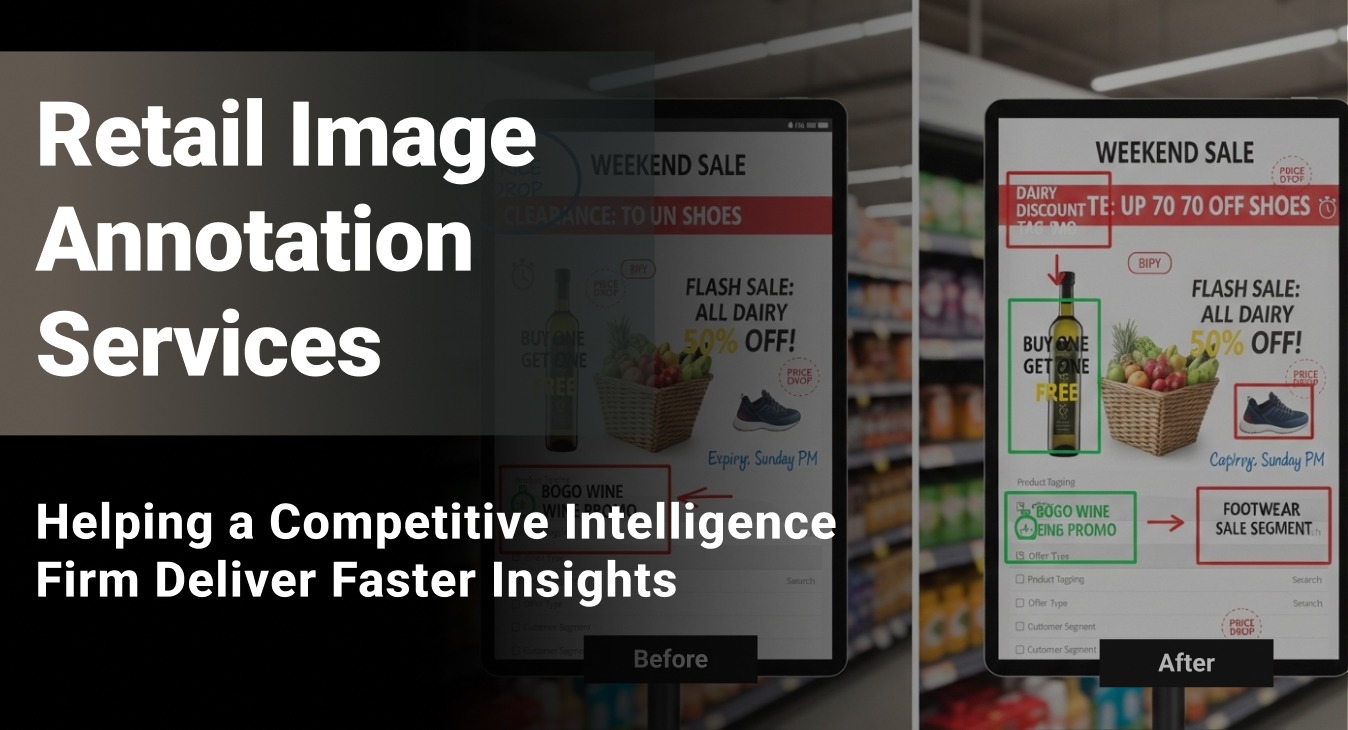
Retail Image Annotation

Bounding box annotation and metadata tagging across retail promotional images, powering competitive intelligence solutions for a US-based company.

250K+

Annotations Delivered Monthly

98.5%

Annotation Accuracy
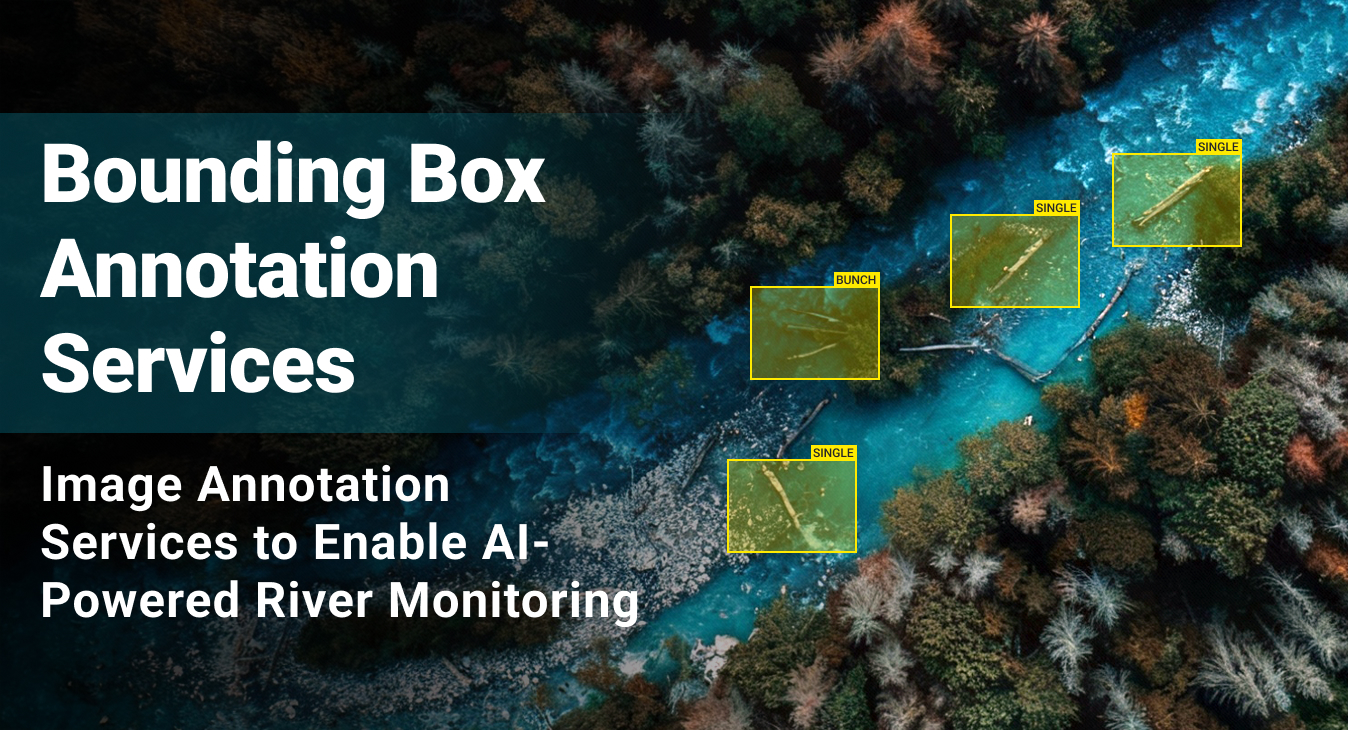
Bounding Box Annotation Services

Precise bounding box annotation for high-resolution aerial river images to train an AI-powered river flow obstruction detection system using the client’s proprietary data annotation tool.

1,500 to 2,000

Images Labeled per Week

98%

Labeling Accuracy Rate Maintained

<1%

Revision/Rework Rate
  • Service Image Annotation
  • Platform Client’s Proprietary Annotation Platform
  • Industry Environmental Monitoring / Forestry
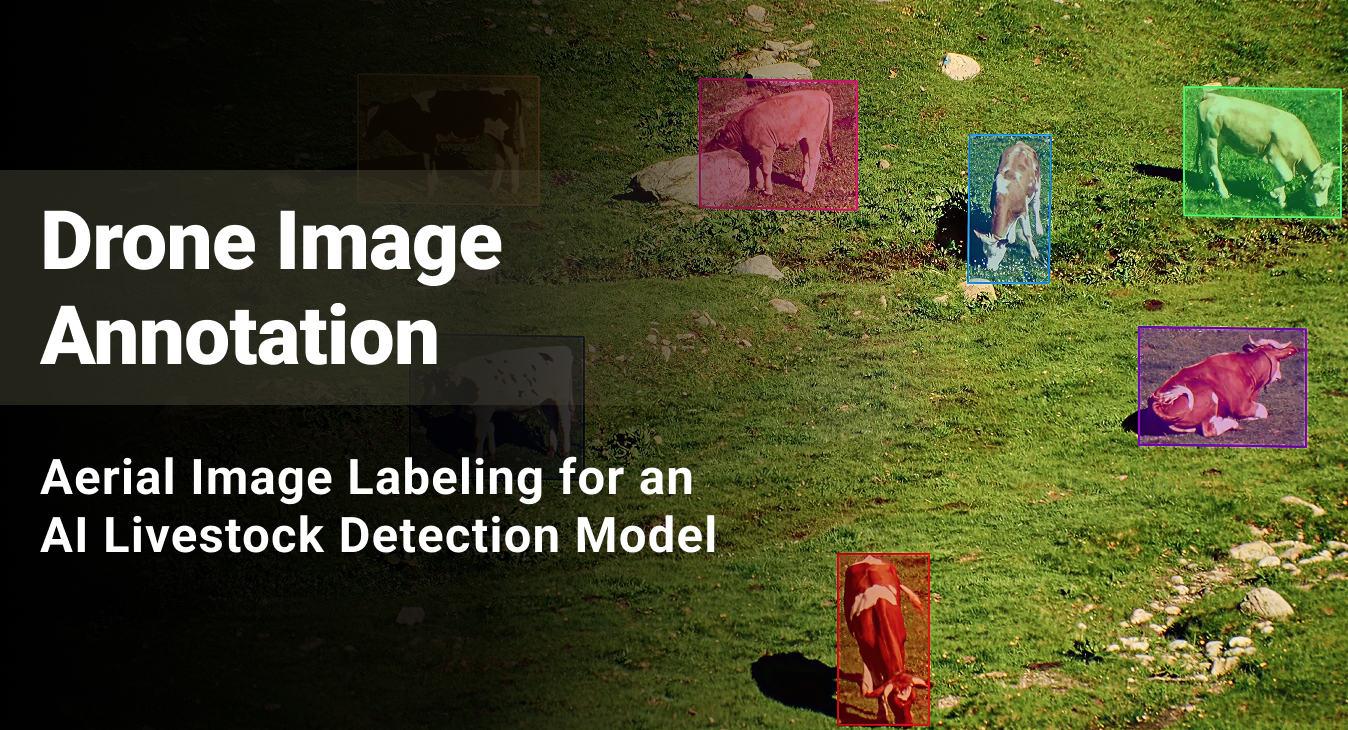
Drone Image Annotation

Labeled and validated over 10,000 high-resolution drone images monthly using QuPath to train an AI-powered livestock detection model, delivering 95%+ annotation accuracy.

10K+

Images Annotated Monthly

95%+

Labeling Accuracy
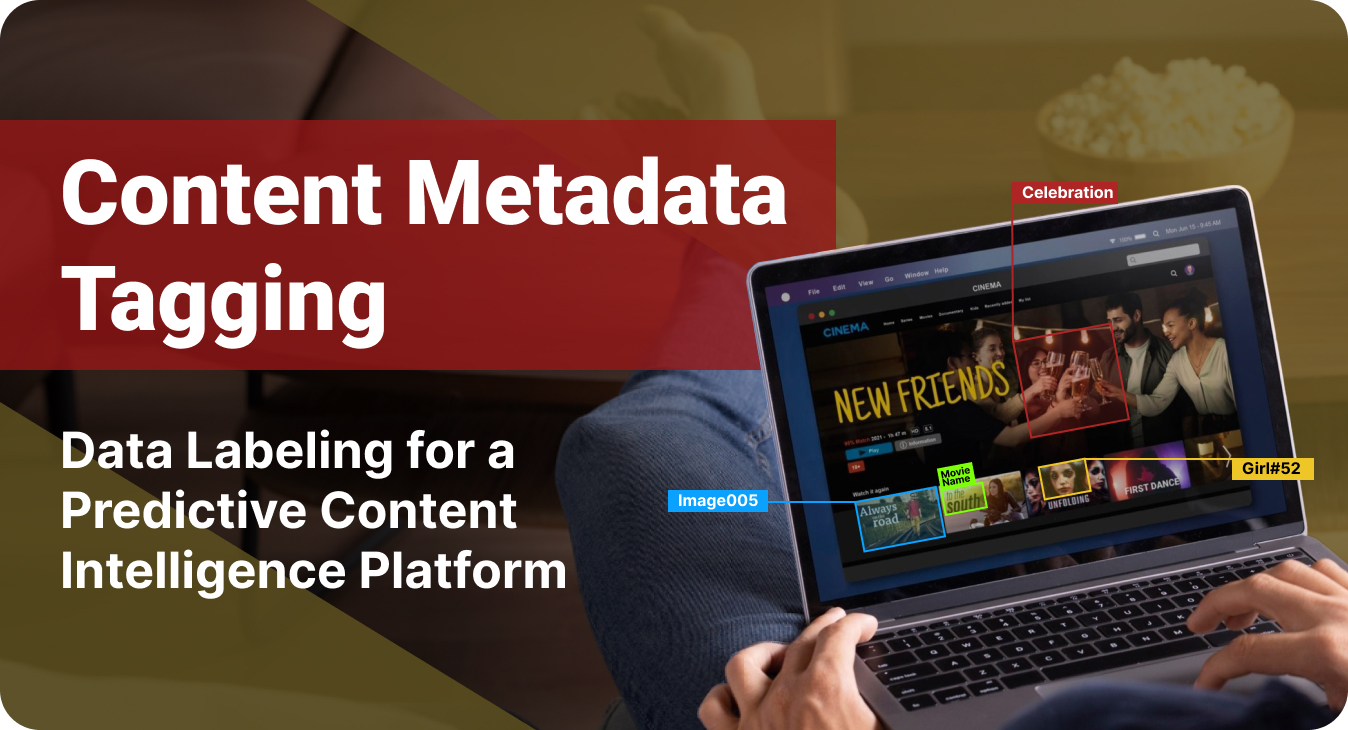
Data Labeling for a Predictive Content Intelligence Platform

Labeled over 2500 entertainment content (Movies, TV Series, Trailers) monthly to enable the accurate prediction of the target audience engagement rates and response.

65%

Improved AI Model Accuracy

60%

Less Content Categorization Errors

4-Month

Faster Model Development

View All

LLM FINE-TUNING AND RLHF DATA ANNOTATION SERVICES

Post-Training Data Pipelines for Language Model Development Teams

Purpose-Built Instruction-Following Datasets and Preference Annotation for LLM Fine-Tuning

LLM development teams require a different category of annotation capability than traditional NLP labeling. The difference is not in volume. It is in evaluator competence, rubric design, and the ability to assess model responses on criteria that require judgment, cultural context, and domain knowledge simultaneously. SunTec India's text annotation services for LLM fine-tuning cover the most required categories of post-training data preparation, each staffed by evaluators trained on your specific quality rubric before production begins:

Instruction-Following Dataset Construction

We create diverse, high-quality prompts and annotated responses aligned to your model's target behavior profile. Instruction sets span task type, domain, length, and complexity. Responses are written or curated by specialist evaluators trained on your quality rubric, covering the full distribution of prompts your model will encounter in production.

Preference Annotation for RLHF Reward Model Training

Our human evaluators rank response pairs on helpfulness, harmlessness, and honesty criteria, with domain-specific rubrics overlaid for your use case. Close comparisons are resolved by senior evaluators. Inter-rater agreement is measured using pairwise agreement metrics before each batch is delivered.

Red Teaming and Adversarial Prompt Annotation

We generate adversarial prompts designed to probe model failure modes: jailbreak attempts, prompt injection, harmful content elicitation, and policy violation testing across defined risk categories. Red teaming outputs are documented with failure type classification, severity tier, and model response annotation, enabling targeted fine-tuning against identified failure patterns.

Constitutional AI and DPO Feedback Annotation

We produce critique-revision pairs (an answer, feedback, and a better version), preference rankings of responses for Direct Preference Optimization (DPO), and Constitutional AI feedback data aligned with your model's policy rules — flagging responses that violate the policy and suggesting how they should be revised.

TECH STACK

The Annotation Platform Stack behind Production-Ready NLP Training Data

Platform-Agnostic Execution across the Annotation Infrastructure Your NLP Pipeline Already Uses

The annotation toolstack behind our text labeling services is configured for three outcomes: throughput predictability at scale, audit-ready IAA traceability on every label, and zero-friction integration with your NLP model training framework. We operate within your existing platform or configure the right tool for your annotation type.

Labelbox
SuperAnnotate AI
CVAT
Dataloop
Scale AI
V7
Keylabs
Label Studio
labelImg
Segments.ai
CloudCompare
Supervisely

WHO WE SERVE

Text Annotation Services Engineered for Your Industry's Specific Language Patterns

With Edge Cases Handled by Subject Matter Experts

We build annotation ontologies and labeling schemas from the ground up for each industry we serve, involving annotators who know the target domain's vocabulary, regulatory context, and language conventions.

  • Generating high-quality prompt-response pairs for Supervised Fine-Tuning (SFT)
  • RLHF & preference ranking of model outputs for helpfulness, honesty, and safety
  • Documentation, bug labeling, and multi-language explanation for AI-driven coding assistants

Autonomous Vehicles & ADAS

  • Intent and entity tagging for in-cabin natural language interfaces and voice-activated controls
  • Multi-turn conversation mapping for driver-assistance feedback loops 
  • Text classification and entity extraction for vehicle maintenance and repair documentation
    • Named Entity Recognition annotation services (NER) for crop types, chemical compounds, and pest classifications in research papers
    • Key-value pair extraction from unstructured field reports and soil analysis datasets
    • Categorization of environmental impact assessments and land-use permits

    Robotics

    • Intent classification for human-robot interaction and natural language processing annotation
    • Structuring and labeling technical safety manuals for industrial robotics
    • Textual annotation of failure modes and correction logs during robotic path auditing
    • Identifying agents, actions, and objects within complex instructional text for robotic tasks
    • Pulling size, color, material, and brand data from messy, unstructured manufacturer descriptions
    • Multi-label classification for vast catalogs based on semantic intent and product hierarchy
    • Intent/entity labeling for search queries to improve product discovery and recommendation
    • Aspect-level opinion mining (identifying specific likes/dislikes) from customer feedback

    Retail

    • Intent and slot filling for retail chatbots and virtual shopping assistants.
    • OCR post-correction and normalization of hand-written or scanned stock-taking logs
    • Multi-label tagging for support tickets, emails, and social media mentions
    • Classification of marketing copy for brand voice consistency and compliance

    Aviation

    • Transcribing pilot-ATC interactions and mapping them to specific flight events
    • Extracting part numbers, failure types, and repair actions from technical logs and safety reports
    • Multi-document summarization and categorization of flight safety and FOD detection reports
    • Syncing telemetry data with pilot voice logs for comprehensive behavioral analysis

    Energy, Oil & Gas Companies

    • Identifying causal and temporal relations in unstructured survey reports
    • Categorizing equipment health status and anomaly descriptions in inspection logs
    • Semantic segmentation of Environmental Impact Assessments for regulatory tracking
    • Building and labeling custom ontologies for energy-specific terminology
    • OCR post-correction and key-value extraction for facility inspection records
    • Labeling text-based reports of leaks, structural fatigue, and equipment failures
    • Extracting dates, locations, and compliance entities from permit & legal documents
    • Categorizing safety violations and maintenance alerts in facility monitoring logs

    Finance

    • Data labeling of invoices, tax forms, and KYC documents for automated processing
    • Aspect-based sentiment analysis of earnings transcripts, news, and market reports
    • Fraud Intent Detection through text classification of suspicious communication patterns and phishing attempts in customer logs
    • Legal & regulatory tagging through Named Entity Recognition
    • Tagging the underlying goal of speaker turns (request, complain, confirm) in support logs
    • Identifying frustration, sarcasm, and high-priority intent in customer-submitted text
    • Training data for chatbots to extract specific variables like order numbers and dates
    • Human-in-the-loop auditing of chatbot responses for fluency, coherence, and hallucination

    Geospatial

    • Extracting location names, POIs, and addresses from unstructured textual data
    • Categorizing geographic feature descriptions and infrastructure mapping reports
    • Real-time text classification of social media and emergency reports during natural disasters
    • Metadata Tagging in satellite imagery datasets with descriptive text for semantic search
    • Metadata tagging to train predictive content intelligence platforms.
    • Generative AI Red-Teaming to identify brand-safety violations and hallucinations in AI-generated text
    • Preference ranking and feedback annotation for fine-tuning narrative-generation models
    • Verifying AI-generated graphics and text against source-truth documents to spot hallucinations

    Security and Compliance

    Your data security is our priority

    ISO
    Certified

    HIPAA
    compliance

    GDPR

    GDPR
    adherence

    Regular
    security audits

    Encrypted data
    transmission

    Secure
    cloud storage

    HUMAN-IN-THE-LOOP TEXT ANNOTATION OUTSOURCING

    AI Text Annotation Services: Consistent Labels, Produced at Scale

    The NLP Data Annotation Infrastructure behind High-Performance Language Models

    AI pre-labeling (using tools like CVAT and Supervisely) without human specialist oversight produces fast annotations. It does not guarantee accuracy. When it comes to domain-specific terminology, nested entities, and ambiguous boundary cases, our AI/ML, LLM, and NLP training data services for enterprises provide a pipeline architecture that uses AI to handle throughput on resolved instances, with in-house domain specialists handling cases that require judgment and domain depth.

    AI-Assisted Pre-Labeling

    Models generate initial entity, sentiment, and classification labels, considerably reducing annotator time on high-frequency, low-ambiguity instances. Specialists focus on edge cases, domain-specific terminology, and ambiguous boundaries.

    Active Learning Loops

    The model identifies its highest-uncertainty examples and routes them to human specialists rather than sampling randomly. This ensures that your annotation budget is directed where it has the highest marginal impact on model performance.

    LLM-assisted pre-labeling for RLHF

    Automated text labeling tools generate multiple responses for each prompt. Human evaluators then rank those, rather than writing responses from scratch. This increases evaluation throughput while maintaining compliance with the evaluation rules.

    Automated IAA Monitoring

    Real-time tracking of inter-annotator agreement per annotator, per label class, per batch, achieved via customization on top of text data annotation tools. Once the drift is detected, it goes through data labeling before the error compounds across the entire training dataset.

    Ontology Drift Detection

    We detect ontology drift by monitoring label usage, validation accuracy, reviewer corrections, and inter-annotator agreement. When annotator behavior deviates from guideline definitions, the system alerts managers and triggers targeted recalibration before the batch proceeds to QA.

    RELATED SERVICES

    Beyond Text Annotation Services: Consistent Labels across Every Data Modality

    Eliminate Cross-Vendor Schema Drift with Unified Multi-Modal Data Annotation Services

    CONTACT US

    Text Annotation for Machine Learning Applications

    With Built-in Domain Expertise

    Eliminate the hidden cost of "dirty data" in AI model training. Get calibrated AI training datasets that stand up to rigorous model evaluation. Whether it’s complex NER or high-stakes RLHF, our domain-expert annotators handle the complexity so your engineers can focus on the code.

    Outsource text annotation services to SunTec India — leverage our human-in-the-loop expertise to build better LLM & NLP models at scale. Start with a free sample.

    FAQ - Frequently Asked Questions

    Text Annotation Services

    SunTec India provides text annotation services with 95-99% annotation accuracy, validated through inter-annotator agreement (IAA) measurements. Batches below the agreed IAA threshold are re-annotated before delivery. The threshold is collaboratively defined with your NLP team at the start of the project, so the quality standard is set against your model's actual requirements, not a generic benchmark.

    For each text labeling project, we design an annotation ontology that documents label boundaries, edge case rules, and worked examples with your NLP team. Before production begins, all annotators complete a calibration exercise on a shared golden dataset. Baseline IAA is measured; annotators below the threshold are re-trained before production. During production, a dedicated QA layer monitors per-annotator IAA in real time and flags drift before it compounds across batches.

    Our NLP annotation services are delivered across all prominent formats. For named entity recognition, we deliver CoNLL-2003, IOB2/BIO, BRAT standoff format, and spaCy DocBin. For text classification, we deliver CSV, JSONL, and Parquet in Hugging Face Datasets format. For text annotation for LLM fine-tuning and RLHF, we deliver OpenAI JSONL (chat and completion formats), Alpaca, ShareGPT, and Hugging Face RLHF format. For custom pipelines, we build to your specification. We also deliver directly to cloud storage (Amazon S3, Azure Blob, GCP Cloud Storage) or via API export to Labelbox, Label Studio, or the Hugging Face Hub.

    Our text annotation company uses multilingual annotators to preserve language-specific domain terminology. Any language-specific edge cases are documented in the annotation ontology before production begins.
    Guideline changes are managed without restarting the project. We update the annotation ontology to incorporate the new rules, run a re-calibration exercise with affected annotators on a new gold set batch, audit prior labeled data to assess the impact of the change, and determine whether existing labels need full re-annotation, selective correction, or can be preserved with a schema remapping. The ontology version changes are documented in the project's label lineage record so your engineering team can trace exactly what changed and when.

    SunTec India is an ISO 27001:2022 certified, HIPAA and GDPR-compliant text data labeling company. All annotators operate under NDAs within access-controlled environments. Raw data is never transmitted through unsecured channels, never retained beyond project completion, and never used for internal training or benchmarking.

    The cost of text annotation outsourcing depends on annotation type, dataset volume, IAA requirements, language coverage, and domain expertise required. For instance, NER annotation on general English text is priced differently from RLHF preference annotation on specialized legal documents. Contact us at info@suntecindia.com with your annotation type, approximate dataset volume, target languages, and delivery format requirements for a detailed project quote.

    Yes. We offer both a free sample batch for initial quality assessment and a paid pilot to validate the complete annotation workflow at your actual project parameters: tool compatibility, delivery format, IAA thresholds, turnaround cadence, and domain accuracy. Before you outsource text annotation for machine learning to our team, you can contact us at info@suntecindia.com to scope your pilot.

    Yes. We operate within client-managed instances of industry-standard text annotation tools, such as Prodigy, Doccano, Label Studio, Labelbox, BRAT, Ango Hub, Amazon SageMaker Ground Truth, and proprietary annotation environments. We preserve your existing label schema, entity taxonomy, and workflow configurations. If you have a partially annotated dataset within an existing platform, we continue from the previous annotation checkpoint. If you do not have a platform preference, we recommend and configure one based on your annotation type and pipeline requirements.

    Yes. We assess label consistency against your current annotation guidelines, identify systematic errors or schema drift from the prior annotation effort, and determine whether existing labels can be preserved, remapped, or require selective re-annotation. We then complete any unlabeled portions while maintaining consistency with the validated existing labels. The final dataset is unified under a single ontology version, with full lineage documentation for your engineering team.

    The timeline for text labeling services depends on annotation type, volume, IAA requirements, and language coverage. We provide a detailed project plan with milestone-level delivery dates before work begins, so you know exactly what to expect and when. If you are working against a tight deadline, we can handle expedited timelines by scaling our team size and optimizing workflows to meet your launch window.

    We use a multi-tier feedback loop to manage ambiguity. When an annotator encounters an edge case:

    • The data point is flagged and moved to a dedicated "Review" queue.
    • Our Project Managers or Subject Matter Experts (SMEs) review the case against your core requirements.
    • We document the resolution in the annotation guidelines.
    • The updated rule is shared with the entire team to ensure consistent labeling across the rest of the dataset.

    Yes. We maintain a "bench" of qualified annotators who can be onboarded quickly. If your volume spikes, we can:

    • Scale the workforce within 3-4 working days.
    • Implement a phased delivery approach to ensure your high-priority data is processed first.
    • Adjust shift structures to provide 24/7 coverage if necessary.

    All annotated datasets, raw data, and project-specific annotation guidelines developed during the engagement are the client’s exclusive intellectual property. Upon project completion:

    • We transfer all final assets to your secure environment.
    • We do not retain copies of your data.
    • We do not reuse your data or guidelines to serve other clients or train our own internal models.