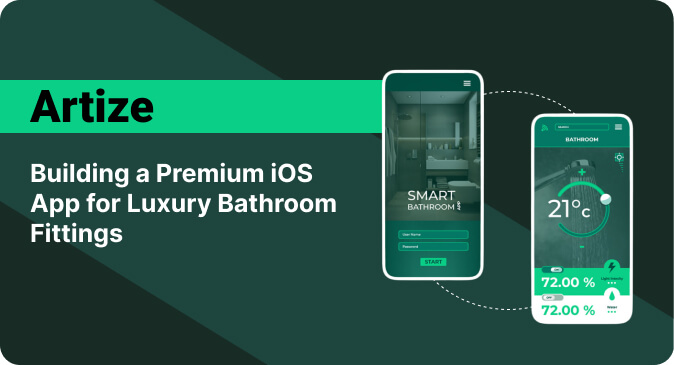
Developed a feature-rich app catering to a luxury audience, allowing users to browse and select premium bathroom collections.

A self-assessment for leaders deciding whether it is time to invest in UX research and strategy services.
Support tickets keep flagging the same usability complaints, and we still do not know why.
We built the last feature everyone said they wanted. Nobody uses it.
Adoption drops between onboarding and the user's first real task.
Our leadership team disagrees on what our users actually need.
We have analytics dashboards, but they tell us what happened, not why.
Our journey map is three years old and was never validated with real users.
Every redesign produces new problems we did not anticipate.
Our personas describe demographics, not behavior.
If you checked three or more boxes, you do not need another sprint. Precisely, you need a better UX research strategy.
Let us help you identify what users expect, where friction is building, and which experience gaps deserve attention first. Connect with our UX research and strategy team to turn observations into a clear, evidence-backed direction.
Our user experience research agency supports product teams working across complex digital environments. Whether the challenge involves multi-role workflows, regulated journeys, AI trust, or conversion-critical paths, our research and strategy work is shaped around the actual product experience, not generic assumptions.
Complex platforms with multiple user roles, permissions, and recurring workflows, where research must account for how each role interacts with the same system differently.
Power-user environments where speed, efficiency, error prevention, and workflow continuity matter more than surface-level aesthetics.
Experiences where research must test explainability, trust calibration, override behavior, and user understanding of model-led outputs.
Products shaped by multi-stakeholder journeys, role-specific usage patterns, and decision-making environments that differ significantly from consumer applications.
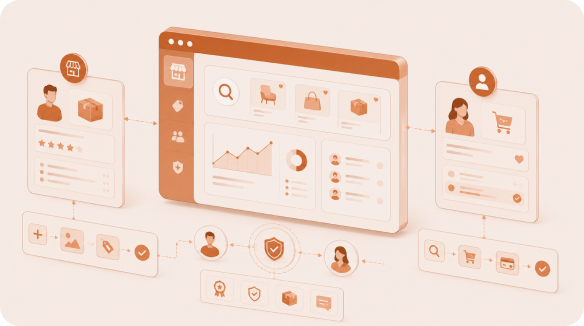
Multi-sided platforms where UX strategy must account for different participant groups, such as buyers, sellers, vendors, or operators, within the same ecosystem.
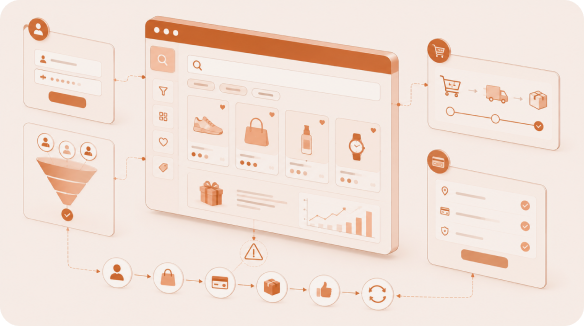
Conversion-focused journeys where even small usability gaps across navigation, product discovery, checkout, or account flows affect revenue outcomes.
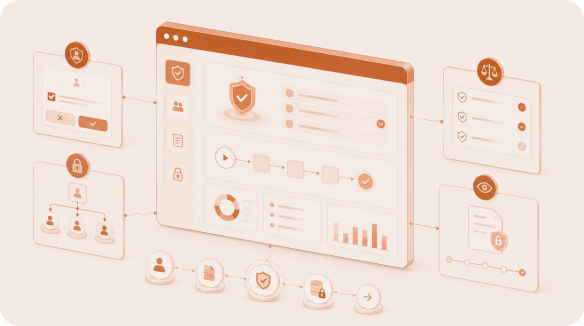
Healthcare, fintech, and similar environments where compliance, accessibility, clarity, and error reduction are central to the user experience.
Inclusive service environments that must work for users with varied digital literacy levels, accessibility needs, and service expectations.
Technologies Used by our UX Strategy and Research team:
Our UX research and strategy services cover the full arc from research planning to strategic roadmap. The research side includes stakeholder interviews, user interviews, usability testing, heuristic reviews, surveys, card sorting, tree testing, persona development, and journey mapping. The strategy side translates those findings into a prioritized UX roadmap with effort, impact, and measurable outcomes for each initiative.
UX research is the evidence-gathering phase, including interviews, usability tests, analytics review, and heuristic audits. It answers what users are doing, thinking, and struggling with. UX strategy is the decision-making phase built on that evidence. It answers what you should build, change, or deprioritize next quarter. Research without a strategy becomes a report nobody acts on. Strategy without research is opinion in a nicer deck. Our UX strategy services cover both because separating them is where most agency engagements lose their ROI.
The clearest signals are symptoms, not calendar timing. Support tickets repeat the same usability complaints. Adoption drops after onboarding. Your last feature release did not move the metrics it was supposed to. Stakeholders disagree on who the user is. Your team is about to start a major redesign or platform migration. Any one of these signals is enough. Waiting until three or four show up simultaneously usually means the redesign cost has already multiplied.
UX research and strategy services help define what should be improved, prioritized, or restructured before design execution begins. They provide the evidence behind user needs, usability gaps, journey friction, and information architecture decisions. Once those findings are validated, they can inform UI/UX product design for wireframing, interface design, prototyping, and experience refinement. This helps ensure design decisions are grounded in research, not assumptions.
Our UX research company offers three engagement models:
Yes. Most of our engagements embed alongside your product, design, engineering, and research teams, not replace them. We can also train your in-house team to run research independently through a research operations engagement.