Laravel Development in 2025: Secure, Scalable, and AI-Ready
Table of Contents
- Why Laravel Still Holds its Ground?
- What Makes Laravel Deliver?
- Social Proofs - Top Apps Built on Laravel
- Modern Web Experiences: Laravel as the Backbone of Contemporary Web Apps
- Client Success Snapshot
- Building a P2P Crowdfunding Platform with a Laravel Back-End
- Best Laravel Combinations – Hybrid Power Stacks
- The Strategic Advantage of Working with Laravel Developers
- Conclusion: Why Laravel Works
Web development has come a long way, from single, static web pages (SPAs) to dynamic data-driven solutions that drive an entire digital strategy. Modern websites are more than storefronts; they meet customers where they’re at, provide instant access across all touchpoints, and offer personalized experiences to all, simultaneously.
As a result, these websites require advanced customization, sophisticated integrations, and enterprise-grade reliability. Laravel—a mature, modern PHP framework—has long been the framework of choice for meeting such demands. Trusted by businesses from agile startups to Fortune 500 enterprises, Laravel currently powers more than 710,565 live websites worldwide, cementing its position as a proven, high-performance solution for custom web development.
In this blog, we’ll examine why Laravel remains a strategic choice for modern web applications.
Why Laravel Still Holds its Ground?
Laravel continues to be a leading choice because it offers the following:
- Enhanced Developer Productivity: Laravel’s expressive syntax can reduce development time compared to raw PHP and several other frameworks like Symfony, Node.js, etc., resulting in increased productivity.
- Enterprise Security: Includes protection against OWASP (Open Worldwide Application Security Project) top 10 vulnerabilities, cross-site request forgery (CSRF) attacks, SQL injections, and several others.
- Flexible Integration Capabilities: Laravel excels at integrating with a wide range of systems—intelligent APIs, IoT devices, cloud services, CRM/ERP platforms, payment gateways, etc., through custom middleware and API orchestration.
- Compliance Readiness: Laravel’s secure foundation and built-in safeguards can be customized to meet compliance requirements like GDPR, HIPAA, or SOC 2.
- Architectural Flexibility: Its modular structure supports everything, from quick MVPs to enterprise-scale deployments, with the freedom to evolve as business needs change
- Future-Ready Foundation: Laravel’s periodic updates also demonstrate its modularity and scalability.
What Makes Laravel Deliver?
Beyond its core strengths, Laravel web app development offers a robust suite of tools and features that make those advantages possible in real-world projects. From performance optimization to deployment automation, these components form the backbone of web app development with Laravel.
Laravel Octane: For High-Throughput Performance
Adds support for Swoole and RoadRunner, keeping the application in memory between requests. This eliminates cold starts, reduces overhead, and enables high concurrency—ideal for real-time APIs, large-scale SaaS, and event-driven workloads.
Livewire + Volt: For Reactive Interfaces Without JavaScript
Enables dynamic UI updates in Blade templates without writing JavaScript. Volt streamlines syntax, allowing teams to build interactive components quickly in PHP; perfect for back-end-driven projects needing modern UI responsiveness.
Forge & Vapor: For Production-Ready Deployment
Forge automates server provisioning, SSL, and CI/CD setup. Vapor deploys Laravel to AWS Lambda with built-in scaling, queue handling, and DB integration—supporting both cloud-native and serverless architectures.
Pest PHP: For Concise, Maintainable Testing
Delivers clean syntax for unit, feature, and browser tests on top of PHPUnit, making TDD (Test-Driven Development (TDD) adoption easier and reducing test maintenance overhead.
Sanctum: For Lightweight API Authentication
Provides secure token-based auth for SPAs, mobile apps, and APIs without OAuth complexity, using either personal tokens or session-based authentication.
Eloquent ORM: For Native JSON Column Queries
Makes it easier to store and search flexible data (like user preferences or product details) directly in the database, avoiding the need for additional NoSQL systems and reducing development complexity.
Pulse: For Real-Time Performance Insights
Offers built-in monitoring for requests, queues, and DB queries, enabling quick diagnosis of bottlenecks without third-party APM (Application Performance Monitoring) tools.
Social Proofs – Top Apps Built on Laravel
Laravel isn’t just popular among developers; it powers leading apps and platforms trusted by millions of users worldwide.
| Application | Industry | Utility |
|---|---|---|
| Laravel Spark | SaaS Toolkits | A Laravel-powered boilerplate built by Laravel’s own creator for SaaS application scaffolding. |
| Invoice Ninja | Fintech / SaaS | Provides online invoicing and billing features; built entirely on Laravel with robust multi-tenant support. |
| Fathom Analytics | Privacy Analytics | A privacy-focused, GDPR-compliant analytics platform using Laravel for its back-end and routing logic. |
| Alison | EdTech / LMS | One of the world’s largest free learning platforms; uses Laravel to manage courses, user roles, and assessments. |
| OctoberCMS | CMS / Content | A Laravel-based content management system used for dynamic site creation with a modular plugin ecosystem. |
| CheckPeople | Background Checks | Uses Laravel to handle large-scale data queries and generate user reports quickly and securely. |
| MyRank | Education / Rankings | An Indian test preparation and ranking platform, using Laravel for speed, routing, and ORM. |
| Barchart | Financial Services | Provides financial data and analytics, using Laravel for API services and back-end infrastructure. |
Modern Web Experiences: Laravel as the Backbone of Contemporary Web Apps
Laravel has long established itself as a reliable framework for building robust web solutions. Over the years, it has grown into a versatile platform that not only excels at delivering these applications but also supports contemporary advancements such as AI/ML, intelligent APIs, and context-aware databases.
1. AI-Powered Applications
Laravel is widely used as a back-end for AI-driven apps, enabling businesses to integrate intelligent features without significant restructuring. Its clean architecture, built-in queue management, and API capabilities make it easier to integrate ML services and process large volumes of data securely, even on the edge.
Consequently, many organizations use Laravel for predictive analytics (to forecast customer behavior, sales trends, or system performance), eCommerce recommendation & search engines, and for creating real-time dashboards for insights.
2. Voice & Chatbot Integration
Laravel chatbot integration becomes streamlined through its extensive middleware support, making it easier to build and scale voice-enabled applications. Companies can deliver conversational AI experiences, from customer support bots to voice assistants, by integrating platforms like Dialogflow or OpenAI’s chatbot API.
3. Progressive Web Apps (PWAs)
When paired with other frameworks and libraries like Inertia.js, Vue.js, or React, Laravel enables the development of fast, app-like PWAs that run seamlessly across devices. Businesses benefit from reduced development overhead while providing offline capabilities and responsive performance.
4. Blockchain & Web3 Readiness
Laravel also simplifies blockchain and Web3 integration. This integration is enabled by its modular design, allowing seamless connectivity with blockchain APIs, crypto wallets, and smart contracts. This makes it a reliable choice for enterprises developing decentralized apps (dApps) or secure digital payment solutions while upholding enterprise-grade security standards.
Some related use cases:
- Secure crypto transactions via PHP blockchain libraries (e.g., php-ethereum)
- NFT marketplace back-ends with smart contract event listeners
- Decentralized identity verification for Web3 applications
Client Success Snapshot
Building a P2P Crowdfunding Platform with a Laravel Back-End
SOP (Scope of the Project): One of our clients needed a peer-to-peer crowdfunding platform that could manage complex financial transactions while ensuring transparency and compliance with strict financial regulations.
Our Approach: We recommended a modern, high-performing stack: Laravel, React, and Flutter, to develop a secure and seamless investment experience.
The Solution:
- Back-end with Laravel + MySQL for high-performance data handling and scalable architecture
- Laravel ORM (Eloquent) + Middleware to enable real-time transaction processing
- 2FA with Laravel Passport + OAuth2 for secure API authentication and data protection
👉 The result was a compliant, intuitive platform that connected businesses seeking capital with individual investors pursuing high-value opportunities.
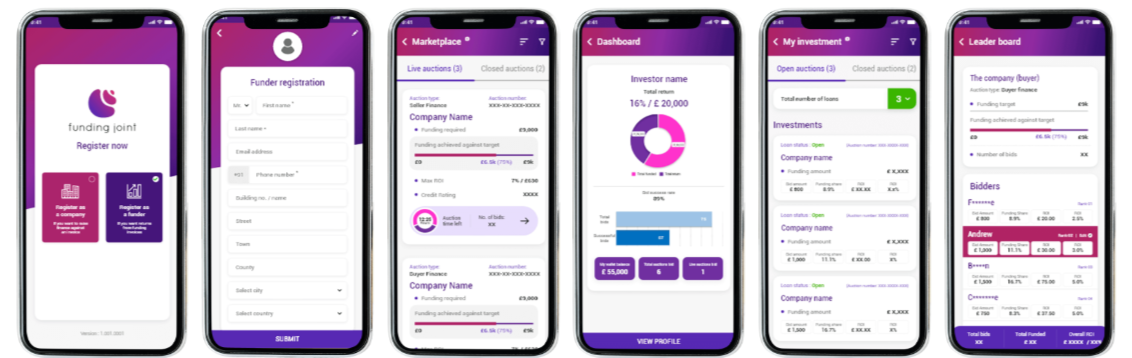
Check out the full story here – A P2P Crowdfunding Platform
Best Laravel Combinations – Hybrid Power Stacks
While Laravel is powerful on its own, its true potential emerges when paired with complementary technologies. These combinations extend Laravel’s capabilities, helping businesses build holistic, full-featured web applications that balance speed, scalability, and user experience.
| Use Case | Laravel + | Why It Works |
|---|---|---|
| Real-Time Apps | Laravel + Livewire / Soketi | Enables real-time dashboards and chat features without relying on Node.js, using Laravel Echo and WebSockets. |
| Microservices | Laravel + Lumen | Lumen provides a lightweight alternative to full Laravel, ideal for fast API services that can still share Eloquent models. |
| Headless CMS / SPA | Laravel + Inertia.js + Vue/React | Bridges Laravel’s back-end with modern JavaScript frontends, eliminating the need for a separate API layer. |
| AI / ML Integration | Laravel + PHP-ML or PyTorch (via API) | Enables intelligent features such as recommendations, personalization, or chatbots, using ML models accessible via Laravel. |
| eCommerce | Laravel + Shopify API | Supports custom storefront logic while integrating with Shopify’s ecosystem for products, inventory, and payments. |
| Serverless Deploy | Laravel + Vapor (AWS) | Facilitates auto-scaling, stateless deployment, and zero server management using AWS Lambda and Laravel’s native tooling. |
With so many possible Laravel combinations to implement and use cases to cater to, identifying the stack that best fits your business goals requires deep technical insight and web development experience. This is where experienced Laravel developers add value. They help you design, build, and maintain solutions that are not just functional but strategically aligned with your growth plans.
The Strategic Advantage of Working with Laravel Developers
1. Future-Proof Expertise
When you hire Laravel developers, they don’t just write code; they bring a deep understanding of how to design architectures that scale, adapt, and stay compliant as business needs evolve. From structuring databases for long-term growth to integrating AI responsibly, their foresight ensures your applications won’t require costly rebuilds when technologies or regulations shift.
2. Cost Efficiency Without Compromise
While the web development framework provides tools, expert developers who know how to apply them effectively are needed. Skilled Laravel teams shorten delivery cycles by avoiding rework, writing maintainable code, and anticipating pitfalls early. This expertise translates into faster launches, lower maintenance overhead, and reduced risk of security or performance issues down the road.
3. Long-Term Development Partnership
Seasoned Laravel developers align technical solutions with your business goals. They guide you through trade-offs, ensure compliance, and select the right integrations, whether that involves AI, IoT, or blockchain. Instead of stitching together tools blindly, they deliver cohesive solutions that are stable, scalable, and tailored to your organization.
This unified approach means fewer dependencies, fewer failures, and more focus on your business logic.
Conclusion: Why Laravel Works
As we have seen, Laravel development delivers three concrete advantages for modern web development:
- Productivity – Clean syntax and built-in tools accelerate development
- Maintainability – Organized code structure reduces long-term costs
- Adaptability – Supports modern needs (intelligent APIs, real-time features, context-aware databases)
- Interoperability – With AI/ML services, cloud platforms, and edge processing systems
Laravel’s ecosystem solves common infrastructure challenges and reduces reliance on fragmented third-party tools. Its active community drives continuous innovation and provides reliable support. Organizations use Laravel to integrate AI features, scale in real time, and deliver user experiences that keep customers engaged—making it a strong choice to start with. If you’re planning to get started, reach out to our Laravel experts for a tailored Laravel development roadmap and strategy.

The SunTec India Blog
Brought to you by the Marketing & Communications Team at SunTec India. We love sharing interesting stories and informed opinions about data, eCommerce, digital marketing and analytics, app development and other technological advancements.