
About twenty years ago, AI was confined to Hollywood blockbusters and research laboratories. But today, it sits in every boardroom discussion, democratizing capabilities once reserved for Fortune 500 companies. So, how did we transition from theoretical possibilities to having AI analyze medical scans, fly planes, process insurance claims, optimize supply chains, and perform many more tasks?
The answer lies not in a single breakthrough, but in AI’s remarkable ability to solve operational challenges at scale, regardless of the industry. From healthcare to finance, manufacturing to retail, AI’s role in business operations has significantly evolved.
In this write-up, we’ll explore how different industries are leveraging AI to transform their operations, examining real-world use cases that demonstrate tangible business value.
Table of Contents
- AI’s Current State: Innovations and Opportunities
- Key AI Applications Across Various Industries
- Common Concerns Around AI Adoption and How Ethical AI Can Address Them
- Ethical AI’s Role in ESG Compliance
AI’s Current State: Innovations and Opportunities
As of 2025, AI has transitioned from being an experimental technology to a fundamental element of the modern tech industry, resulting in a market anticipated to reach US$244bn by the end of 2025. It has positively impacted all industries, from healthcare and finance to eLearning and logistics.[1]
Recent AI Technologies and Innovations
The following AI trends and technologies are set to shape business strategies and digital transformation for at least the next decade.
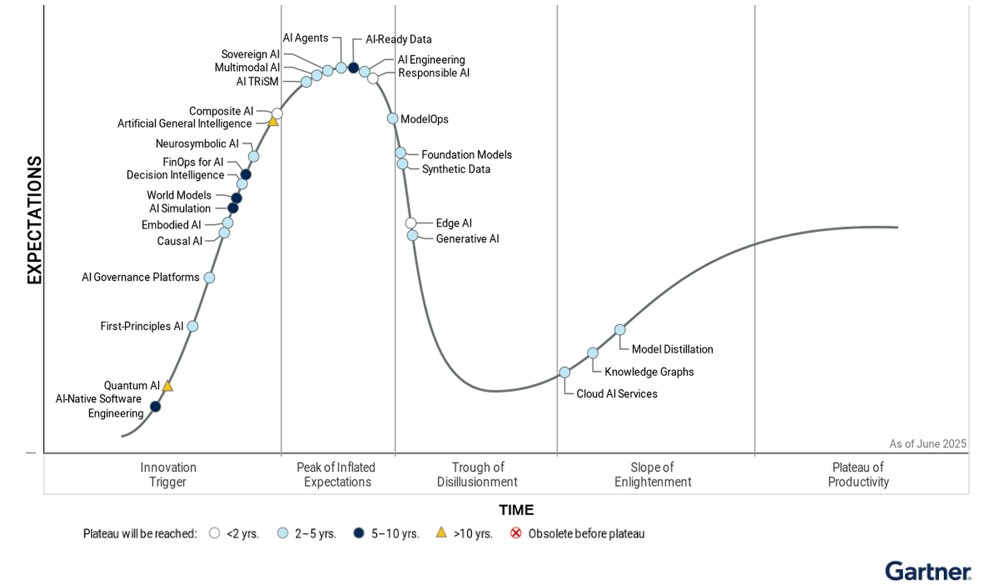
- Advancements in the Large Language Models (LLMs) Space: Models like Google’s Gemini 2.5 and Anthropic’s Claude 3.7 have introduced improvements in reasoning capabilities, allowing for more context-aware and accurate outputs.
- Cloud AI Services: To avoid the hassle of managing an AI-ready infrastructure, organizations have opted for on-demand, internet-based cloud services to access specialized AI tools and infrastructure.
- The Rise of AI Agents: AI Agents are becoming more prevalent in business operations. These agents can automate routine tasks, learn from experiences, and make decisions with minimal human intervention. Oracle’s Miracle Agent and Salesforce’s Einstein are prime examples of such agents.
- ModelOps: DevOps, extended to full-spectrum AI development and deployment workflows, has resulted in a new stream of operations referred to as ModelOps. Organizations are investing in ModelOps to manage AI, foundational, and decision models within production environments.
- AI-Ready Data: Regardless of the AI use case, the utility of AI-ready data is increasing and is expected to continue doing so over the next 5-10 years. Organizations working on and integrating AI are venturing into more contemporary, AI-friendly data management practices and capabilities.
Some Other AI Developments
Regulatory Developments: Governments and organizations are focusing on establishing frameworks for ethical and explainable AI (XAI), making sure AI technologies are developed and deployed responsibly.
Sustainable AI Practices: The emphasis on reducing AI’s environmental, societal, and governmental (ESG) impact is growing, with efforts to optimize energy consumption and drive sustainable AI development. As ESG reporting becomes mandatory in Europe and is soon expected to do so in the USA, more companies are aligning their AI strategies with sustainability goals and regulatory standards.
With these advancements, let’s explore how AI is transforming business operations across various industries.
Key AI Applications Across Various Industries
Let’s dig deeper into the role of AI in business operations across leading industries.
AI in Healthcare
AI in healthcare has redefined every aspect, from research and diagnosis to drug discovery and personalizing patient outcomes. With such extensive usage, the global AI in healthcare market surpassed USD 32 billion in 2024 and is expected to reach USD 208 billion by 2030.[2]
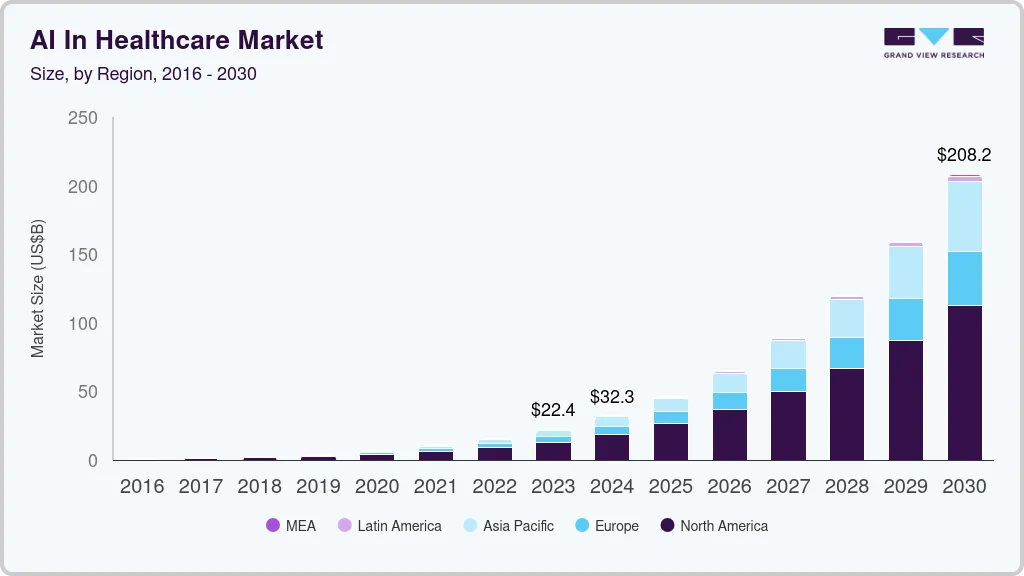
The healthcare software solution sector dominated this market, accounting for over 46% of the total revenue share. In terms of applications, the AI-powered robotic surgery segment garnered the largest revenue share (13%).[2]
A few other leading AI applications in healthcare:
1. Drug Discovery & Development
Machine Learning (ML) has accelerated and simplified medicinal R&D by examining molecular interactions and establishing connections between them and causative agents. This shortens timelines, reduces costs, and improves success rates in clinical trials.
2. Medical Imaging
AI in healthcare is widely used to examine X-rays, MRIs, and CT scans to identify anomalies or unwanted growths. This is highly beneficial for the early detection of diseases, such as cancer.
3. Operational Automation
From claims processing to medical coding, AI in healthcare automates administrative tasks, minimizing human error and freeing healthcare professionals to focus on direct patient care.
4. Remote Patient Monitoring
Many organizations also utilize AI-driven patient care solutions to analyze patient data in real-time, predicting adverse health events (such as stroke, sugar spikes, seizures, etc). These solutions examine data collected by wearable monitoring devices (such as Dexcoms and portable ECGs).
5. Telemedicine
The integration of AI in healthcare has also enabled remote consultations, allowing patients to receive prompt medical guidance. This not only improves access to healthcare, especially in rural or underserved areas, but also reduces patient wait times and streamlines the diagnosis process.
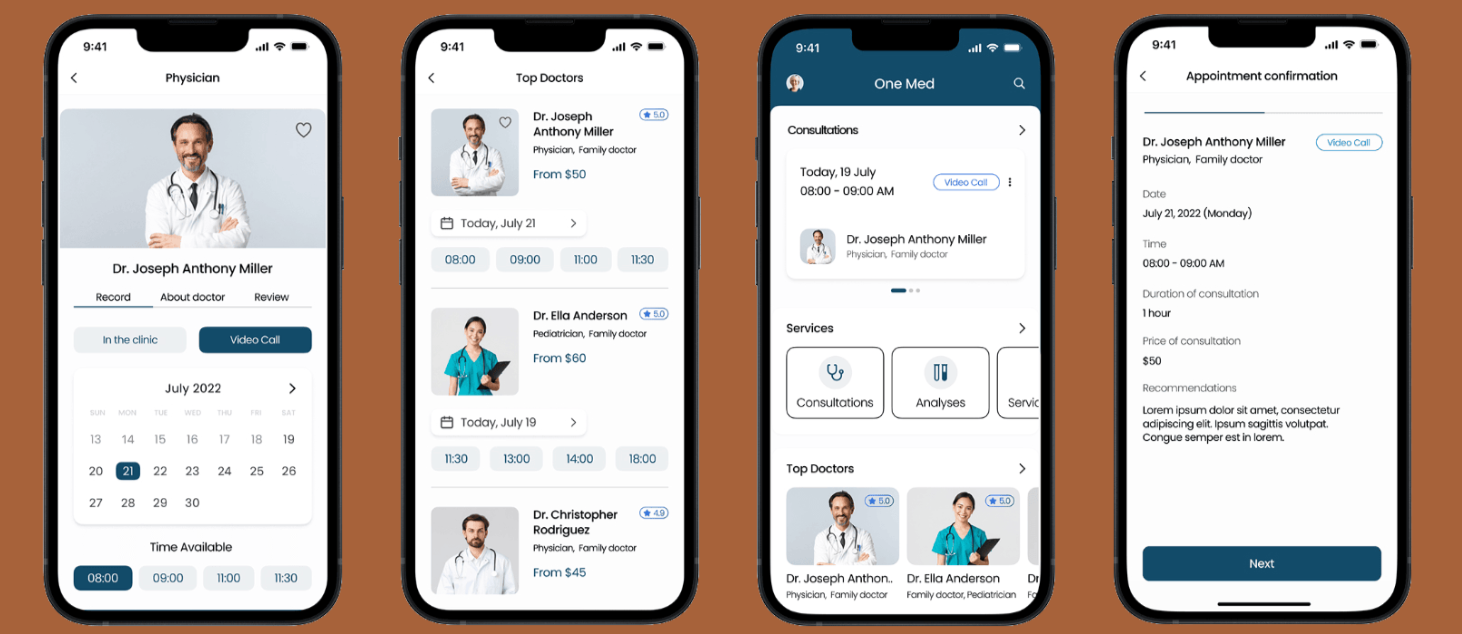
HealthCore – A Patient Data Management and Telemedicine Platform
Discover how we delivered an AI-driven patient care solution, improving access and efficiency in healthcare delivery, facilitating over 20,000 virtual consultations within just 6 months of deployment.
Seeking a similar solution? Our AI development services can deliver.
AI in eCommerce & Retail
The AI in retail and eCommerce industry is advancing at a remarkable pace, completely changing how businesses market their products, interact with customers, and manage operations. Particularly with increasing preference toward omnichannel strategies, the AI in retail market is projected to reach USD 164 by 2030.[3]
From personalizing product recommendations and demand planning to automating customer relationship management, AI (particularly Generative AI) in retail has given several businesses, such as Bath & Body Works and Coca-Cola, among others, a competitive edge.
Key AI use cases in retail:
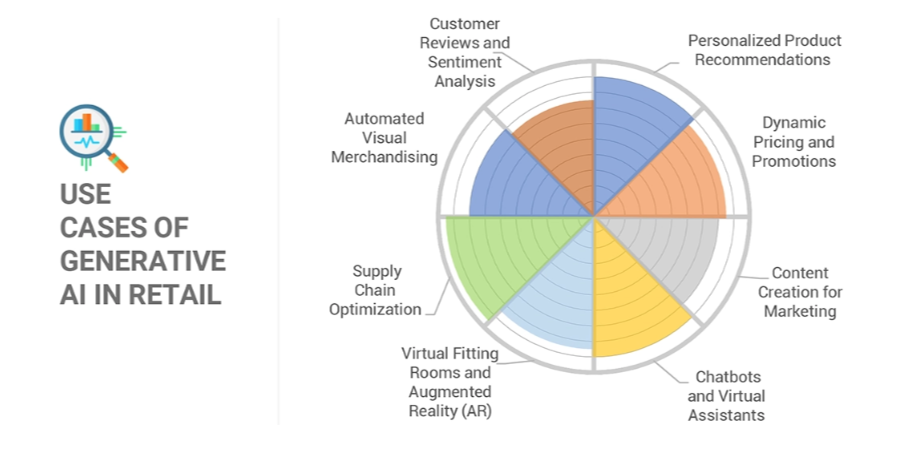
1. Customer Insights & Personalization
AI in retail is widely utilized to provide hyper-targeted product recommendations. This personalized approach not only enhances customer satisfaction but also drives higher conversion rates and repeat business. For instance, Amazon’s AI-powered recommendation engine suggests products based on users’ browsing history and past purchases.
2. Virtual Try Rooms & AR Shopping
Retailers use AI in retail and AR to let customers “try on” clothing, eyewear, or furniture virtually. This reduces hesitation, minimizes returns, and delivers an interactive shopping experience.
3. Inventory & Supply Chain Optimization
Many organizations also utilize AI, particularly predictive AI models, in their inventory management and supply chain operations. These models analyze historical data on stock levels, supply, and consumer demand to forecast and automate restocking processes.
4. Dynamic Pricing & Promotions
AI tools adjust product prices in real-time by monitoring demand, competitor pricing, and market trends. Retailers gain better margins, while shoppers get competitive and contextually relevant deals.
5. Search Query Mapping and Product Discovery
Many eCommerce businesses are integrating AI into their site’s internal search systems to enhance product discovery. By mapping search queries to relevant products, AI helps deliver more accurate results, even with typing errors or closely matching key terms, improving UX and reducing churn rate.
Want to See the Impact of AI in Product Discovery?
Explore how we integrated AI into a client’s internal search system, resulting in a <72% higher user search-to-conversion rate.
AI in Legal Business
The legal sector, traditionally perceived as conservative in adopting new technologies, is now undergoing a rapid transformation with the advent of AI. By 2026, legal and compliance departments in global businesses are expected to increase their investments by 50% in AI-powered document automation and other solutions.[4]
Moreover, by 2028, Generative AI (given the pace of current adoption of AI in legal businesses) is expected to free up over 240 hours/annually per legal professional, up from 200 hours in 2024. In the US alone, this amounts to over USD 32 billion annually, considering the average annual cost of USD 19,000 per professional. You can only imagine the global value addition; that will be a massive gain.[5]
Despite having this foresight at their disposal, only a few companies have a viable AI strategy, while many still lack solid AI implementation plans.
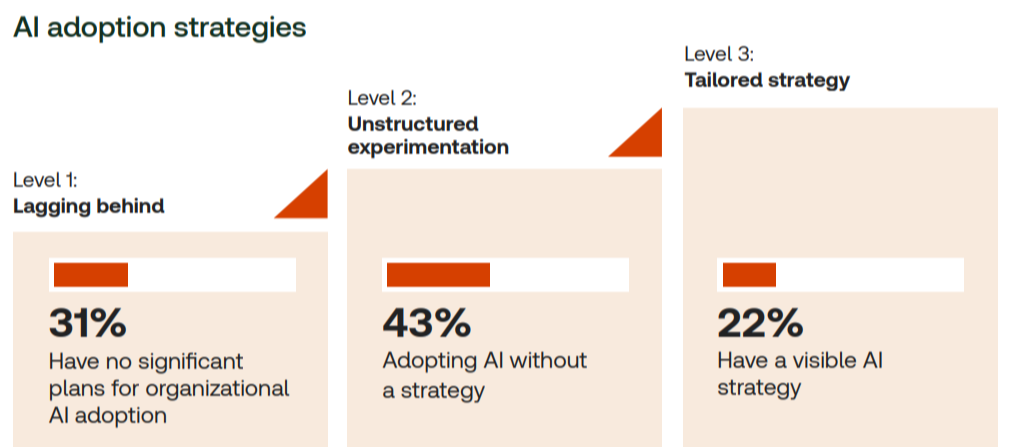
Besides automation, some other key AI use cases in legal include:
1. Contract Review and Management
Many organizations handling legal business utilize AI to review contracts, automatically identifying key clauses, risks, and discrepancies within them. For example, in real estate leases, AI can highlight clauses related to rent escalation, renewal terms, and liability provisions, helping legal teams identify potential issues such as non-compliance or ambiguous terms.
2. Chatbots for Legal Support
AI-driven chatbots in legal operations assist clients with basic legal queries, intake processes, and document preparation, improving accessibility while reducing routine workload for lawyers.
3. Compliance & Risk Monitoring
AI continuously monitors regulatory changes and company activities, alerting legal teams to potential compliance risks before they escalate.
4. Predictive Legal Analytics
AI in legal business operations can also predict case outcomes based on historical data, case patterns, and existing rulings. Established law firms and corporate entities are utilizing this approach to assess the likelihood of success in specific scenarios, thereby aiding in informed decision-making and effective legal strategy.
5. AI-Powered Case Analysis & Summarization
AI supports legal research and has also streamlined case analysis and summarization by examining large volumes of cases and legal precedents. It can then generate concise case summaries, highlighting key points, which helps legal professionals assess cases more quickly and accurately.
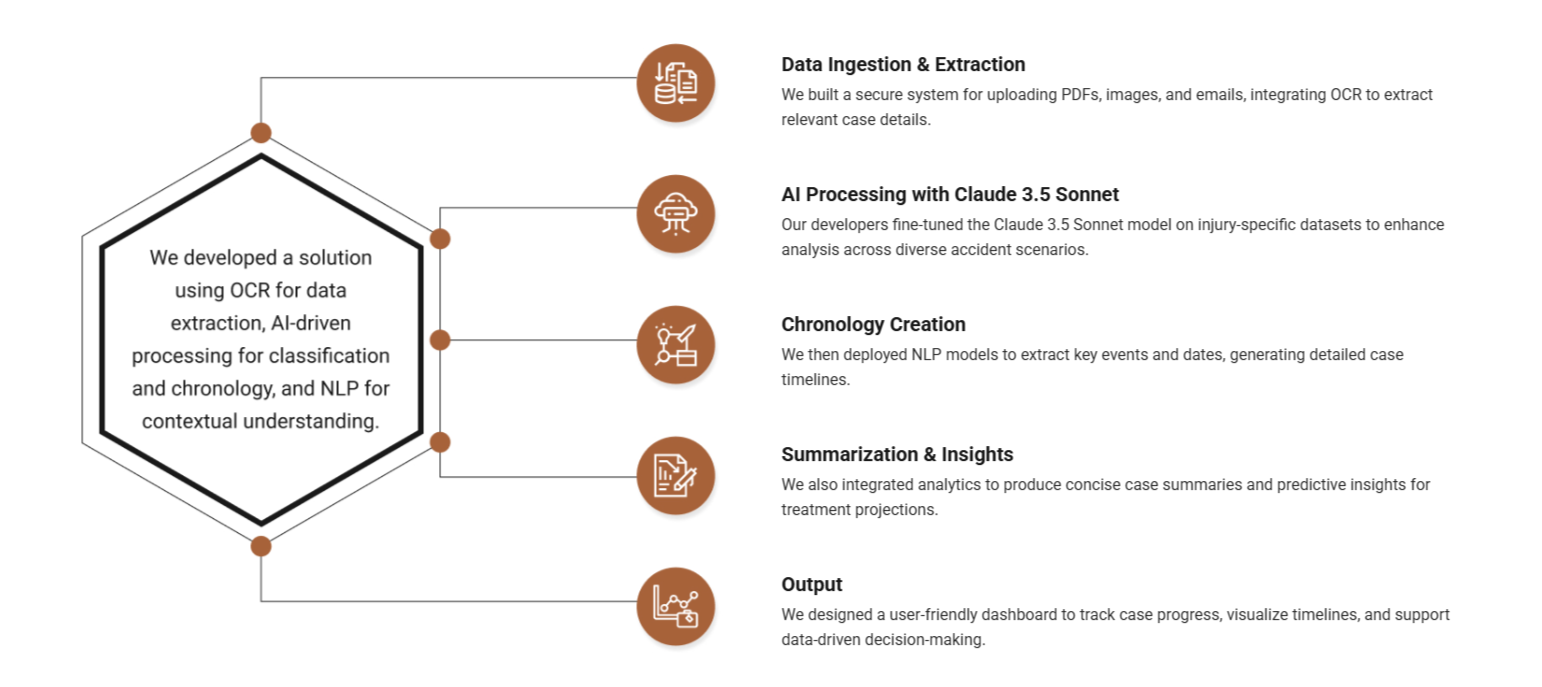
Optimizing Legal Workflows with AI in Personal Injury Practice
Discover how we integrated a custom-trained Gen AI model (Claude Sonnet 3.5) into a digital platform designed to streamline medico-legal case consolidation for efficient injury practice management.
AI in Finance & Banking
The finance and banking sector has been among the earliest adopters of AI. Its market was valued at USD 38 billion as of 2024 and is expected to cross USD 190 billion by 2030.[6] Additionally, with more than 57% of leaders expecting a positive, measurable ROI from AI in finance operations, the data reflects a massive future adoption as well.[7]
Key AI use cases in finance and banking:
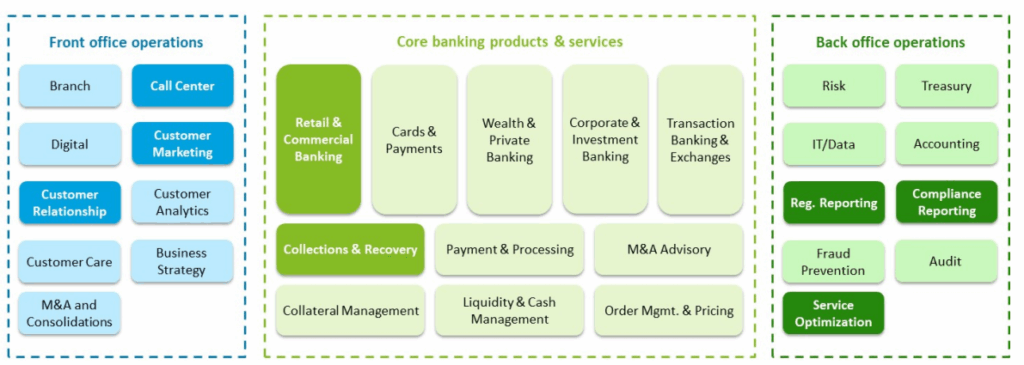
Some of them are discussed in detail below:
1. Fraud Detection and Prevention
AI in finance is largely utilized to detect and prevent fraud in real-time. AI can flag potentially fraudulent transactions or unusual behavior before they cause an issue, safeguarding both financial institutions and their customers.
2. Credit Scoring and Risk Assessment
Many organizations are augmenting traditional credit scoring methods with AI in finance to assess risk more accurately. AI-integrated systems combine behavioral data with non-traditional indicators, such as social media activity, educational background, and online engagement, to provide a comprehensive view of a borrower’s creditworthiness.
3. Algorithmic & High-Frequency Trading
AI applications in banking and finance are redefining how trading desks operate by enabling algorithmic trading and high-frequency trading (HFT). They execute thousands of micro-transactions in milliseconds, utilize deep learning (DL) models to forecast short-term asset movements, and employ natural language processing (NLP) or computer vision (CV) to scan financial news, analyst reports, and even X (Twitter) posts for insights.
4. Customer Service & Virtual Banking Assistants
Banks deploy AI chatbots and voice assistants to handle account inquiries, loan applications, and wealth management support, thereby reducing service costs and enhancing customer satisfaction.
5. Regulatory Compliance and Reporting
With constantly changing regulations, AI in finance also automates compliance checks by analyzing organizational data. This ensures the reports are accurate and the organization adheres to all rules without manual effort.
AI in Education & eLearning
The role of AI in education is expanding rapidly, reshaping how students learn, how educators teach, and how institutions deliver value at scale. Its market was estimated at around USD 5.9 billion in 2024 and is expected to cross USD 32.3 billion in 2030.[8]
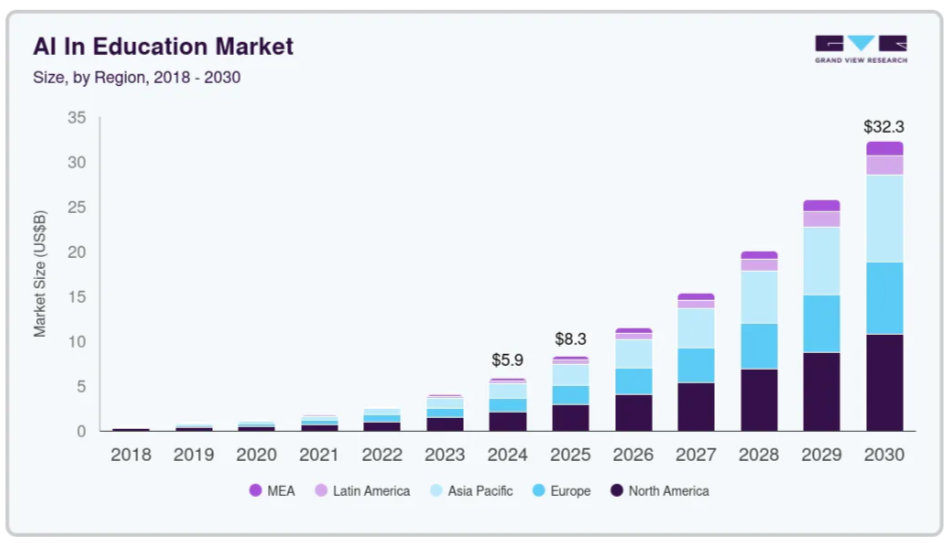
From automating grading to enabling personalized curricula, AI in education is bridging gaps in access, engagement, and learning efficiency.
Key AI use cases in the education and eLearning industry include:
1. Personalized Learning Paths
Many organizations utilize AI in education and eLearning to deliver personalized learning experiences tailored to individual progress, preferences, and learning speeds. Integrating AI enables the app/software to tailor content to meet each student’s particular needs, resulting in improved learning outcomes.
2. Automated Grading and Feedback
Educational institutions are also investing in AI app development to automate grading—assessments, quizzes, and essays. These applications can review hundreds of assessments simultaneously and provide instant feedback to students.
3. Predictive Analytics for Student Performance
One of the most powerful applications of AI in education is its ability to forecast learning outcomes and identify students who may be at risk of struggling. By aggregating data from Learning Management Systems (LMS), online assessments, attendance logs, and even behavioral patterns in digital classrooms, AI algorithms generate a comprehensive learner profile.
4. Content Creation & Curriculum Design
Educators are also utilizing AI app development to create educational apps featuring interactive learning modules, quizzes, and multimedia resources tailored to specific learning objectives.
5. Intelligent Tutoring Apps
AI-integrated learning apps offer personalized guidance to students, simulating one-on-one tutoring and providing real-time assistance with problem-solving. This has also simplified imparting knowledge to distant locations and students.
AI in Supply Chain
Global supply chains have become increasingly complex, with disruptions ranging from pandemics to geopolitical events, underscoring the urgent need for resilience and agility. This is where AI in supply chain management is having the most significant impact. As more and more companies explore supply chain AI, its market is expected to reach USD 51 billion by 2030.[9]
The AI in the logistics software segment has driven this growth, with supply chain planning being the most preferred AI use case. Additionally, organizations (particularly in the automotive sector) have achieved a competitive edge by reducing forecasting errors by 20–50% and cutting lost sales due to stockouts with AI-integrated supply chain ops. Other sectors that have greatly benefited include manufacturing, retail, food & beverages, and more.
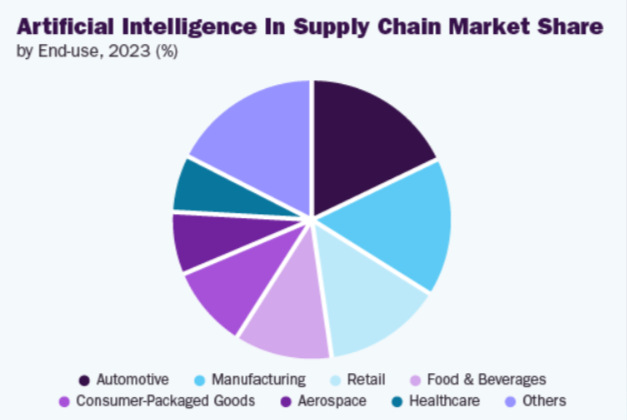
Key AI use cases in supply chains:
1. Inventory Management
Many organizations have integrated AI in supply chain and logistics operations to automate inventory management. For instance, L’Oreal is one such company that uses AI to track its inventory in real-time, ensuring product availability and reducing overstocking.
2. Route Optimization
AI-integrated logistics solutions can analyze traffic data, weather conditions, and delivery schedules to suggest optimal routes, improving delivery times and reducing travel costs.
3. Geopolitical & Market Intelligence
AI supply chain solutions can ingest global trade data, regulatory filings, and political risk indices to predict how tariffs, sanctions, or regional instability might disrupt supplier performance. This helps organizations plan ahead of any potential event, ensuring operational and supply continuity.
4. Continuous Monitoring & Early Alerts
Unlike quarterly reports, AI supply chain dashboards provide ongoing surveillance. If a supplier’s delivery lead time suddenly spikes or negative financial data appears, alerts are triggered immediately, enabling quick mitigation.
5. Order Processing
In logistics, AI-powered automation is also used for order processing and management, particularly in organizations with multiple sales channels. These models predict demand and optimize inventory levels based on historical data. Additionally, many are also deploying AI agents across various areas, configuring them to work in coordination, even on the consumer front.
Discover AI-Driven Order Management in Action
We delivered an AI-integrated order management system for an eCommerce business dealing in pool accessories. It allowed them to:
- Manage multiple suppliers from a single intelligent dashboard
- Aggregate orders based on selected parameters
- Automate sending POs (purchase orders)
- Enable region-specific order sorting and restocking alerts
AI in Real Estate
The AI market in the real estate sector is rapidly expanding, with projections indicating it will surpass USD 975 billion by 2029, growing at a CAGR of over 34%. From property valuation to tenant management, AI in real estate is revolutionizing the way investors, developers, and brokers operate.[10]
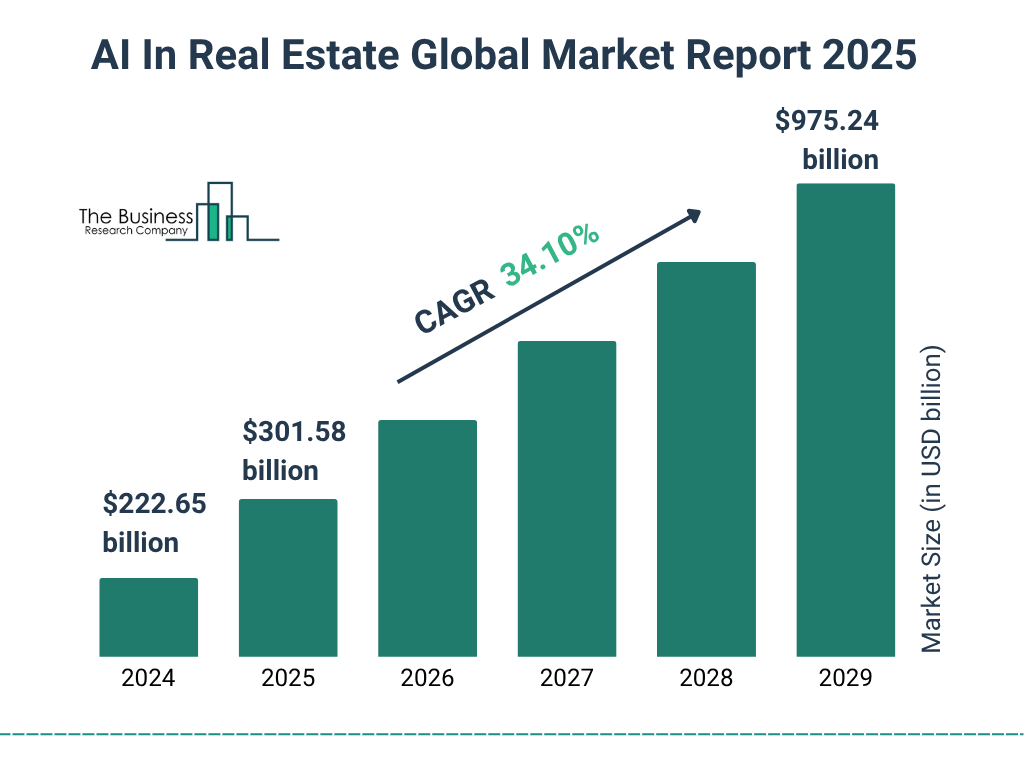
Key AI use cases in real estate:
1. Automated Property Valuation (AVMs)
AI-powered real estate valuation models consider far more variables than traditional comps, such as school distances, walkability scores, climate risks, and neighborhood sentiment. This creates valuations that are more accurate and dynamic, improving trust for both buyers and lenders.
2. Virtual Tours
AI app development for real estate enables virtual tours that allow potential buyers to explore properties remotely, providing an immersive and interactive experience. Using computer vision and 3D modeling, AI systems create realistic virtual representations and 3D renders of homes, enabling buyers to view properties from anywhere.
3. Tenant Screening & Smart Leasing
Real estate AI models evaluate tenant applications using a mix of financial, employment, and behavioral data, reducing defaults while ensuring fairer, bias-aware decisions. Automated lease management further shortens turnaround times.
4. Building Management & Energy Optimization
In commercial real estate setups, AI is integrated with IoT sensors to optimize HVAC, lighting, and energy usage. This lowers operational costs, supports ESG compliance, and improves tenant satisfaction.
5. Property Staging
Many firms now utilize AI in real estate to virtually stage vacant properties, providing potential buyers with a clearer vision of the finished space. For instance, Redfin, a well-known US-based real estate company, offers a tool called “Redfin Redesign”. This AI-powered automation allows their customers to virtually add custom furniture and design elements, helping them envision the property’s potential.
AI in Information Technology (IT)
The integration of AI in IT has transformed how enterprises build, monitor, and secure digital systems. Unlike traditional and reactive IT management, AI-enabled platforms proactively detect issues, self-correct anomalies, and dynamically scale resources. As a result, the global AI in ITOps market is projected to reach USD 36.07 billion by 2030.[11]
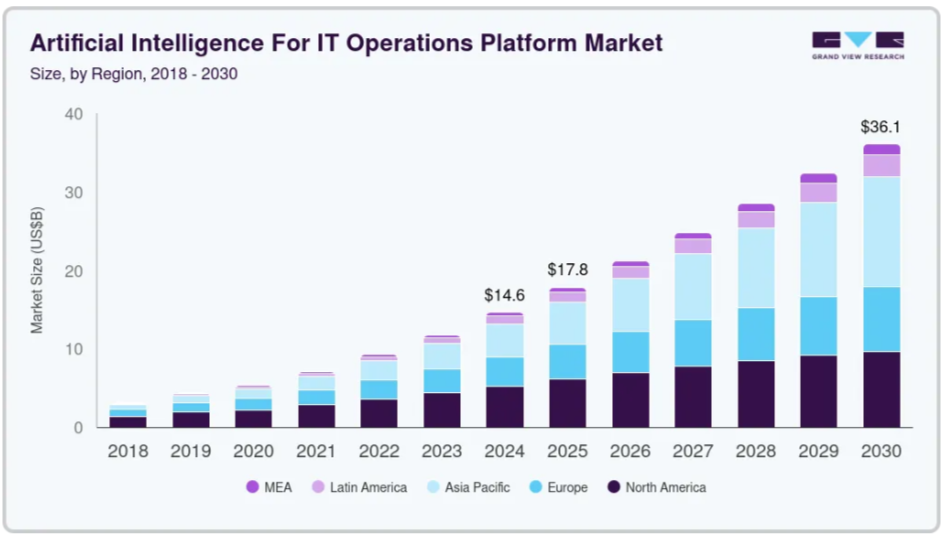
The platform segment dominates this market, accounting for over 86% of the total revenue. Based on application, real-time analytics was the most preferred use case of AI in information technology, especially at a time when IT infrastructures are becoming increasingly complex.[11]
Key use cases of AI in IT:
1. Cybersecurity
Many organizations have integrated AI in information technology systems to enhance cybersecurity. These systems detect and respond to security threats by analyzing network traffic, identifying patterns, and flagging potential vulnerabilities in real-time.
That said, even malicious actors are utilizing AI to simulate legitimate user behavior, enabling them to bypass security measures and infiltrate secure IT systems to leak sensitive data. This requires careful consideration and strategic planning.
2. Automated IT Support (AI Helpdesks)
Conversational AI chatbots in IT ops to handle L1 and L2 support queries such as password resets, software troubleshooting, and ticket categorization. This reduces support overhead and improves employee productivity.
3. Network and Server Monitoring
AI in IT also helps monitor and optimize network performance by analyzing large volumes of data, detecting anomalies, and predicting potential issues before they disrupt operations. This increases system reliability and ensures consistent uptime.
4. Software Development & QA Automation
AI-driven software development aids developers with code completion, bug detection, and automated testing, thereby accelerating release cycles and reducing errors. This has reduced the standard coding and delivery time by as much as 35-45%.
5. Cloud Infrastructure Management
Integrating AI into cloud-based IT operations enables organizations to optimize workload distribution, scale resources dynamically, and enhance cost efficiency. Google Cloud AI is a prime example, widely used by organizations to automate resource scaling and optimize cloud infrastructure management.
Planning to Automate Cloud Infrastructure Management with AI?
Talk to one of our AI experts and see how we can automate and streamline your cloud operations.
Common Concerns Around AI Adoption and How Ethical AI Can Address Them
- Data Privacy and Security Concerns: As AI use cases expand, particularly in sectors that handle sensitive data, concerns about privacy and security become increasingly prominent.
- Quality and Siloed Data: For AI solutions to be effective, businesses need integrated, high-quality data on which AI models can be trained. However, this becomes challenging when data is siloed or inconsistent.
- Quality and Siloed Data: For AI solutions to be effective, businesses need integrated, high-quality data on which AI models can be trained. However, this becomes challenging when data is siloed or inconsistent.
- Ethical Concerns: AI systems can unintentionally inherit biases, leading to unfair or discriminatory outcomes.
- Environmental Concerns: AI, especially deep learning (DL) and large language models (LLMs), demands enormous computational resources, even surpassing hundreds of megawatt-hours of electricity. The high energy consumption directly contributes to carbon emissions. Moreover, with AI’s powerful hardware (GPUs, TPUs, specialized AI chips), the hardware refresh cycle shortens.
While these challenges are significant, they become manageable with ethical AI development—an approach that acknowledges human oversight, transparency, and the societal impact of AI’s integration. Organizations are adopting ethical AI frameworks to ensure their technology investments deliver value while maintaining trust and adhering to compliance standards.
- Ethical AI emphasizes privacy-by-design, ensuring that data protection is built into systems from the outset. Techniques like differential privacy, federated learning, and homomorphic encryption enable AI to process sensitive data without exposing individual information.
- Ethical AI development also prioritizes data governance, promoting data integration while respecting organizational boundaries. This is achieved through proper access controls and by establishing clear data-sharing protocols.
- To make AI implementation cost-efficient, start with phased AI implementation strategies. Beginning with pilot projects in low-impact areas, leverage open-source AI frameworks, and rely on cloud-based solutions to reduce infrastructure costs.
- Ethical AI systems are also more efficient in tackling bias as they are trained on diverse, more representative datasets. To make them more reliable, implement regular algorithmic audits, incorporate fairness metrics to assess model performance, and create feedback loops for continuous improvement.
Struggling with AI Adoption?
Partner with our AI development company. We specialize in building ethical AI systems and apps, providing end-to-end development and integration assistance–from data preparation and model training to development and deployment.
Ethical AI’s Role in ESG Compliance
With growing recognition of how emerging technologies, such as AI, impact society and the environment, governments worldwide have begun mandating comprehensive ESG reporting. The EU’s Corporate Sustainability Reporting Directive, SEC’s climate disclosure rules, and similar regulations across Asia-Pacific markets reflect a global shift toward accountability in AI technology deployment. This regulatory landscape makes ethical AI not just a best practice but a necessity.
The good part is that AI implementation, while being a challenge, also turns out to be a solution. Here is how ethical AI can simplify ESG reporting:
- Consider environmental monitoring, AI systems can analyze satellite imagery to track deforestation patterns, monitor industrial emissions through IoT sensors, and predict climate-related risks to supply chains.
- In the social dimension, ethical AI systems can help ensure fair labor practices and protect human rights by examining communications and documentation to identify potential violations. Additionally, computer vision systems can be used to monitor workplace safety conditions.
- Ethical AI also enhances governance by providing boards and executives with data-driven insights for decision-making.
With AI taking the lead in all industries, you must find a way to adopt it and grow with it. The key lies in developing AI systems or apps tailored to address your specific business challenges. By doing so, you can easily optimize operations, drive innovation, and stay ahead of the competition.
At SunTec, our AI/ML development services are designed with an understanding of the concerns surrounding AI, particularly in high-stakes industries. We make sure all the AI solutions we develop are –
- Built and trained on tailored, unbiased datasets,
- Passed through multi-step, expert-led QA and testing,
- Deployed under proper supervision,
- Consistently monitored and adjusted post-deployment.
Contact our AI development company at info@suntecindia.com to get started.
References:
1. Statista – Artificial Intelligence Market Report
2. Grand View Research – Artificial Intelligence in Healthcare – Industry Analysis
3. MarketsandMarkets – Artificial Intelligence in Retail – Market Reports
4. Gartner – Press Release – Legal and Compliance Investment in Governance Tools
5. Thomson Reuters – Future of Professionals Report 2025
6. MarketsandMarkets – AI in Finance Market
7. KPMG – Press Release – AI Adoption Across Finance Functions 2024
8. Grand View Research – Artificial Intelligence in Education – Industry Analysis
9. Grand View Research – Artificial Intelligence in Supply Chain – Industry Analysis
10. The Business Research Company – AI in Real Estate Global Market Report
11. Grand View Research – AIOps Platform Market – Industry Analysis