AI Training Data Services for Retail

Training Data that Keeps Retail AI Accurate as Catalogs, Prices, and Demand Shift

We convert scattered retail data — store camera feeds, shelf images, POS logs, catalogs, and clickstreams — into structured, annotated training datasets.

Get Your AI Training Data Proposal

Success Stories

...it's all about results

Automated Competitor Intelligence

Automated Competitor Intelligence

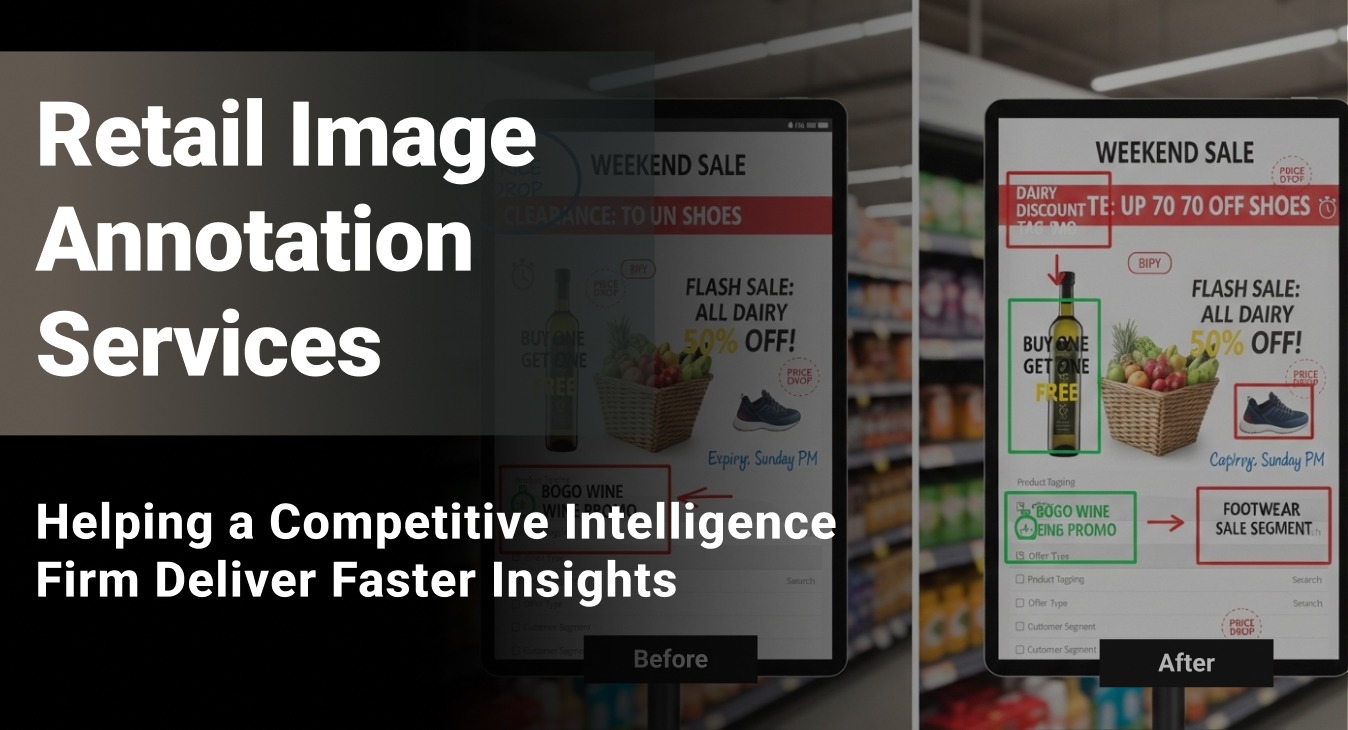
250K+ Retail Image Annotation Delivered per Month with 98.5% Annotation Accuracy

Read More

AI TRAINING DATA SERVICES FOR RETAIL

Accelerate Deployment for Complex Retail AI with Specialized Training Data

Deploying retail AI applications—from automated in-store inventory tracking and product recognition to checkout-free stores and customer assistance—presents a unique operational bottleneck: the chaotic, shifting realities of live store environments can not be captured with generalist data annotation.

SunTec India provides domain-specialized AI training data services for retail AI solutions, engineered specifically to solve this problem and move your models from pilot to production with absolute predictability. Our annotators are trained on retail-specific rules tailored to your use case. Human reviewers check every batch, ensuring that the training datasets align with your model objectives, operational realities, product taxonomy, and store environments.

Proven Domain Expertise

Hands-on experience with retail AI training data preparation — shelf image annotation, product catalog labeling, in-store video analytics, SKU-level classification, and eCommerce data processing across omnichannel retail environments.

Scale without Sacrificing Quality

Established operational workflows, in-house subject matter experts, and a large workforce with the flexibility to scale teams up or down based on your project's demands.

Security & Compliance

Your proprietary datasets and product data are protected at every stage through NDAs, strict internal access governance, data encryption, and compliance with ISO, HIPAA, and GDPR.

Flexible Engagement Models

Whether you need a short-term pilot (a free sample is available), a dedicated annotation team for an ongoing program, or burst capacity for a seasonal project, we tailor the engagement to your requirements.

OUR RETAIL AI TRAINING DATA SERVICES

Training Data for Models Operating across Stores, Channels, and Catalogs

To prevent label schema drift and model failures in production, our team manages all stages of AI training data preparation in a single integrated pipeline, with domain-specific logic maintained at each step. From curating the dataset for retail AI model training to labeling, domain-specific fine-tuning, and model validation, every stage runs against a shared taxonomy and label schema.

AI Data Collection Services for Retail

  • Gather high-quality retail-specific images, videos, and textual data from publicly available sources through targeted web scraping and structured online research.
  • Integrate client-provided datasets (POS records, in-store camera feeds, CRM exports, inventory databases) into the training pipeline alongside externally sourced data to create a unified training resource.
View MoreAI Data Collection Services

Data Preprocessing Services for Retail

  • Clean, normalize, and transform raw retail data into machine learning-ready formats.
  • Includes deduplication, format conversion (JSON, CSV, XML, COCO, YOLO, Pascal VOC), PII masking where applicable, and enrichment with retail-specific metadata, such as SKU/UPC tags, category taxonomy, store-zone or planogram coordinates, and capture conditions like lighting and camera angle.
View MoreData Preprocessing Services

Retail Data Annotation Services

  • AI-assisted pre-annotation with expert human review across text, image, audio, and video formats — with annotation teams trained on product-specific guidelines, edge-case handling.
  • Retail AI data labeling teams that work natively across prominent data labeling tools, such as CVAT, Labelbox, Label Studio, and V7, as well as proprietary annotation platforms.
View MoreData Annotation Services

LLM Fine-Tuning Services for Retail AI

  • Supervised fine-tuning data (instruction-response pairs grounded in your product catalog, customer interaction patterns, and merchandising terminology).
  • RLHF annotation to align model outputs with retail-specific expectations, brand tone, and human preferences.
  • Adversarial red team testing to catch hallucinated recommendations, unsafe outputs, and policy violations.
View MoreLLM Fine-Tuning Services

AI Model Validation Services for Retail

  • Human-in-the-Loop validation of your retail AI model's outputs against domain-expert ground truth.
  • Subject matter expert review to catch edge cases (misclassified products, false-positive theft alerts, biased recommendation patterns, inaccurate pricing extraction).
  • Bias audits to ensure your model performs across varying conditions. Consensus-based accuracy checks with multi-annotator agreement measurement.
View MoreAI Model Validation Services

CLIENT SUCCESS STORIES

The Proof is in the Pipeline

The Proof is in the Pipeline

Discover how we’ve helped businesses across 50+ nations bridge the gap between "lab-ready" and "market-ready" AI/ML applications by solving their most complex training data challenges.

Retail Image Annotation

Bounding box annotation and metadata tagging across retail promotional images, powering competitive intelligence solutions for a US-based company.
250K+

Annotations Delivered Monthly

98.5%

Annotation Accuracy
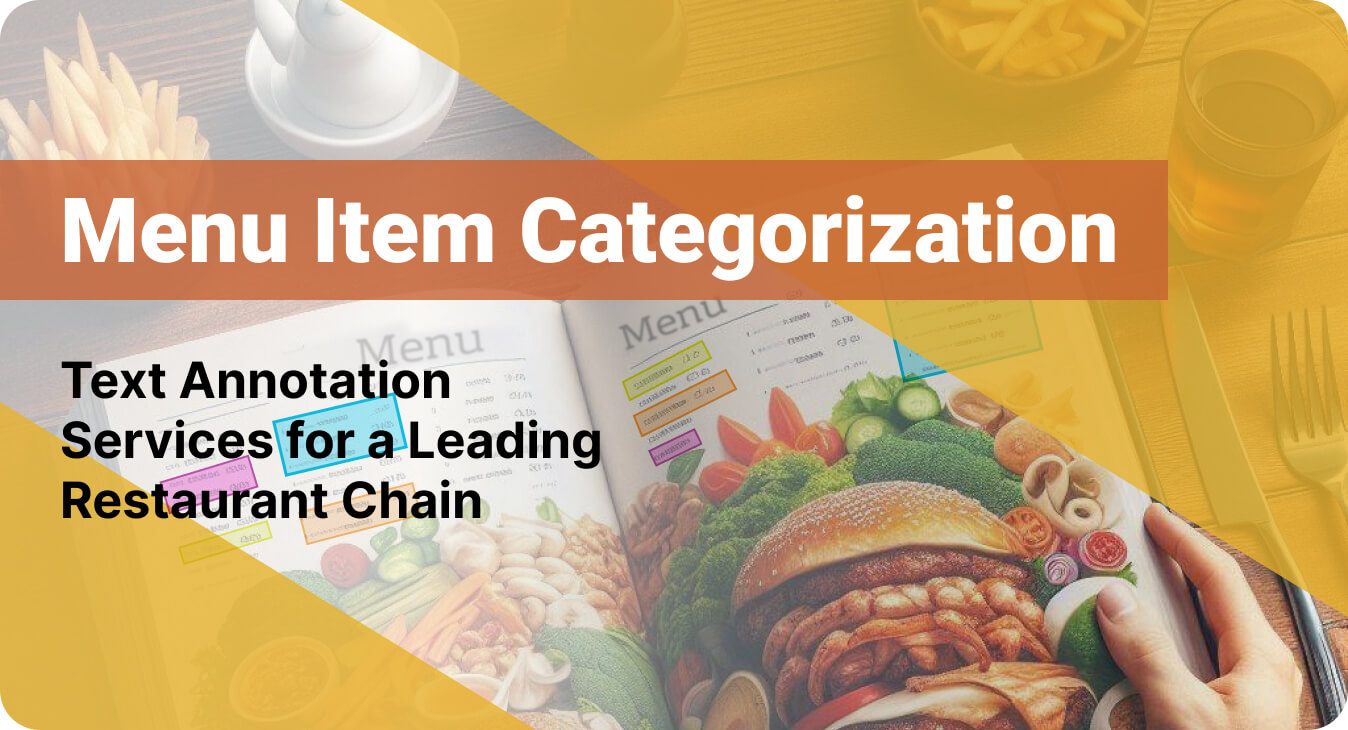
menu item categorization

Helping a leading restaurant chain classify 50k+ menu items to ensure customer satisfaction and legal compliance, with 100% accuracy rates

100%

Accuracy in Menu Items Categorization

50K+

Items Classified in Menu Categorization

Enhanced

Regulatory Compliance and Customer Experience
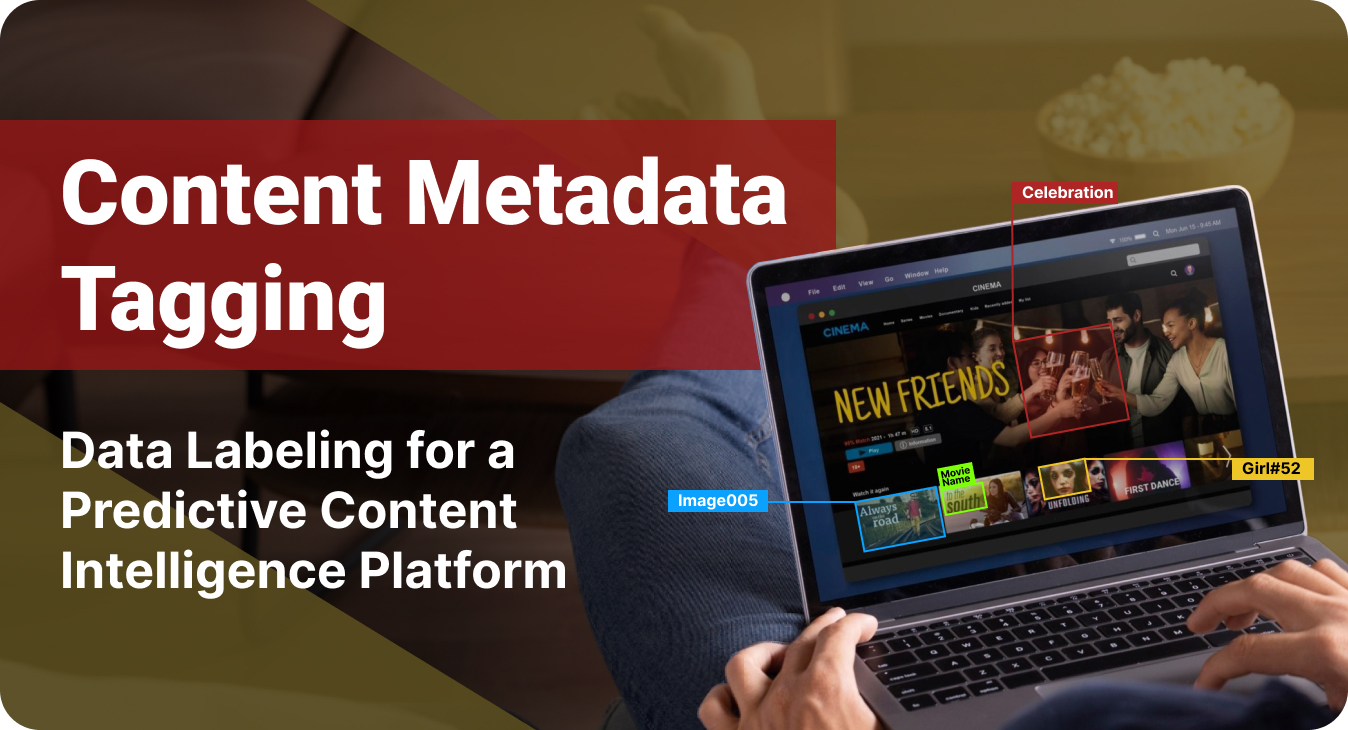
Data Labeling for a Predictive Content Intelligence Platform

Labeled over 2500 entertainment content (Movies, TV Series, Trailers) monthly to enable the accurate prediction of the target audience engagement rates and response.

65%

Improved AI Model Accuracy

60%

Less Content Categorization Errors

4-Month

Faster Model Development
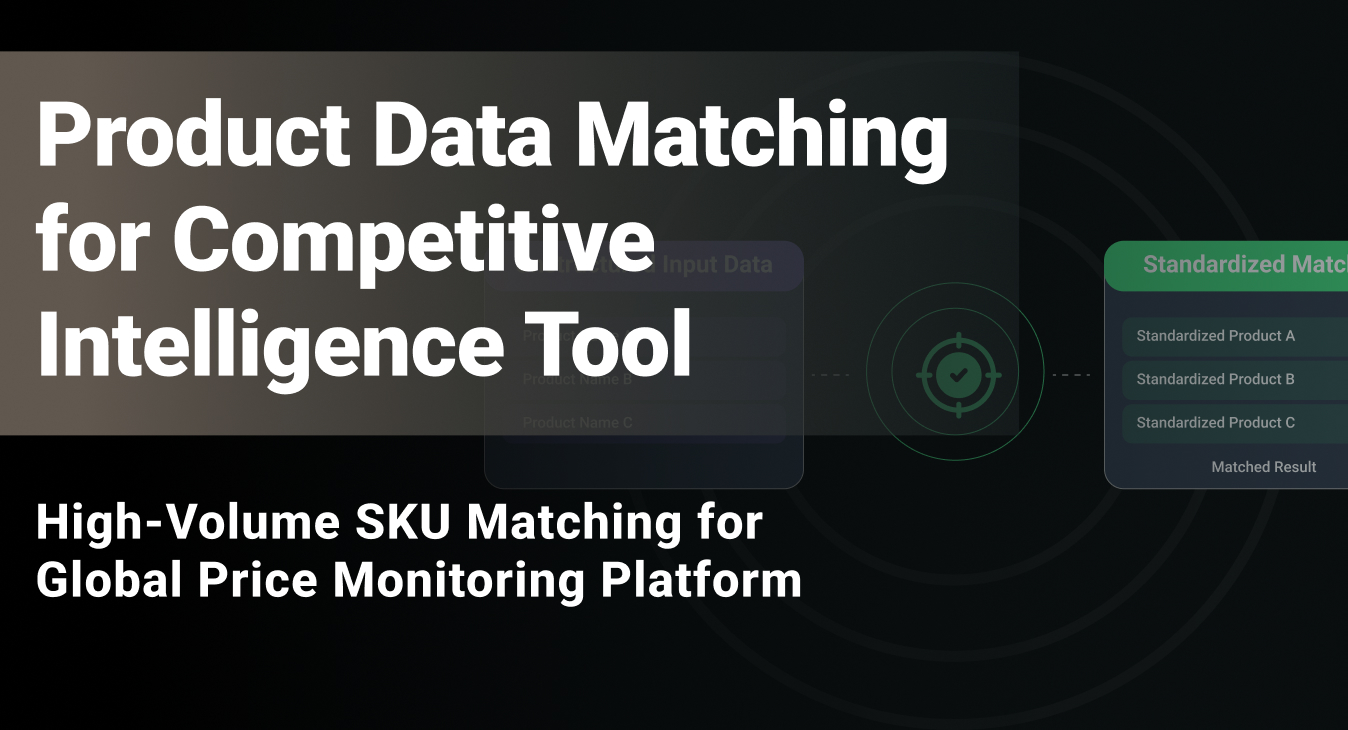
Product Data Matching for Competitive Intelligence Tool

Accurately validated 25,000+ SKUs monthly across hundreds of competitor websites with a human-in-the-loop workflow for a subscription-based competitive intelligence software

40%

Faster Time-to-Market

20-25%

Uplift in Gross Profit

99.2%

Data Accuracy Achieved

View All

DATA ANNOTATION TYPES WE SUPPORT

Advanced Labeling Workflows for Reliable Retail AI Models

Retail AI runs across three layers — what's on the shelf, what the shopper does, and how the catalog connects them. Retail computer vision models read store environments to track inventory and pricing. Behavior models track shoppers across cameras to map dwell time, intent, and conversion. Catalog models structure millions of SKUs into search, recommendation, and personalization signals. Each of these layers fails differently when training data is wrong — a misread shelf creates stockouts, a mistracked shopper distorts analytics, a mistagged SKU breaks search. Our retail data annotation services span every annotation technique retail models typically need.

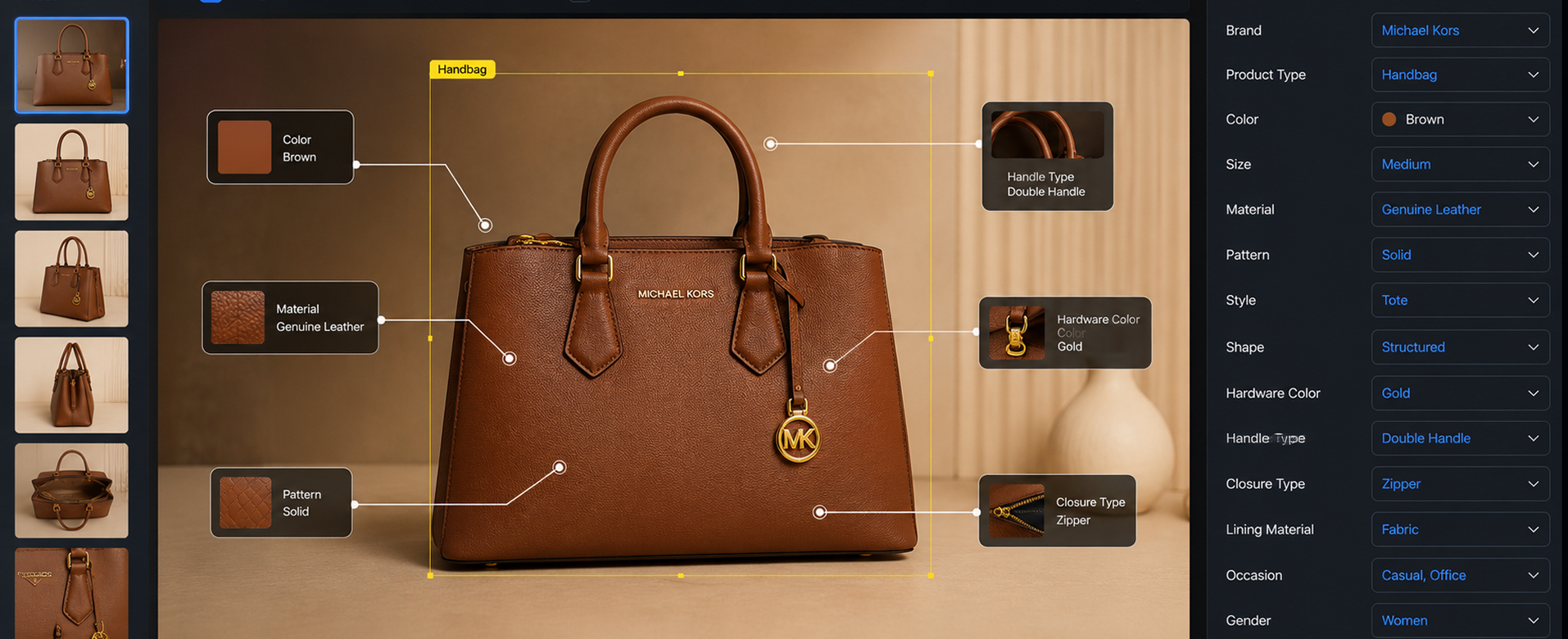
Attribute Labeling

Tagging products with descriptive attributes — color, size, material, pattern, brand, style — enriching catalog data for search relevance, recommendation accuracy, and faceted filtering at scale.

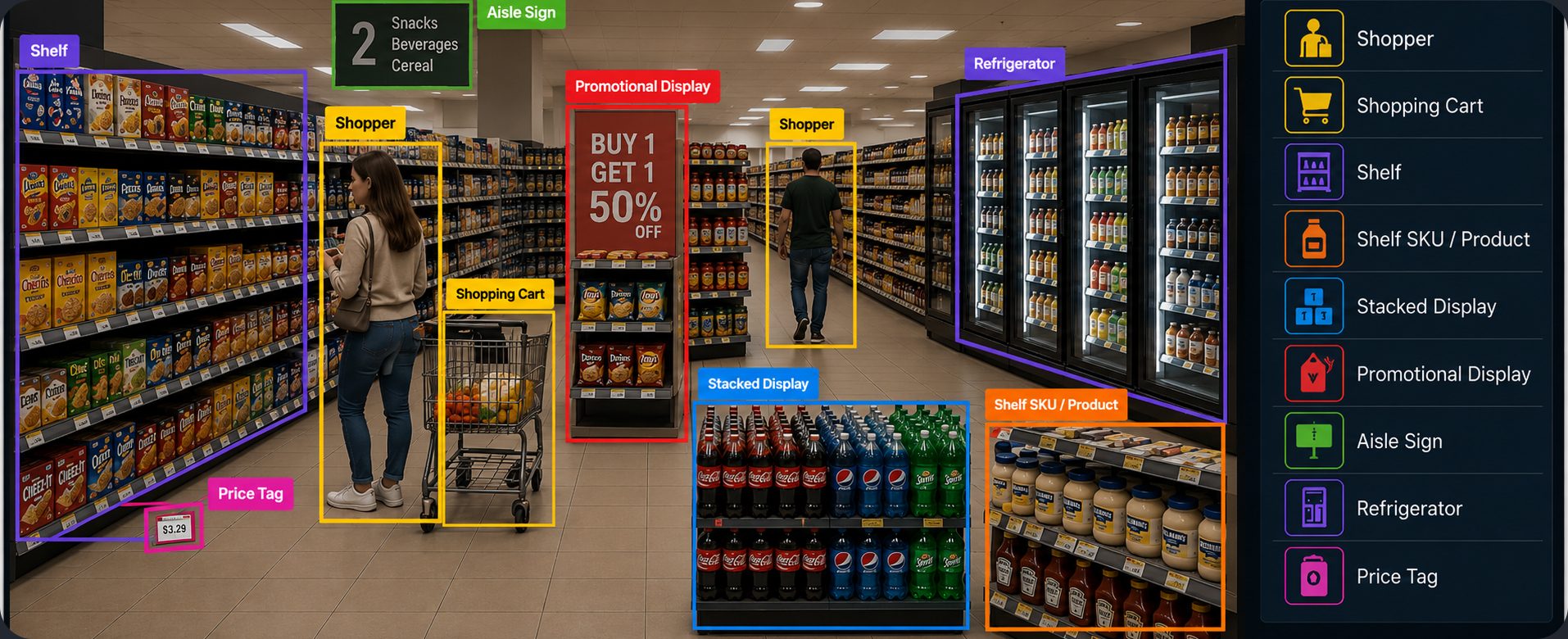
Bounding Box Annotation

Drawing rectangles around products and assets in retail imagery — shelf SKUs, promotional displays, shoppers, or store fixtures — for detection, counting, and compliance models.

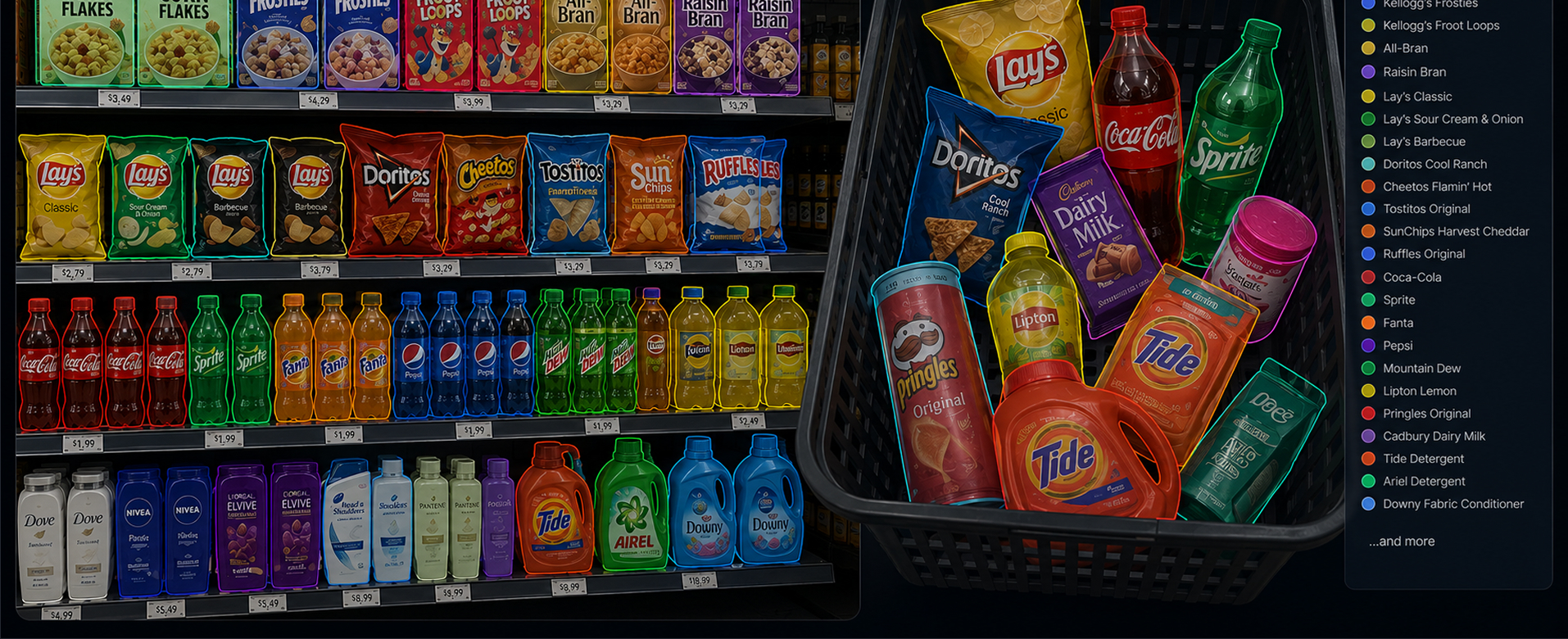
Instance Segmentation

Outlining each product at the pixel level in cluttered retail scenes — distinguishing every overlapping SKU on a shelf or item in a shopping basket.

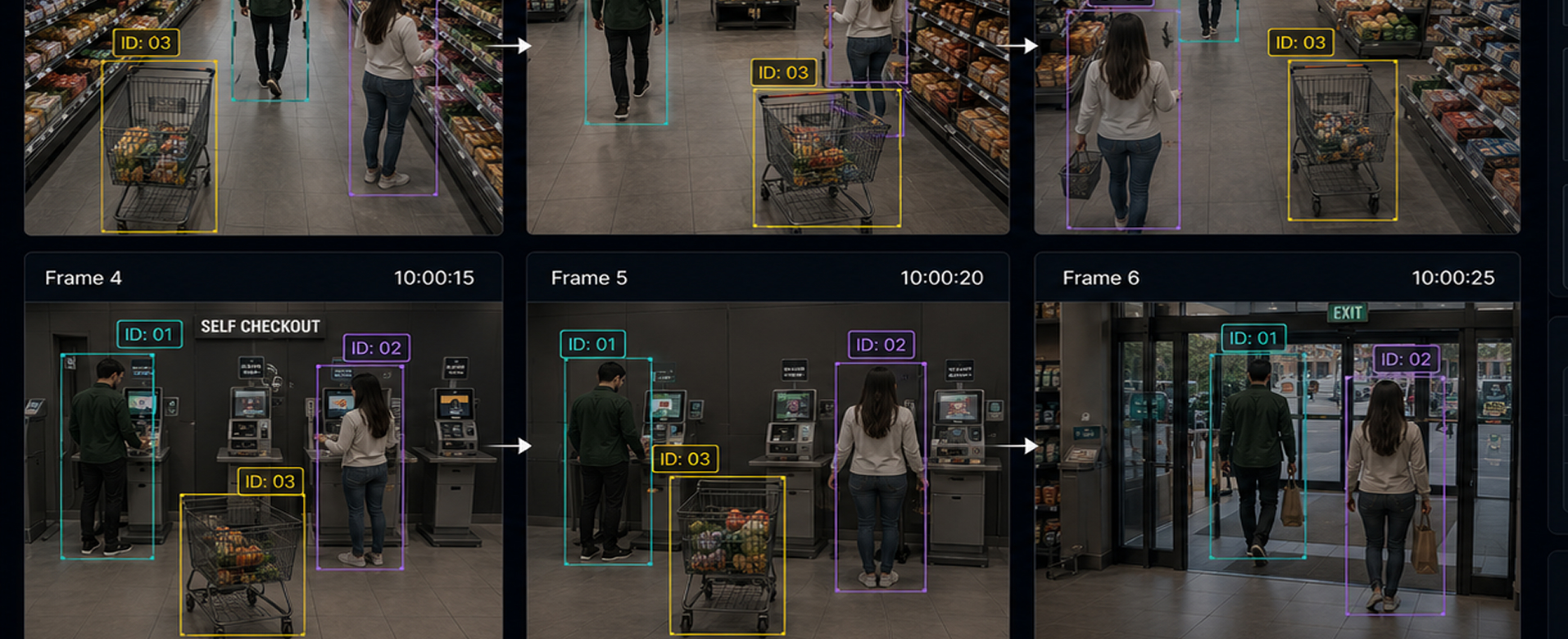
Multi-Object Tracking

Following multiple items or shoppers across consecutive video frames with persistent IDs — products through self-checkout, customers across store cameras, or carts moving through aisles.

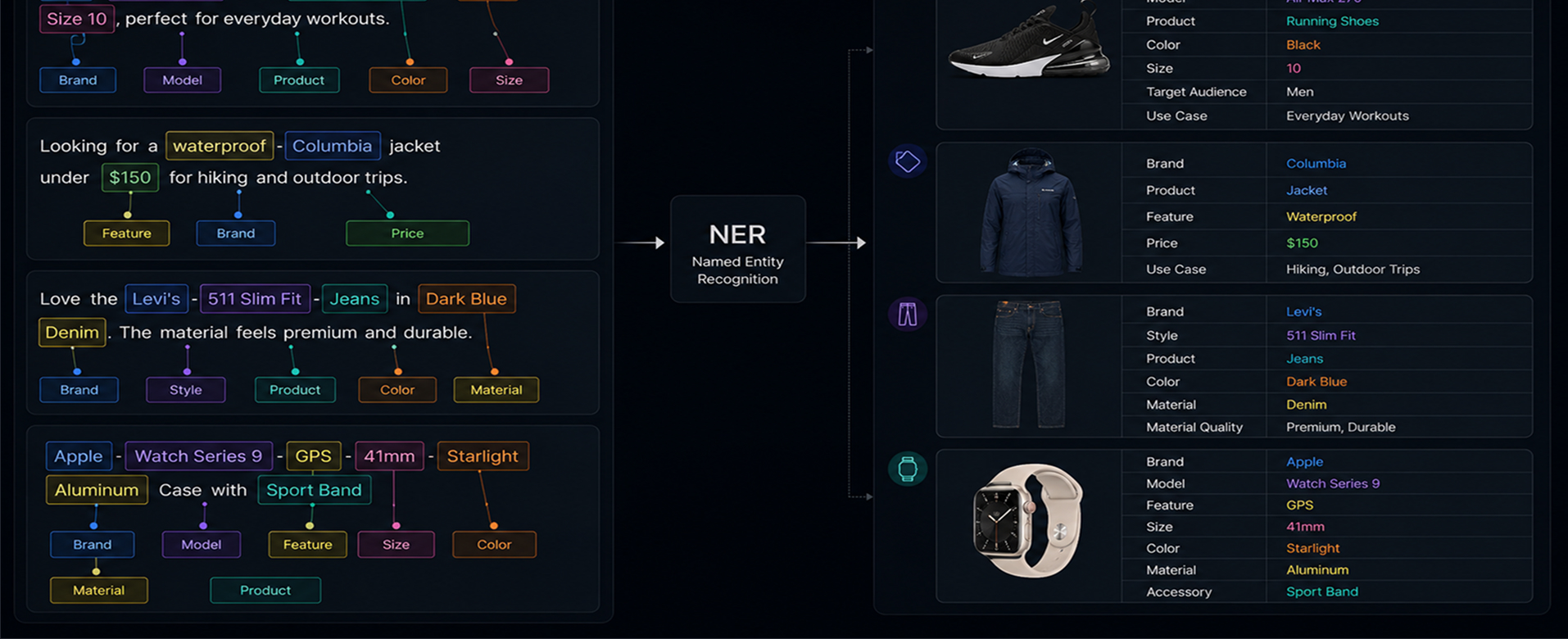
Named Entity Recognition

Identifying and tagging retail-specific terms in unstructured text — brand names, product attributes, sizes, materials, or model numbers — within reviews, queries, and listings.

Tagging products with descriptive attributes — color, size, material, pattern, brand, style — enriching catalog data for search relevance, recommendation accuracy, and faceted filtering at scale.

Drawing rectangles around products and assets in retail imagery — shelf SKUs, promotional displays, shoppers, or store fixtures — for detection, counting, and compliance models.

Outlining each product at the pixel level in cluttered retail scenes — distinguishing every overlapping SKU on a shelf or item in a shopping basket.

Following multiple items or shoppers across consecutive video frames with persistent IDs — products through self-checkout, customers across store cameras, or carts moving through aisles.

Identifying and tagging retail-specific terms in unstructured text — brand names, product attributes, sizes, materials, or model numbers — within reviews, queries, and listings.

TECH STACK

AI Data Services: Technology Stack

The Operational Stack Supporting Large-Scale AI Data Collection & Labeling

The infrastructure behind our AI data solutions is optimized for control and speed. This tech stack, implemented within our AI data preparation workflow, enables our AI training data services to remain predictable at scale, auditable under scrutiny, and dependable when models encounter real-world variability.

RETAIL AI TRAINING DATA SERVICES: USE CASES

Retail AI Training Data, Configured around Your Model's Operating Reality

SunTec India provides specialized retail AI datasets built around the distinct complexities of grocery, fashion, electronics, and omnichannel environments. Our teams map data directly to your specific product taxonomy, labeling schemas, and store formats, delivering model-ready datasets that require no internal cleanup.

Retail Shelf Monitoring AI & Planogram Compliance

AI Capability

Detects misplaced, missing, or out-of-stock products on retail shelves in real time across grocery retail, supermarkets, and department stores.

Training Data Gap

Products within the same category can look nearly identical at different camera resolutions and under varying lighting conditions. Store planograms also differ by region, season, and store format, so a model trained on a very specific set of conditions/a standard planogram fails on another.

Our Approach

We prepare planogram-compliant training data by marking exactly where an item is missing (out-of-stock) or misplaced, and counting how many rows of a product face forward. Shelf image annotation is performed using bounding boxes and semantic segmentation at SKU-level granularity, with product class labels and shelf position tags, so the AI doesn't just see "soda"; it sees "12oz Diet Coke Can, Shelf 3, Position 4."

Automated Checkout & Cashier-less Stores

AI Capability

Identify products customers pick up in smart retail environments without barcode scanning, enabling frictionless checkout.

Training Data Gap

Products are grabbed, rotated, partially occluded, and placed into bags in rapid succession. For the model to perform well, visually similar variants (regular vs. low-sodium, 250ml vs. 500ml) must be distinguished under variable lighting and constant movement in the training data.

Our Approach

Instance segmentation and multi-object tracking across video feeds, with persistent object IDs maintained through occlusions and hand interactions. Product variant labeling to capture size, packaging type, and brand attributes, while automated checkout datasets are validated through scenario-based edge-case testing.

Customer Behavior & Footfall Analytics

AI Capability

Analyze shopper movement patterns, dwell times, and engagement zones inside physical stores — powering store layout optimization and promotional product placement decisions.

Training Data Gap

The challenge lies in building a dataset that teaches the model to follow a completely anonymous silhouette from camera to camera through dense crowds while respecting privacy laws and accurately distinguishing between meaningful product engagement and a distracted shopper checking their phone.

Our Approach

Before annotation begins, PII masking is applied to protect customer identities throughout the video data. Video annotation is then carried out using anonymized persistent tracking IDs, heatmap zone annotations, and activity labels for entering, browsing, engaging, purchasing, and exiting. We also annotate queue-detection datasets with dwell-time event markers and shopper-behavior labels.

Loss Prevention & Theft Detection

AI Capability

Identify suspicious activity patterns in in-store surveillance feeds without generating excessive false positives or introducing discriminatory fraud-detection bias.

Training Data Gap

Behaviors indicating theft at a self-checkout kiosk differ fundamentally from those associated with fitting room concealment or warehouse pilferage. False positives create customer friction. Bias in detection algorithms creates regulatory, legal, and reputational risk.

Our Approach

We annotate retail surveillance and theft-detection datasets with behavioral event labels, including concealment gestures, tag removal, and unusual movement patterns. These annotations are calibrated to specific store environments and theft scenarios, covering suspicious activity across self-checkout areas, fitting rooms, and open-floor formats. Every dataset we deliver includes a mandatory bias and fairness audit.

Product Categorization & Smart Tagging

AI Capability

Automatically classify and tag products across e-commerce catalogs — supporting search relevance, recommendation accuracy, and catalog integrity at scale.

Training Data Gap

Catalogs contain millions of SKUs from hundreds of suppliers, each with different attribute naming, taxonomy depth, and description quality. Category structures also shift with seasonal rotations and market expansion.

Our Approach

We prepare product categorization datasets by standardizing the taxonomy and removing duplicate entries before annotation. We utilize text annotation with multi-label classification to label subcategories, brands, materials, sizes, colors, and styles, and named entity recognition (NER) to extract attributes from unstructured product descriptions.

Warehouse Automation & Inventory Management

AI Capability

Monitor stock movement, automate picking workflows, and track inventory levels using computer vision and sensor data across warehouse and distribution environments.

Training Data Gap

Warehouse floors are visually complex with stacked pallets, conveyor systems, forklifts in motion, personnel, and variable industrial lighting. Objects must be detected and tracked in that 3D space with cross-sensor consistency and absolute precision.

Our Approach

We use point cloud segmentation and 3D bounding boxes to generate object detection datasets. To enable safe automation, we utilize polyline path annotations that define navigable routes through complex warehouse layouts and sensor-fusion annotations to maintain consistent object-tracking IDs across different sensor types (such as camera and LiDAR data).

Dynamic Pricing & Promotion Detection

AI Capability

Extract pricing information from shelf labels, promotional displays, and competitor listings — supporting real-time price intelligence and promotional compliance monitoring.

Training Data Gap

Shelf label formats vary by retailer, region, and manufacturer. OCR must handle reflections, angled captures, partial occlusion, and damaged labels. Promotional displays use non-standard layouts and mixed typography.

Our Approach

We annotate shelf label imagery using OCR annotation with field-level tags for price, unit price, promotion text, and barcode data. Bounding box detection is applied to promotional signage, endcap displays, and branded materials. Barcode detection annotation supports automated price verification and POS fraud detection data pipelines.

Demand Forecasting

AI Capability

Predict product demand based on historical sales, seasonal patterns, external events, and consumer behavior signals.

Training Data Gap

Demand signals are fragmented across POS systems, inventory databases, social media, and competitor pricing feeds — each with different schemas, update cadences, and granularity.

Our Approach

We label the inputs a demand model trains on (per-SKU sales events, dated promotion and price-change markers, stockout windows, and seasonal peaks). From unstructured text—news, reviews, social posts—we tag demand-driving events (store openings, recalls) and sentiment. Both are delivered in a schema that your forecasting team can use to build model features.

AI Capability

Detects misplaced, missing, or out-of-stock products on retail shelves in real time across grocery retail, supermarkets, and department stores.

Training Data Gap

Products within the same category can look nearly identical at different camera resolutions and under varying lighting conditions. Store planograms also differ by region, season, and store format, so a model trained on a very specific set of conditions/a standard planogram fails on another.

Our Approach

We prepare planogram-compliant training data by marking exactly where an item is missing (out-of-stock) or misplaced, and counting how many rows of a product face forward. Shelf image annotation is performed using bounding boxes and semantic segmentation at SKU-level granularity, with product class labels and shelf position tags, so the AI doesn't just see "soda"; it sees "12oz Diet Coke Can, Shelf 3, Position 4."

AI Capability

Identify products customers pick up in smart retail environments without barcode scanning, enabling frictionless checkout.

Training Data Gap

Products are grabbed, rotated, partially occluded, and placed into bags in rapid succession. For the model to perform well, visually similar variants (regular vs. low-sodium, 250ml vs. 500ml) must be distinguished under variable lighting and constant movement in the training data.

Our Approach

Instance segmentation and multi-object tracking across video feeds, with persistent object IDs maintained through occlusions and hand interactions. Product variant labeling to capture size, packaging type, and brand attributes, while automated checkout datasets are validated through scenario-based edge-case testing.

AI Capability

Analyze shopper movement patterns, dwell times, and engagement zones inside physical stores — powering store layout optimization and promotional product placement decisions.

Training Data Gap

The challenge lies in building a dataset that teaches the model to follow a completely anonymous silhouette from camera to camera through dense crowds while respecting privacy laws and accurately distinguishing between meaningful product engagement and a distracted shopper checking their phone.

Our Approach

Before annotation begins, PII masking is applied to protect customer identities throughout the video data. Video annotation is then carried out using anonymized persistent tracking IDs, heatmap zone annotations, and activity labels for entering, browsing, engaging, purchasing, and exiting. We also annotate queue-detection datasets with dwell-time event markers and shopper-behavior labels.

AI Capability

Identify suspicious activity patterns in in-store surveillance feeds without generating excessive false positives or introducing discriminatory fraud-detection bias.

Training Data Gap

Behaviors indicating theft at a self-checkout kiosk differ fundamentally from those associated with fitting room concealment or warehouse pilferage. False positives create customer friction. Bias in detection algorithms creates regulatory, legal, and reputational risk.

Our Approach

We annotate retail surveillance and theft-detection datasets with behavioral event labels, including concealment gestures, tag removal, and unusual movement patterns. These annotations are calibrated to specific store environments and theft scenarios, covering suspicious activity across self-checkout areas, fitting rooms, and open-floor formats. Every dataset we deliver includes a mandatory bias and fairness audit.

AI Capability

Automatically classify and tag products across e-commerce catalogs — supporting search relevance, recommendation accuracy, and catalog integrity at scale.

Training Data Gap

Catalogs contain millions of SKUs from hundreds of suppliers, each with different attribute naming, taxonomy depth, and description quality. Category structures also shift with seasonal rotations and market expansion.

Our Approach

We prepare product categorization datasets by standardizing the taxonomy and removing duplicate entries before annotation. We utilize text annotation with multi-label classification to label subcategories, brands, materials, sizes, colors, and styles, and named entity recognition (NER) to extract attributes from unstructured product descriptions.

AI Capability

Monitor stock movement, automate picking workflows, and track inventory levels using computer vision and sensor data across warehouse and distribution environments.

Training Data Gap

Warehouse floors are visually complex with stacked pallets, conveyor systems, forklifts in motion, personnel, and variable industrial lighting. Objects must be detected and tracked in that 3D space with cross-sensor consistency and absolute precision.

Our Approach

We use point cloud segmentation and 3D bounding boxes to generate object detection datasets. To enable safe automation, we utilize polyline path annotations that define navigable routes through complex warehouse layouts and sensor-fusion annotations to maintain consistent object-tracking IDs across different sensor types (such as camera and LiDAR data).

AI Capability

Extract pricing information from shelf labels, promotional displays, and competitor listings — supporting real-time price intelligence and promotional compliance monitoring.

Training Data Gap

Shelf label formats vary by retailer, region, and manufacturer. OCR must handle reflections, angled captures, partial occlusion, and damaged labels. Promotional displays use non-standard layouts and mixed typography.

Our Approach

We annotate shelf label imagery using OCR annotation with field-level tags for price, unit price, promotion text, and barcode data. Bounding box detection is applied to promotional signage, endcap displays, and branded materials. Barcode detection annotation supports automated price verification and POS fraud detection data pipelines.

AI Capability

Predict product demand based on historical sales, seasonal patterns, external events, and consumer behavior signals.

Training Data Gap

Demand signals are fragmented across POS systems, inventory databases, social media, and competitor pricing feeds — each with different schemas, update cadences, and granularity.

Our Approach

We label the inputs a demand model trains on (per-SKU sales events, dated promotion and price-change markers, stockout windows, and seasonal peaks). From unstructured text—news, reviews, social posts—we tag demand-driving events (store openings, recalls) and sentiment. Both are delivered in a schema that your forecasting team can use to build model features.

Security and Compliance

Your data security is our priority

ISO
Certified

HIPAA
compliance

GDPR

GDPR
adherence

Regular
security audits

Encrypted data
transmission

Secure
cloud storage

CONTACT US

Get Retail Vision Training Data, Annotated to Your Taxonomy, and Delivered Model-Ready

Get the precise 3D annotations, multi-label text tags, and standardized data pipelines you need to scale. Get a sample batch annotated at no cost — using the same workflow, quality standards, output formats, and turnaround benchmarks we maintain in production. You assess whether our retail domain expertise, annotation accuracy, and delivery standards meet your project's requirements before committing further.

FAQ: FREQUENTLY ASKED QUESTIONS

AI Training Data Services for Retail

When it comes to delivering retail AI training data services, we start with a structured onboarding and calibration process. We begin by developing project-specific annotation guidelines in collaboration with your team, covering product taxonomy, SKU-level classification criteria, planogram identification protocols, and labeling edge cases specific to your dataset. Our annotators then complete calibration exercises on sample data, and their outputs are benchmarked against expert-labeled ground truth before production begins. Only annotators who meet accuracy thresholds of 95-99% move to live production work. Once the project goes live, our QA leads run ongoing quality reviews, inter-annotator agreement checks, and recalibration cycles as the dataset evolves. This helps maintain annotation quality across the full delivery lifecycle.

Yes. We offer both a free sample and a paid pilot, depending on how much validation you need before scaling. If you want a quick review of output quality, annotation precision, or dataset structure, we can process a small batch of your AI training dataset so you can evaluate our work directly. If you want to validate the full workflow — tooling compatibility, delivery format, turnaround, and quality at scale — we can run a paid pilot in your environment. That includes annotation, LLM fine-tuning, or AI model validation, depending on your pipeline's requirements. Write to us at info@suntecindia.com to get started.

Our AI training data services for retail handle mid-project changes through a structured recalibration process:

  • Update the annotation guidelines
  • Re-train affected annotators on the revised product taxonomy
  • Run a fresh calibration exercise on sample data to verify consistency
  • Audit previously labeled data to determine whether re-annotation is needed or whether the existing labels can be mapped to the new schema

Our goal is to absorb the change without restarting the project or allowing revised labels to introduce inconsistencies with the training data you've already received.

Yes. Retail AI projects often expand rapidly due to seasonal resets, new store rollouts, post-funding scaling, and promotional campaigns. When volume increases, we scale capacity through a structured onboarding process that includes project-specific training, guideline review, sample annotation exercises, and quality benchmarking against your approved ground truth. This means new annotators enter production at the same quality standard as your current team.

All annotated datasets, raw data, and project-specific annotation guidelines developed during the engagement are the client's intellectual property upon project completion. We do not retain copies, reuse client data to serve other clients, or repurpose your annotation guidelines for other projects.

The turnaround time for AI training data services for retail depends on dataset volume, annotation complexity, the number of label classes, and QA requirements. Before work begins, we share a detailed project plan with milestone-level delivery dates so you know what to expect and when. If you need a faster turnaround, we can structure the team and workflow accordingly without compromising quality.

Our annotators are trained to flag ambiguous instances rather than guess. Flagged cases are escalated to the project QA lead, who reviews them against the current annotation guidelines. If the case falls outside the defined rules, it is routed to your team for a final decision. That decision is then documented, added to the guideline set as a reference example, and shared across the full annotation team.

Yes. We regularly work within client-provided environments, whether that is Labelbox, CVAT, Label Studio, a proprietary internal platform, or another setup your team has standardized on. We also deliver datasets in the format your ML pipeline requires — COCO, YOLO, Pascal VOC, JSON, CSV, or custom formats — so your engineering and data science teams can ingest the output without extra conversion steps.

Yes. Our retail AI training data services help close training data gaps by sourcing, filtering, and assembling datasets tailored to your model’s exact use case (from the web). Depending on fit, this may include product images from open e-commerce listings, customer review corpora, competitor pricing data, shelf and store layout imagery, market trend datasets, etc. If you also have proprietary data (POS records, in-store camera feeds, CRM exports, inventory databases), we integrate it with publicly sourced data to build a unified retail AI training dataset.

Our annotations focus strictly on objective behavioral actions—such as concealment, item skipping at self-checkout, or erratic pacing—rather than demographic profiles. Furthermore, we provide comprehensive documentation on our consensus and multi-reviewer validation pipelines, proving exactly how subjective labels were audited and reconciled to eliminate annotator bias.

Yes. We fine-tune open-source models (LLaMA, Mistral, Qwen) and proprietary models (OpenAI, Gemini, Anthropic) using SFT and RLHF. For retail, we train on your specific product taxonomy, customer support transcripts, review language, and merchandising terminology.

You get structured visibility throughout the engagement, not just status updates. Reporting can include batch-level throughput, edge-case and exception logs, inter-annotator agreement trends, revision counts, and QA findings tied to specific delivery batches. We set the reporting cadence during onboarding — daily, weekly, or milestone-based — depending on project scale and your internal review cycle. Your team can get an overview of where label consistency is improving, where defect logic is creating review friction, and where additional calibration may be needed before those issues affect training or validation.