
AI Training Data Services for Content Generation

LLM Training Data Built for Enterprise Content Generation Solutions

  • Data sourcing, preprocessing, labeling, fine-tuning, and model validation under one managed operation
  • Fewer handoffs & tighter quality control across the AI training pipeline
Get Your AI Training Data Proposal

Success Stories

...it's all about results

AUDIENCE RESPONSE PREDICTION

AUDIENCE RESPONSE PREDICTION

65% Improved AI Model Accuracy with Multilingual Content Metadata Tagging

Read More
TEXT CLASSIFICATION

TEXT CLASSIFICATION

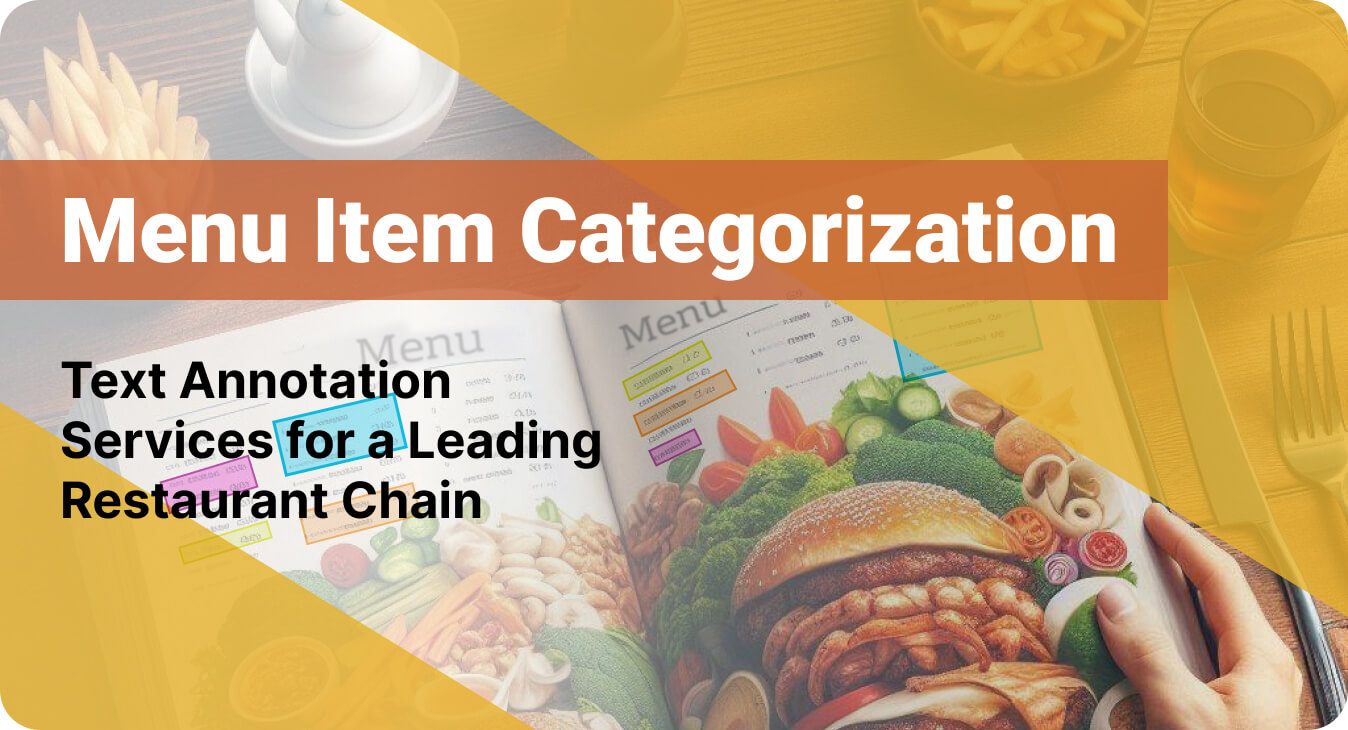
Annotated 50,000+ Menu Items for a National Restaurant Chain’s Menu Digitization Initiative.

Read More
Brand-Entity Attribution

Brand-Entity Attribution

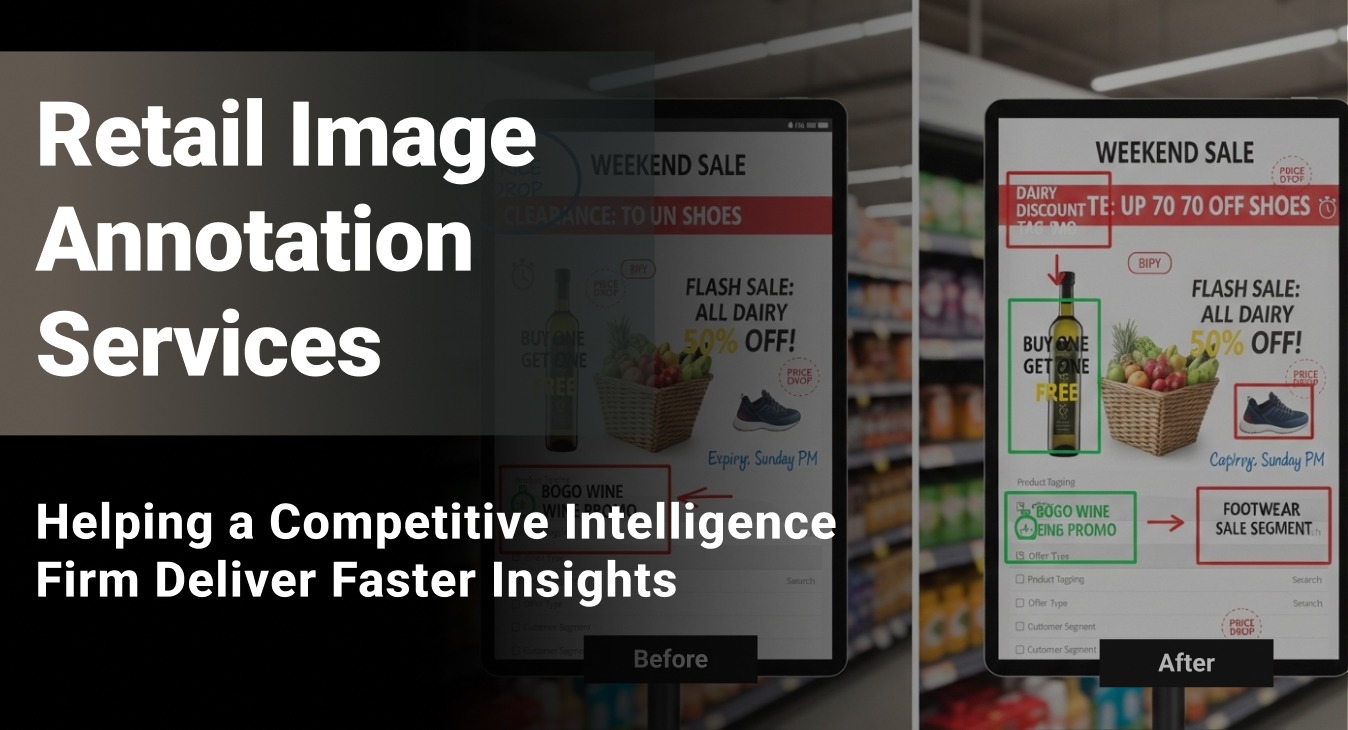
Metadata Tagging for Retail Promotions with 98.5% Annotation Accuracy

Read More

GENERATIVE AI TRAINING DATA SERVICES

Training Data Services for High-Performing Generative AI Solutions

Enterprise GenAI initiatives are expected to produce outputs that meet brand standards, withstand editorial review, and scale without inflating manual effort. But when outputs require frequent rewriting, drift from brand voice, miss context, or create avoidable review overhead, the problem becomes operational. It slows launches, adds manual effort, and weakens confidence in deployment.

Our AI training data services for content generation can help you fix the dataset before your model learns the wrong things.

We collect, structure, label, fine-tune, and validate training datasets against the model's intended output standards and use cases. Quality judgments are made by professionals with editorial and linguistic backgrounds across domains. The result is stronger output quality, tighter brand alignment, lower review burden, and a more dependable path from model release to full production deployment.

Proven Domain Expertise

Hands-on experience with content generation, AI training data preparation, including prompt-response dataset annotation, text data labeling, and content quality evaluation.

Scale without Sacrificing Quality

Established operational workflows, in-house subject matter experts, and a large workforce with the flexibility to scale teams up or down based on your project's seasonal demands.

Security & Compliance

Your proprietary content, training datasets, and internal knowledge assets are protected at every stage with NDAs, strict internal access governance, data encryption, ISO, HIPAA, and GDPR compliance.

Flexible Engagement Models

Whether you need a short-term pilot (free trial available), a dedicated annotation team for an ongoing program, or burst capacity for a seasonal project, we configure the engagement to your requirements.

LLM TRAINING DATA SERVICES

AI Data Services Built around How Content Generation Models Actually Learn

When content generation AI falls short in production, the root cause usually traces back to the data it was trained on. Typically, the training data is riddled with duplicate records, inconsistent formatting, weak metadata, uneven supervision, and limited evaluation rigor. When those gaps go unchecked, the model learns from distorted signals rather than business-ready examples. Our generative AI training data services are designed to correct that at the data layer, where output quality, factual control, brand stability, and review-readiness are shaped long before deployment.

AI Data Collection Services for Content Generation

  • Gather high-quality text, image, video, and document data from public content repositories, knowledge sources, editorial platforms, and web sources.
  • Aggregate and integrate client-provided datasets, including content archives, product copy, support knowledge, transcripts, and style guides, into the training pipeline alongside externally sourced data.
View MoreAI Data Collection Services

Data Preprocessing Services for Content Generation

  • Clean, normalize, and transform raw content datasets into machine learning-ready formats.
  • Includes deduplication, format conversion, schema normalization, PII masking where required, and enrichment with metadata such as content type, topic taxonomy, audience, language, tone, source provenance, and grounding signals.
View MoreData Preprocessing Services

Data Annotation Services for Content Generation

  • AI-assisted pre-annotation with expert human review across text, documents, transcripts, image-caption pairs, and multimodal inputs, with annotation teams trained on project-specific guidelines and relevant edge-case handling with annotation accuracy up to 95-99%.
  • Teams that can work across prominent data labeling tools, such as CVAT, Labelbox, Label Studio, and V7, as well as proprietary annotation platforms.
View MoreData Annotation Services

LLM Fine-Tuning Services for Content Generation

  • Supervised fine-tuning data (prompt-response pairs grounded in content generation domain knowledge).
  • RLHF annotation to align model outputs with domain-specific expectations.
  • Adversarial red team testing to catch hallucinated claims, unsafe content, policy violations, and unsupported outputs before deployment.
View MoreLLM Fine-Tuning Services

AI Model Validation Services for Content Generation

  • Human-in-the-loop validation of your content generation AI model's outputs.
  • Subject matter expert review to catch edge cases (hallucinated claims, weak summaries, off-brand tone, unsupported recommendations, policy-sensitive content).
  • Bias audits to ensure your model performs across varying real-world conditions. Consensus-based accuracy checks with multi-annotator agreement metrics.
View MoreAI Model Validation Services

CLIENT SUCCESS STORIES

It's all about results.

The Proof is in the Pipeline

Discover how we’ve helped businesses across 50+ nations bridge the gap between "lab-ready" and "market-ready" AI/ML applications by solving their most complex training data challenges.

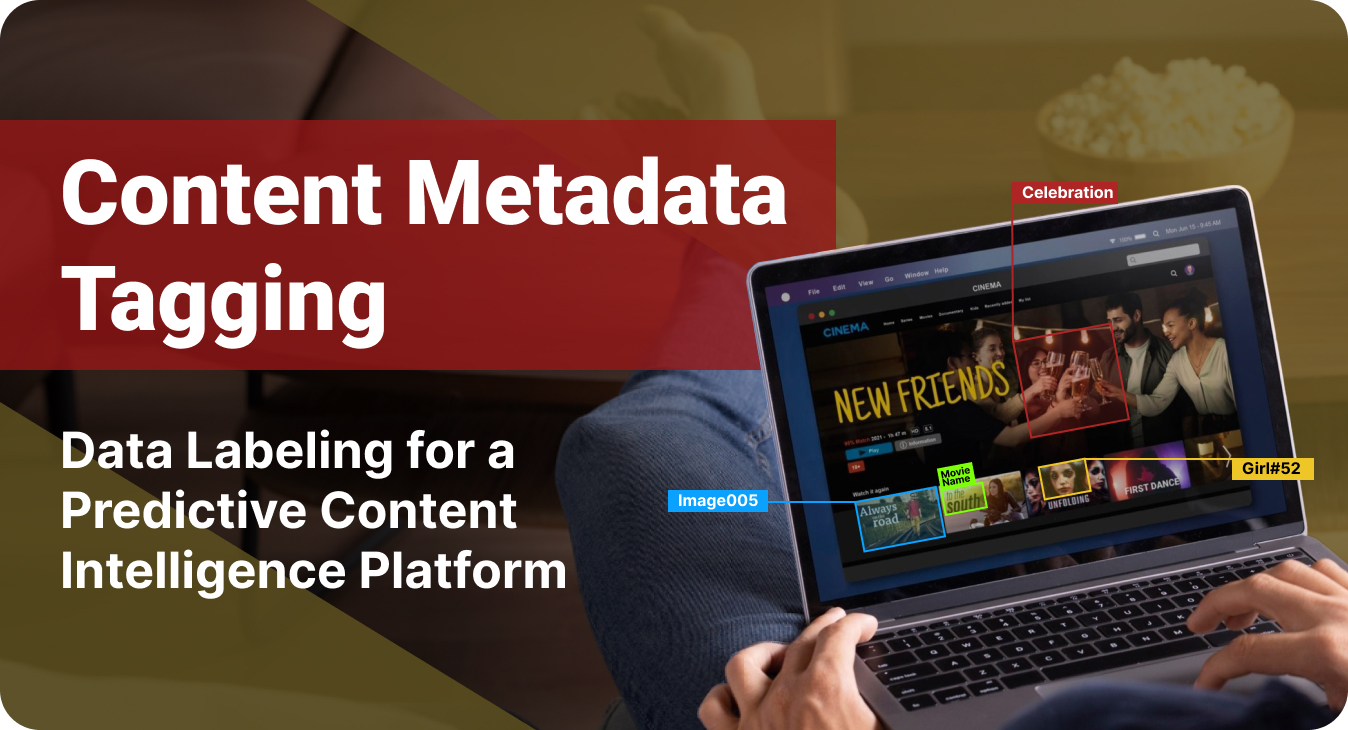
Data Labeling for a Predictive Content Intelligence Platform

Labeled over 2500 entertainment content (Movies, TV Series, Trailers) monthly to enable the accurate prediction of the target audience engagement rates and response.
65%

Improved AI Model Accuracy

60%

Less Content Categorization Errors

4-Month

Faster Model Development
menu item categorization

Helping a leading restaurant chain classify 50k+ menu items to ensure customer satisfaction and legal compliance, with 100% accuracy rates

100%

Accuracy in Menu Items Categorization

50K+

Items Classified in Menu Categorization

Enhanced

Regulatory Compliance and Customer Experience
Retail Image Annotation

Bounding box annotation and metadata tagging across retail promotional images, powering competitive intelligence solutions for a US-based company.

250K+

Annotations Delivered Monthly

98.5%

Annotation Accuracy
Automated website data scraping

Automated website data scraping and performed market research data processing with human supervision to deliver monthly pricing intelligence for a global online printing provider.

90%

Reduction in Manual Research Effort
Deployed A Fully Automated Data Scraping And Processing Pipeline

60%

Faster Lead Acquisition
Image Annotation for Restaurant AI Agents

Prepared production-ready training data for a restaurant operations management AI agent through specialized polygon segmentation of food items, enabling multi-chain deployment without client-specific retraining.

20,000+

Annotated Images Delivered

98%

Annotation Accuracy Maintained
  • Service Image Annotation
  • Platform CVAT
  • Industry F&B (Food Delivery Technology)

palm image labeling for astrology

Helping an Al-powered astrology app improve palm reading accuracy by 25% through accurate image annotation

25%

Accuracy Boost in Application's Performance

10000+

Images Labeled For AI Model's Refinement
  • Service Image Annotation Polygon & Polyline Annotaton Image Segmentation
  • Platform LabelBox
  • Industry Astrology

View All

DATA ANNOTATION TYPES WE SUPPORT

Advanced Labeling Workflows for High-Stakes Content Generation

The applications of generative AI span an enormous range — from large language models drafting long-form articles and marketing copy to image generators producing on-brand creative assets to code assistants writing production-ready functions to multimodal models captioning, summarizing, and translating across formats. Each of these models is trained differently and demands its own threshold of labeling accuracy — here's what we deliver across that spectrum.

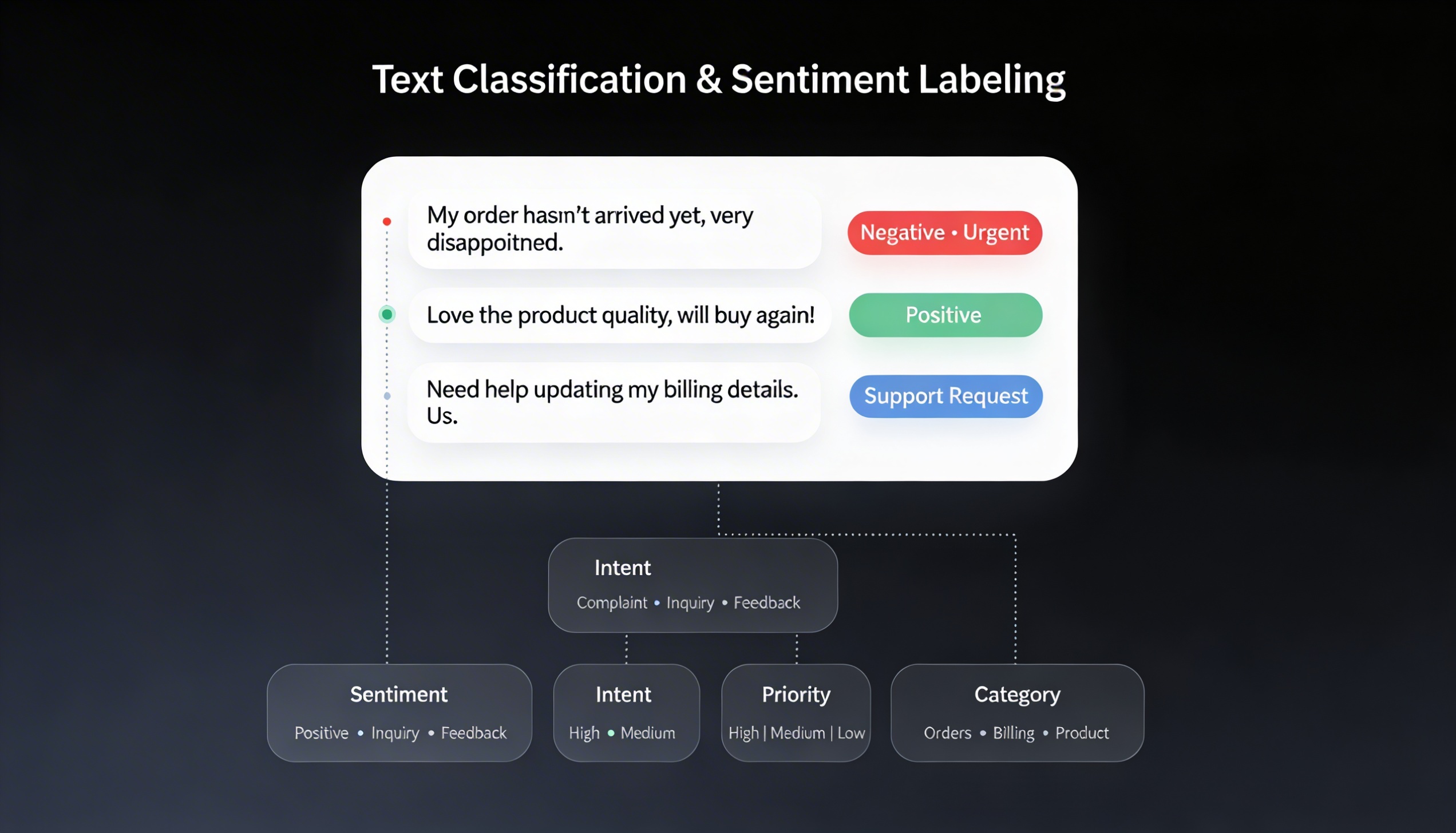
Text Classification & Sentiment Labeling

Categorizing feedback, support tickets, or in-app reviews by topic, intent, urgency, or sentiment to power routing and escalation models.

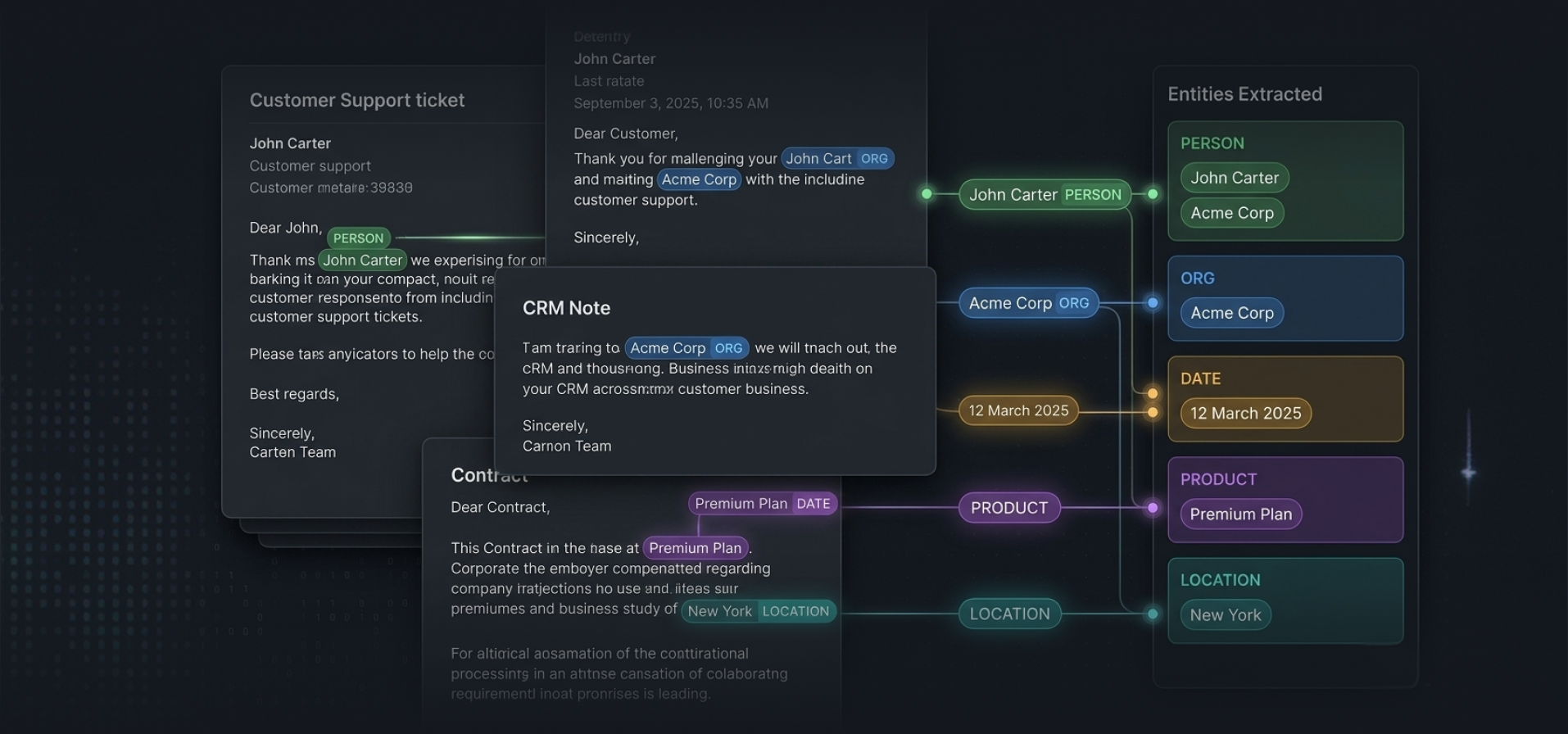
Named Entity Recognition (NER)

Tagging names, dates, product tiers, and organization names within support tickets, contracts, CRM records, and user-generated content.

Bounding Boxes

Drawing rectangles or cuboids around UI elements, product images, or dashboard components so models know what to detect and where.

OCR Annotation

Localizing text regions with bounding boxes or polygons and transcribing the character sequence inside each — training models to detect and read text simultaneously.

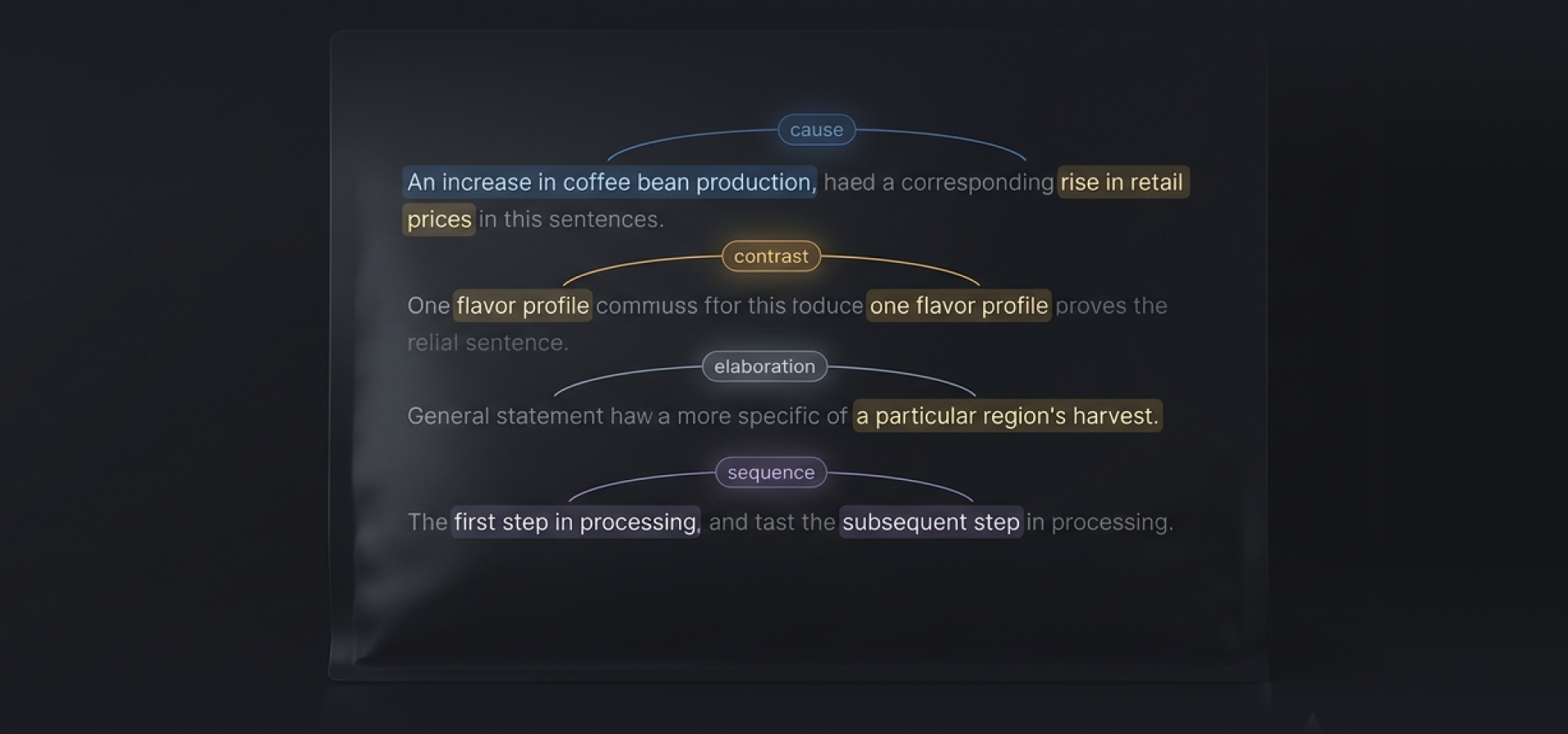
Discourse Annotation

Labeling logical or rhetorical relationships between sentences and clauses — marking cause-effect, contrast, elaboration, or temporal links to capture how a text holds together.

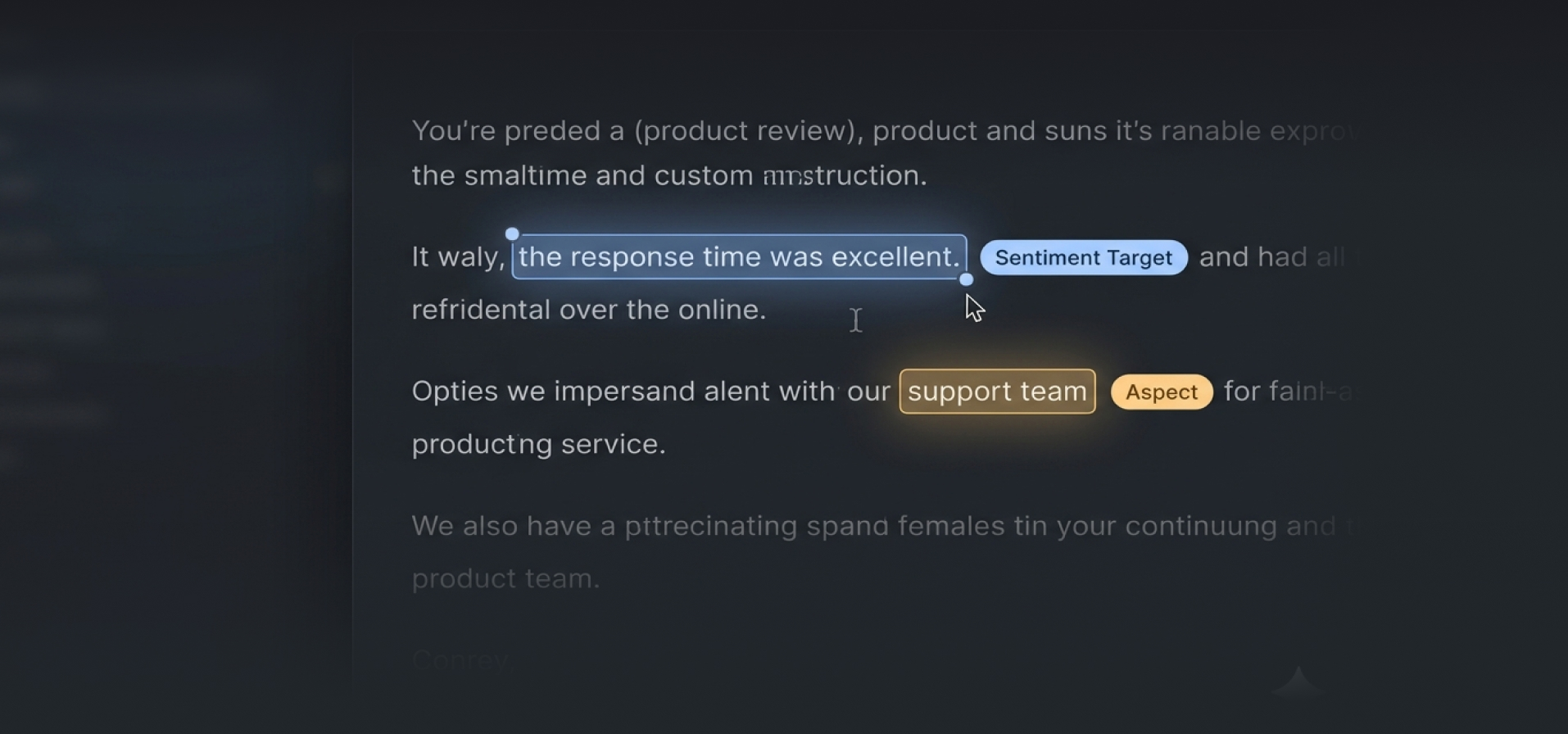
Span Annotation

Highlighting specific adjacent text segments and tagging them — extracting answer spans, entity mentions, or sentiment targets with exact start and end positions.

Dense Captioning

Writing multiple region-specific captions within a single image — each bounding box gets its own descriptive sentence rather than one summary describing the whole scene.

Image Captioning Annotation

Writing one or more natural-language sentences that describe an image's overall content — training models to generate fluent descriptions of unseen visual inputs.

Categorizing feedback, support tickets, or in-app reviews by topic, intent, urgency, or sentiment to power routing and escalation models.

Tagging names, dates, product tiers, and organization names within support tickets, contracts, CRM records, and user-generated content.

Drawing rectangles or cuboids around UI elements, product images, or dashboard components so models know what to detect and where.

Localizing text regions with bounding boxes or polygons and transcribing the character sequence inside each — training models to detect and read text simultaneously.

Labeling logical or rhetorical relationships between sentences and clauses — marking cause-effect, contrast, elaboration, or temporal links to capture how a text holds together.

Highlighting specific adjacent text segments and tagging them — extracting answer spans, entity mentions, or sentiment targets with exact start and end positions.

Writing multiple region-specific captions within a single image — each bounding box gets its own descriptive sentence rather than one summary describing the whole scene.

Writing one or more natural-language sentences that describe an image's overall content — training models to generate fluent descriptions of unseen visual inputs.

TECH STACK

AI Data Services: Technology Stack

The Operational Stack Supporting Large-Scale AI Data Collection & Labeling

The infrastructure behind our AI data solutions is optimized for control and speed. This tech stack, implemented within our AI data preparation workflow, enables our AI training data services to remain predictable at scale, auditable under scrutiny, and dependable when models encounter real-world variability.

AI TRAINING DATA SERVICES FOR CONTENT GENERATION: USE CASES

Training Data Services Designed for Your Generative AI Solution’s Intended Behavior

Different content generation workflows place varying demands on the data layer. A model trained for grounded answers, long-form summaries, multilingual content, dialogue, or product descriptions is not learning a single task across multiple formats; it is learning distinct output behaviors. Each behavior depends on its own source structure, supervision signals, labeling logic, and evaluation criteria. That is why organizations cannot rely on generic datasets or review rules to train every content-generation AI model. Our AI data services for content generation deliver an integrated workflow, with each stage of the training data pipeline aligned to the exact output behavior the business expects to scale.

Marketing & Promotional Content Generation

AI Capability

Generate ad copy, email subject lines, product descriptions, and social posts that hold a single brand voice across formats and segments — without slipping into the generic AI tone.

Training Data Gap

Marketing models drift off-brand when training data lumps together multiple voices. The output drifts away from brand positioning when tone shifts between long copy and short copy go unlabeled, and when high-converting copy is treated as interchangeable with filler.

Our Approach

We map the brand voice first—what the brand says and what it never says. Annotators score every output against that reference. We label campaign intent, funnel stage, CTA spans, value claims, brand terms, and keyword targets so the model learns how promotional copy should vary across channels, audiences, and conversion goals.

Long-Form Content & Narrative Generation

AI Capability

Produce articles, white papers, and narrative explainers that hold a single argument from start to finish, keep terminology stable across thousands of words, and don't restate the same point in different wording.

Training Data Gap

Long-form content datasets often lack outline alignment, discourse labels (why one paragraph follows another), revision history, and claim-level review, which weakens section flow, factual stability, and consistency across multi-section drafts.

Our Approach

We annotate the full draft as a single document, not as isolated paragraphs, so coherence drops at section boundaries, terminology drift across the piece, recycled claims, and opening-closing repetition all get marked at the span level. Annotators track named entities for definitional stability across sections. This gives the model stronger supervision for brief-to-draft generation and better control over extended outputs.

Conversational AI & Dialogue Generation

AI Capability

Generate multi-turn responses that stay helpful, context-aware, persona-consistent, stay in role when the conversation pivots, and adjust tone as the user's mood and intent shift through the session.

Training Data Gap

Conversation data often contains missing context links, clean single exchanges rather than long, multi-turn sessions, inconsistent intent labels, shallow preference signals, and weak escalation markers. It undermines continuity, response selection, and policy-safe handling in live interactions.

Our Approach

We annotate conversational AI datasets around tone shifts, turn intent, persona breaks, entity capture, dialogue state, escalation cues, and context carry-over from earlier turns. When two responses are both correct, ranking captures the preferred choice, and annotators record the reason. Reviewers verify multi-turn consistency before approval.

Knowledge-Grounded Content Generation

AI Capability

Generate answers and content that stay anchored to approved sources, preserve attribution logic, and reduce unsupported claims across enterprise knowledge workflows.

Training Data Gap

Fragmented question-answer datasets—marked by poor structure and weak verification—fuel hallucinations. This happens when models favor paraphrasing over grounding, reward incomplete matches, or prioritize internal biases over source evidence.

Our Approach

We build knowledge-grounded datasets around query-context-answer alignment, evidence spans, claim support, and citation behavior. We flag every factual claim that doesn't map directly to a specific source. Flags categorize failures as missing details, model-added details, contradictions, or unsupported prior knowledge.

Structured Data-to-Text Generation

AI Capability

Generate readable narratives from tables, records, product attributes, or business metrics without losing numerical accuracy, data relationships, or decision-critical context.

Training Data Gap

Structured inputs rarely include narrative mappings, entity relationships, or data-faithfulness checks, leading to omissions, fabricated values, and outputs that sound fluent but misstate the source.

Our Approach

We tie every field in the source record to the exact span where its value appears in the generated text, or flag the field as dropped. Wrong values, fabricated values, and values borrowed from adjacent rows each get a separate flag — borrowed and fabricated stay distinct in the data because they require different fixes downstream.

Multimodal Content Generation (Image & Video)

AI Capability

Generate captions, descriptions, alt text, and prompt-to-media outputs that hold visual fidelity, intent, and content-safety boundaries across image and video formats.

Training Data Gap

Multimodal data often has weak captions ("A woman at a desk"), limited region-wise labeling (subject/background location), and temporal labeling (time-stamped scene changes, actions, transitions). They also need specialized safety reviews for edge cases that text-only or visual-only filters miss.

Our Approach

We build multimodal AI training datasets that focus on text-visual alignment, scene detail, temporal coherence, and content-safety controls. We ground captions in visual evidence using bounding boxes, segmentation, and temporal markers. Captions describe the actual frame content rather than likelihoods, while ambiguous visuals receive flags rather than guesses.

Enterprise Document Generation (Technical /Compliance)

AI Capability

Generate professional documents (legal contracts, policy documents, technical manuals, and SOPs) and enterprise knowledge content that remain terminologically accurate, structurally compliant, and usable across policy, technical, legal, and regulated environments.

Training Data Gap

Professional content sources include complex section logic, domain-specific terms, clause structures, and compliance-sensitive language that generic labeling often misses, leading to risky omissions, weak terminology control, and review delays.

Our Approach

We label technical documentation, datasets, and knowledge content for section logic, defined terms, compliance flags, and mandatory language patterns. Annotators tag defined terms, mandatory clauses, and prohibited paraphrases at the span level, while SMEs verify regulatory accuracy and clause completeness.

LLM Alignment, Safety & Content Quality Evaluation

AI Capability

Evaluate and refine model outputs by judging helpfulness, safety, and factual consistency like a careful human reviewer. Provide precise signals to flag bias and retrain models before weak behaviors reach live content workflows.

Training Data Gap

Alignment data is usually scarce, expensive, and unevenly labeled, while unsafe edge cases and weak preference signals leave models under-tested against refusal logic, harmful outputs, and quality failures.

Our Approach

We create LLM evaluation datasets around preference quality, refusal behavior, safety taxonomies, and failure-mode coverage. We define the rubric in concrete terms before ranking begins. Calibration sessions run continuously throughout the project, not just at onboarding, because edge-case discussions keep preference labeling stable.

Content Personalization & Style Adaptation

AI Capability

Take the same core message and adapt it for different audiences, tones, personas, and reading levels (executive summary, deeper technical reading, regional localization) while preserving the original message, intent, and factual meaning.

Training Data Gap

Style-adaptation datasets often lack aligned rewrites, tone boundaries, audience-specific review criteria, and message-preservation checks, which makes personalization unstable and weakens brand control.

Our Approach

We build brand-fine-tuning datasets and style-transfer examples that focus on tone boundaries, audience fit, technical depth, persona match, regional fit, and message preservation. Annotators score each adapted version twice — once against the original intent and once against the target style — so that meaning preservation and style fit are tracked as independent signals.

Domain-Specific LLM Training & Optimization

AI Capability

Prepare broader instruction, preference, and evaluation data that takes a base LLM from general capability to a model that reliably handles your product-specific queries & edge cases, follows directions, and optimizes performance across content workloads.

Training Data Gap

LLM optimization programs often suffer from noisy corpora, weak task taxonomy, inconsistent difficulty labeling, and limited distinction from the original training data, which makes improvement harder to measure and retraining cycles less efficient.

Our Approach

We design the prompt distribution before annotation begins, so the dataset reflects how your product is actually used — including prompts that pass smoke tests and prompts that don't. Quality criteria sit on paper before labeling starts. Refusal, edge-case, and adversarial prompts run on dedicated annotation tracks with their own rubrics.

Multilingual Content Generation

AI Capability

Generate localized content across languages and markets while preserving intent, tone, terminology, compliance context, and brand meaning in each target locale. Catch the phrases that read 'clean' in one language and 'wrong' in another.

Training Data Gap

Multilingual datasets often carry translation bias, uneven locale adaptation, sparse native review, and inconsistent terminology controls, which weaken fluency, local relevance, and cross-market content quality.

Our Approach

We prepare multilingual content datasets around locale rules, terminology governance, transcreation quality, and native-speaker review signals. Annotators label data based on the source intent, not the literal translation. Cultural fit, idiom handling, and brand voice continuity are scored as separate signals.

Video Caption & Video Description Generation

AI Capability

Generate accurate captions, video descriptions, and descriptive summaries that preserve timing, visual context, terminology, and accessibility-focused content structure. Convey what is happening without inventing details the viewer cannot actually see or hear in the clip.

Training Data Gap

Video sources often combine fast scene changes, on-screen text, dense visual actions, and weak segmentation logic, which lowers caption usability and weakens downstream description quality and content review.

Our Approach

We annotate scene changes, on-screen text, visible actions, and key visual moments to improve caption structure, description quality, and frame-to-text consistency. Captions describe only what the viewer can directly see or hear at each moment in the timeline. Reviewers verify temporal accuracy and scene boundary consistency across annotators before release.

Text Summarization

AI Capability

Summarize documents, meetings, tickets, knowledge-heavy workflow, and reports into shorter text that preserves critical facts, key entities, and decision-making context. Preserves the source's stance and adds nothing that the source never said.

Training Data Gap

Summarization data often lacks claim-level faithfulness checks, coverage labels, and compression targets, which leads to omissions, invented details, and summaries that miss what reviewers actually need.

Our Approach

We prepare summarization datasets around important signals, coverage thresholds, compression levels, and source-faithfulness review. Reviewers cross-check span coverage and verify that any added details, dropped facts, and distorted claims each carry the correct failure label before release.

Product Issue Trend Detection

AI Capability

Summarize reviews, tickets, and feedback into narratives and trend digests at scale. Surface emerging product issues, root causes, shifts in sentiment without losing severity or context, and identify recurring complaints before they escalate or surface as market-wide complaints.

Training Data Gap

Feedback datasets usually mix complaints, suggestions, duplicates, and noisy sentiment cues, which weaken issue grouping, obscure patterns, and reduce summary quality across product workflows.

Our Approach

We build feedback-to-summary datasets around defect taxonomy, symptom spans, severity signals, duplicate linking, and issue progression over time. Annotators tag at the sentence level, not the review level, and track product, version, and platform as named entities. Reviewers verify category boundaries against the taxonomy before release.

AI Capability

Generate ad copy, email subject lines, product descriptions, and social posts that hold a single brand voice across formats and segments — without slipping into the generic AI tone.

Training Data Gap

Marketing models drift off-brand when training data lumps together multiple voices. The output drifts away from brand positioning when tone shifts between long copy and short copy go unlabeled, and when high-converting copy is treated as interchangeable with filler.

Our Approach

We map the brand voice first—what the brand says and what it never says. Annotators score every output against that reference. We label campaign intent, funnel stage, CTA spans, value claims, brand terms, and keyword targets so the model learns how promotional copy should vary across channels, audiences, and conversion goals.

AI Capability

Produce articles, white papers, and narrative explainers that hold a single argument from start to finish, keep terminology stable across thousands of words, and don't restate the same point in different wording.

Training Data Gap

Long-form content datasets often lack outline alignment, discourse labels (why one paragraph follows another), revision history, and claim-level review, which weakens section flow, factual stability, and consistency across multi-section drafts.

Our Approach

We annotate the full draft as a single document, not as isolated paragraphs, so coherence drops at section boundaries, terminology drift across the piece, recycled claims, and opening-closing repetition all get marked at the span level. Annotators track named entities for definitional stability across sections. This gives the model stronger supervision for brief-to-draft generation and better control over extended outputs.

AI Capability

Generate multi-turn responses that stay helpful, context-aware, persona-consistent, stay in role when the conversation pivots, and adjust tone as the user's mood and intent shift through the session.

Training Data Gap

Conversation data often contains missing context links, clean single exchanges rather than long, multi-turn sessions, inconsistent intent labels, shallow preference signals, and weak escalation markers. It undermines continuity, response selection, and policy-safe handling in live interactions.

Our Approach

We annotate conversational AI datasets around tone shifts, turn intent, persona breaks, entity capture, dialogue state, escalation cues, and context carry-over from earlier turns. When two responses are both correct, ranking captures the preferred choice, and annotators record the reason. Reviewers verify multi-turn consistency before approval.

AI Capability

Generate answers and content that stay anchored to approved sources, preserve attribution logic, and reduce unsupported claims across enterprise knowledge workflows.

Training Data Gap

Fragmented question-answer datasets—marked by poor structure and weak verification—fuel hallucinations. This happens when models favor paraphrasing over grounding, reward incomplete matches, or prioritize internal biases over source evidence.

Our Approach

We build knowledge-grounded datasets around query-context-answer alignment, evidence spans, claim support, and citation behavior. We flag every factual claim that doesn't map directly to a specific source. Flags categorize failures as missing details, model-added details, contradictions, or unsupported prior knowledge.

AI Capability

Generate readable narratives from tables, records, product attributes, or business metrics without losing numerical accuracy, data relationships, or decision-critical context.

Training Data Gap

Structured inputs rarely include narrative mappings, entity relationships, or data-faithfulness checks, leading to omissions, fabricated values, and outputs that sound fluent but misstate the source.

Our Approach

We tie every field in the source record to the exact span where its value appears in the generated text, or flag the field as dropped. Wrong values, fabricated values, and values borrowed from adjacent rows each get a separate flag — borrowed and fabricated stay distinct in the data because they require different fixes downstream.

AI Capability

Generate captions, descriptions, alt text, and prompt-to-media outputs that hold visual fidelity, intent, and content-safety boundaries across image and video formats.

Training Data Gap

Multimodal data often has weak captions ("A woman at a desk"), limited region-wise labeling (subject/background location), and temporal labeling (time-stamped scene changes, actions, transitions). They also need specialized safety reviews for edge cases that text-only or visual-only filters miss.

Our Approach

We build multimodal AI training datasets that focus on text-visual alignment, scene detail, temporal coherence, and content-safety controls. We ground captions in visual evidence using bounding boxes, segmentation, and temporal markers. Captions describe the actual frame content rather than likelihoods, while ambiguous visuals receive flags rather than guesses.

AI Capability

Generate professional documents (legal contracts, policy documents, technical manuals, and SOPs) and enterprise knowledge content that remain terminologically accurate, structurally compliant, and usable across policy, technical, legal, and regulated environments.

Training Data Gap

Professional content sources include complex section logic, domain-specific terms, clause structures, and compliance-sensitive language that generic labeling often misses, leading to risky omissions, weak terminology control, and review delays.

Our Approach

We label technical documentation, datasets, and knowledge content for section logic, defined terms, compliance flags, and mandatory language patterns. Annotators tag defined terms, mandatory clauses, and prohibited paraphrases at the span level, while SMEs verify regulatory accuracy and clause completeness.

AI Capability

Evaluate and refine model outputs by judging helpfulness, safety, and factual consistency like a careful human reviewer. Provide precise signals to flag bias and retrain models before weak behaviors reach live content workflows.

Training Data Gap

Alignment data is usually scarce, expensive, and unevenly labeled, while unsafe edge cases and weak preference signals leave models under-tested against refusal logic, harmful outputs, and quality failures.

Our Approach

We create LLM evaluation datasets around preference quality, refusal behavior, safety taxonomies, and failure-mode coverage. We define the rubric in concrete terms before ranking begins. Calibration sessions run continuously throughout the project, not just at onboarding, because edge-case discussions keep preference labeling stable.

AI Capability

Take the same core message and adapt it for different audiences, tones, personas, and reading levels (executive summary, deeper technical reading, regional localization) while preserving the original message, intent, and factual meaning.

Training Data Gap

Style-adaptation datasets often lack aligned rewrites, tone boundaries, audience-specific review criteria, and message-preservation checks, which makes personalization unstable and weakens brand control.

Our Approach

We build brand-fine-tuning datasets and style-transfer examples that focus on tone boundaries, audience fit, technical depth, persona match, regional fit, and message preservation. Annotators score each adapted version twice — once against the original intent and once against the target style — so that meaning preservation and style fit are tracked as independent signals.

AI Capability

Prepare broader instruction, preference, and evaluation data that takes a base LLM from general capability to a model that reliably handles your product-specific queries & edge cases, follows directions, and optimizes performance across content workloads.

Training Data Gap

LLM optimization programs often suffer from noisy corpora, weak task taxonomy, inconsistent difficulty labeling, and limited distinction from the original training data, which makes improvement harder to measure and retraining cycles less efficient.

Our Approach

We design the prompt distribution before annotation begins, so the dataset reflects how your product is actually used — including prompts that pass smoke tests and prompts that don't. Quality criteria sit on paper before labeling starts. Refusal, edge-case, and adversarial prompts run on dedicated annotation tracks with their own rubrics.

AI Capability

Generate localized content across languages and markets while preserving intent, tone, terminology, compliance context, and brand meaning in each target locale. Catch the phrases that read 'clean' in one language and 'wrong' in another.

Training Data Gap

Multilingual datasets often carry translation bias, uneven locale adaptation, sparse native review, and inconsistent terminology controls, which weaken fluency, local relevance, and cross-market content quality.

Our Approach

We prepare multilingual content datasets around locale rules, terminology governance, transcreation quality, and native-speaker review signals. Annotators label data based on the source intent, not the literal translation. Cultural fit, idiom handling, and brand voice continuity are scored as separate signals.

AI Capability

Generate accurate captions, video descriptions, and descriptive summaries that preserve timing, visual context, terminology, and accessibility-focused content structure. Convey what is happening without inventing details the viewer cannot actually see or hear in the clip.

Training Data Gap

Video sources often combine fast scene changes, on-screen text, dense visual actions, and weak segmentation logic, which lowers caption usability and weakens downstream description quality and content review.

Our Approach

We annotate scene changes, on-screen text, visible actions, and key visual moments to improve caption structure, description quality, and frame-to-text consistency. Captions describe only what the viewer can directly see or hear at each moment in the timeline. Reviewers verify temporal accuracy and scene boundary consistency across annotators before release.

AI Capability

Summarize documents, meetings, tickets, knowledge-heavy workflow, and reports into shorter text that preserves critical facts, key entities, and decision-making context. Preserves the source's stance and adds nothing that the source never said.

Training Data Gap

Summarization data often lacks claim-level faithfulness checks, coverage labels, and compression targets, which leads to omissions, invented details, and summaries that miss what reviewers actually need.

Our Approach

We prepare summarization datasets around important signals, coverage thresholds, compression levels, and source-faithfulness review. Reviewers cross-check span coverage and verify that any added details, dropped facts, and distorted claims each carry the correct failure label before release.

AI Capability

Summarize reviews, tickets, and feedback into narratives and trend digests at scale. Surface emerging product issues, root causes, shifts in sentiment without losing severity or context, and identify recurring complaints before they escalate or surface as market-wide complaints.

Training Data Gap

Feedback datasets usually mix complaints, suggestions, duplicates, and noisy sentiment cues, which weaken issue grouping, obscure patterns, and reduce summary quality across product workflows.

Our Approach

We build feedback-to-summary datasets around defect taxonomy, symptom spans, severity signals, duplicate linking, and issue progression over time. Annotators tag at the sentence level, not the review level, and track product, version, and platform as named entities. Reviewers verify category boundaries against the taxonomy before release.

Security and Compliance

Your data security is our priority

ISO
Certified

HIPAA
compliance

GDPR

GDPR
adherence

Regular
security audits

Encrypted data
transmission

Secure
cloud storage

CONTACT US

Request a FREE AI Training Data Sample for Your Content Generation Model

Send us the dataset, content stream, or evaluation set your team is still struggling to operationalize. We will assess the requirement, scope the right workflow, and process a representative sample under project-specific guidelines, calibrated QA, and secure delivery controls. That gives your team a direct view of how SunTec handles content generation AI training data before you expand scope, team size, or turnaround expectations.

FAQ - Frequently Asked Questions

AI Training Data Services for Content Generation

Every content generation AI engagement starts with a structured onboarding and calibration process. We develop project-specific annotation guidelines with your team, covering brand voice, instruction-following criteria, factual consistency, response quality scoring, style controls, safety boundaries, and edge cases unique to your workflow. Our annotators then complete calibration exercises on sample data, and their outputs are benchmarked against expert-reviewed ground truth before production begins. Only annotators who meet accuracy thresholds of 95-99% move to production work. Once the project is live, our QA leads run ongoing quality reviews, inter-annotator agreement checks, and periodic recalibration as your content generation datasets evolve. This helps maintain annotation quality across the full delivery lifecycle.

Yes. We offer both a free sample and a paid pilot, depending on how much validation you need before committing. If you want a quick view of annotation quality, labeling logic, and delivery fit, request a free sample, and we will process a small batch of your data. If you want to validate the full workflow, including tooling compatibility, delivery format, turnaround time, and quality at scale, we can run a paid pilot within your actual environment. That includes annotation, LLM fine-tuning, or AI model validation, depending on what your pipeline requires. Write to us at info@suntecindia.com to get started.

Our data services for generative AI handle mid-project changes through a structured recalibration process:

  • Update the annotation guidelines
  • Re-train affected annotators on the revised taxonomy
  • Run a fresh calibration exercise on sample data to verify consistency
  • Audit previously labeled data to determine whether re-annotation is needed or whether the existing labels can be mapped to the new schema

Our goal is to absorb the change without restarting the project and without introducing inconsistency with the LLM training datasets you've already received.

Volume shifts are common in content generation AI projects as new use cases, multilingual expansion, model iterations, or larger source datasets enter the workflow. When that happens, we onboard and calibrate additional annotators within one to two weeks. That process includes project-specific training, guideline review, sample annotation exercises, and accuracy benchmarking against your approved ground truth. This means new annotators enter production at the same quality standard as your current team.

All annotated datasets, raw data, project-specific guidelines, and related documentation developed during the engagement remain the client’s intellectual property upon project completion. We do not retain copies, reuse client content to support other programs, or repurpose your annotation guidelines for unrelated projects.

The turnaround time for LLM training data services depends on dataset volume, annotation complexity, the number of label classes, and QA requirements. Before work begins, we share a detailed project plan with milestone-level delivery dates so you know what to expect and when. If you need a faster turnaround, we can structure the team and workflow accordingly without compromising quality.

Our annotators are trained to flag ambiguous cases instead of guessing. Flagged cases are escalated to the project’s QA lead, who reviews them against the existing annotation guidelines. If the case falls outside the current ruleset, it is routed to your team for a final decision. That decision is then documented, added to the project guidelines as a new reference example, and communicated back to the annotation team.

Yes. We regularly work within client-provided annotation environments, whether that is Labelbox, Label Studio, Prodigy, a proprietary internal platform, or another workflow your team has standardized on. We also deliver annotated datasets in the format your ML or LLM pipeline requires, including JSONL, CSV, TXT, XML, and custom schemas. That means your engineering or AI operations team can ingest the output without additional conversion work.

Yes. Our generative AI training data services can help close training data gaps by sourcing, filtering, and assembling datasets tailored to your model’s exact use case. Depending on the use case, this may include editorial content, question-and-answer content, SEO content, blog articles, marketing content, product descriptions, or knowledge base datasets. If you also have proprietary assets, such as prompt libraries, internal documents, transcripts, product content, customer support content datasets, or brand-approved copy, we integrate them with externally sourced data to build a unified training dataset. This helps create stronger training data for generative AI models.

SunTec is a globally trusted large language model data labeling company with 25+ years of experience in data operations. We help content-generation AI teams prepare, clean, annotate, and validate large volumes of text and multimodal data for training, fine-tuning, and model evaluation.

Our AI training data services for content generation support the data work that shapes real model behavior in production. That includes multimodal data labeling, prompt-response and Q&A pair creation, domain-specific fine-tuning support, RLHF data preparation, evaluation-set creation, and benchmarking for model validation. The goal is to turn raw content assets into structured, high-quality ground-truth datasets that help models understand context, generate accurate, human-like content, and adhere to safety and quality standards.

Outsourcing helps when content generation models need training data with tighter quality control, faster throughput, and greater operational discipline than internal teams can provide without slowing product and model development.

We bring the execution layer needed to keep that work consistent. That includes structured dataset preparation, project-specific guidelines, calibrated annotators, controlled QA, and delivery workflows built for prompt-response datasets, instruction-tuning inputs, preference data, and evaluation sets.