Gen Z Doesn’t Have a Short Attention Span – Your App Just Failed the Test
Table of Contents
- The Myth Businesses Have Been Building Their Apps Around
- Let’s Unpack The Reasons Behind Mobile App Abandonment
- How to Improve App Retention: Lessons From Our Projects
- Beyond Performance Issues: Mobile App Uninstalls Also Vary by Platform, Category, and Region
- Mobile App Abandonment, Reconsidered
- How SunTec India Can Help You Build Apps That Gen Z Keeps
Picture this: a nineteen-year-old taps “install.” The icon lands on her home screen; she opens it once, stares at a loading spinner, and thumbs through a sign-up form that already wants her email, her birthday, and (why?) her location. Eleven seconds in, she’s back on the home screen. By the end of the day, the app is gone. This isn’t a rare occurrence, but the median. Roughly 1/4th of users abandon an app after a single use. And 90% abandon it before the 30-day mark.
There is significant buzz around the idea that Gen Z has lost its ability to focus. But looking at it from a different lens will tell you otherwise – they’ve instead built a high-speed value filter. They don’t abandon apps because they are fickle, but anything that fails to prove its worth in the first few seconds.
So, to put it plainly, the ‘ app abandonment problem’ is really a ‘first-impression economy issue.’ You can also say that the apps that win Gen Z aren’t louder, they’re faster to value. Let us explore this in detail and see why certain apps risk being abandoned by the present generation.
The Myth Businesses Have Been Building Their Apps Around
Dr. Gloria Mark, a professor at the University of California, Irvine, who has spent two decades studying attention, has tracked exactly how long people focus on a single screen before switching. In her 2004 research, the average attention span on a digital device was approximately 150 seconds. By 2012, that number had been cut in half, to 75 seconds. More recent data (2024) puts it at a staggering 47 seconds. In other words, on-screen attention is genuinely compressing, and it’s been doing so for twenty years. Narrowing this down to Gen Z and even millennials, many sources cite it as 8 seconds!
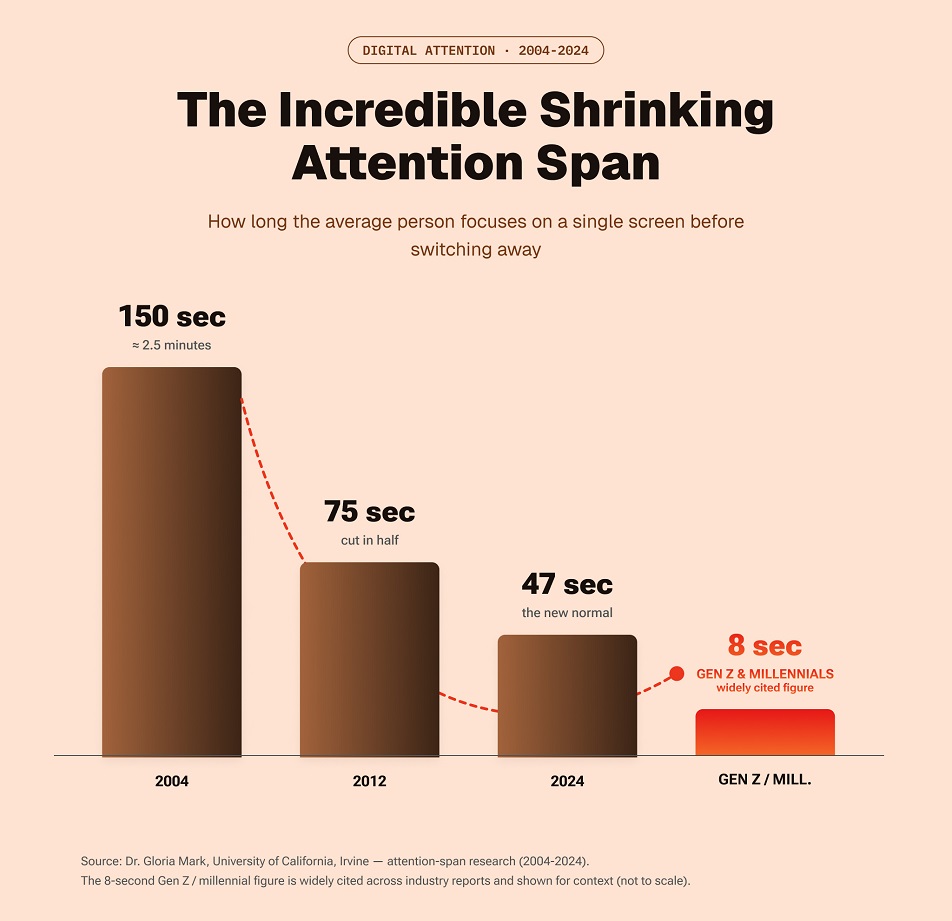
Here’s the part most product teams get wrong, though: that 8-second window is not the limit of Gen Z’s ability to focus but the speed at which they decide whether something is worth their focus. This is a generation that owns smartphones at near-universal rates (98%) and spends multiple hours (~4) a day inside apps; hardly the behavior of people who can’t concentrate.
They will happily disappear into a forty-minute video essay or a three-hour rabbit hole if presented nicely, exactly how they want, and when they want it. What they won’t do is grant your app the benefit of the doubt.
Gen Z evaluates relevance, payoff, and usefulness in the first beat of an interaction and decides, almost instantly, whether to keep going. The data backs the reframe: surveys from IBM’s Institute for Business Value found that 62% of Gen Z won’t use an app or website that’s hard to navigate, and 60% abandon one that’s too slow to load. They aren’t impatient. They’re efficient.
Let’s Unpack The Reasons Behind Mobile App Abandonment
Knowing that users leave is one thing; understanding why is where the mobile app retention rate is actually won or lost. When you break down why users abandon apps, the same handful of culprits surface again and again, and almost all of them strike during the first session, long before anyone has seen what the product can really do.
Here are the reasons people delete apps, ordered roughly by how often they prove fatal.
1. Poor All Performance and Clutter
No points for guessing, this is the number-one killer. Industry data attributes roughly half of all uninstalls to technical performance. Moreover, it is well known that users who experience a crash, freeze, or error will uninstall the app. For a generation raised on instant everything, a single stutter on launch is often all it takes.
2. Slow Load Times
Closely related, but it earns its own mention. Users now expect an app to become usable in about a few seconds or less. Anything slower is simply read as broken. The irony is pointed for Gen Z, as every second your app spends “loading” is a second spent from the window they have granted you to prove your worth.
3. A Long or Demanding Onboarding
When the sign-up flow runs longer than two minutes, a large share of new mobile app users abandon before they ever reach the payoff. Every extra field, permission request, and tutorial screen costs 120 seconds of your budget, which you cannot easily refill. The flip side is the opportunity: well-designed app onboarding can boost retention, so the difference between deleted and kept is often just how quickly the app helps someone value it.
4. Privacy Concerns and the Trust Tax
Gen Z is privacy-literate and skeptical by default. If your app demands the camera, microphone, location, and a bunch of other things on the very first launch with no context, you may have already raised a red flag before earning any goodwill.
5. Notification Overload
Aggressive, irrelevant, or relentless push notifications are one of the fastest routes to the uninstall button. What is meant to drive re-engagement does the opposite: it signals that the app values its own metrics over the user’s attention. This is a particular dealbreaker for a generation already actively managing notification fatigue and screen time.
6. Limited Storage and Data Drain
Phones fill up, and heavy apps are the first to go. A significant portion of users drop an app because of how much storage or mobile data it consumes. Bloated downloads and background data usage quietly push an app to the top of the next cleanup.
7. No Ongoing Value (or a Better Alternative)
The quietest killer of all is stagnation. If an app doesn’t keep delivering fresh, compounding value, it gets cut the moment something more useful comes along. This is exactly why personalized experiences that adapt to the user can lift retention, while generic ones blur into the dozens of other icons competing for the same home screen.
The thread connecting all the reasons people delete apps is time. Each of these reasons is really a failure to deliver value before the user’s filter decides you aren’t worth it.
How to Improve App Retention: Lessons From Our Projects
We are not calling out the above reasons by fluke. Across the hundreds of mobile apps we’ve delivered, we’ve engineered against each one and watched the right choices move the numbers.
For Performance and Clutter
Take performance and clutter. The Easy Barn App that we developed had to serve three very different users: barn managers, field staff, and horse owners, without overwhelming any of them or lagging on real-time updates. For peak performance, we designed a tailored interface for each user role, built QR-code workflows to keep task data reliable and accurate, and scoped notifications to only the events that mattered.
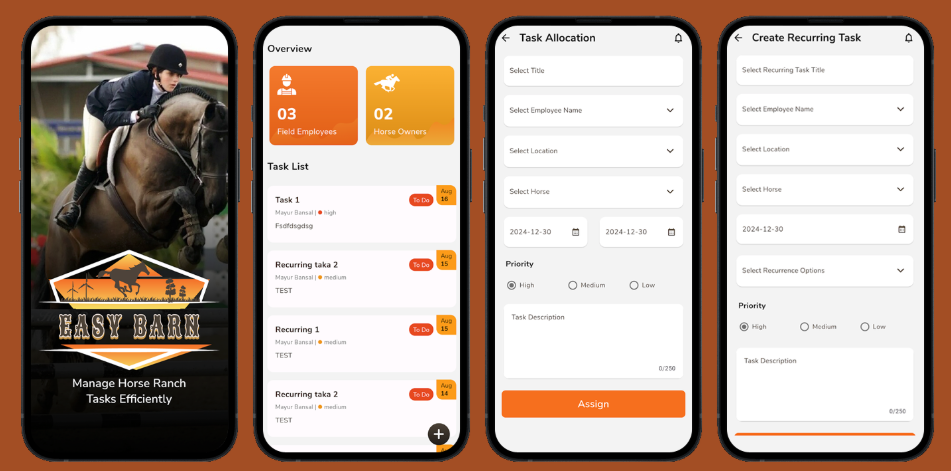
Our targeted focus on optimizing for peak performance and minimum clutter resulted in a 95% drop in app errors and 2–3 hours saved per staffer every day, making it an app people open because it actually works for them.
Coming to Gen Z, this is the generation that has never known dial-up or buffering. Native-app smoothness is their baseline, not their bar. So, to build apps for peak performance and minimal clutter:
- Set a hard performance budget. Target a cold start under ~2 seconds and treat anything slower as a bug, not a backlog item.
- Show content, not spinners. Use skeleton screens, optimistic UI, and progressive loading so the app feels instant.
- Lazy-load for everything off-screen. Paginate lists, defer below-the-fold assets, and serve adaptive, compressed media (WebP, adaptive-bitrate video) so nothing heavy blocks the first interaction.
- Keep the binary lean. Code-split, strip unused SDKs, and minimize install size, both to keep the download itself from being a barrier and to prevent storage pressure from making your app the first one deleted.
For Maximum Trust and Privacy
Trust is harder to earn, and nowhere more so than when parents put a child in a stranger’s car or a cab. One of our projects required us to build a Trustworthy, On-Demand Ridesharing App for Kids. Our mobile app developers built the entire experience around it: mandatory driver verification, real-time GPS tracking, and Zendrive monitoring that flags hard braking, phone use, or collisions mid-ride. The permissions the app requests are not a red flag in this particular case; they are the product, each one explained and earned to maximize trust and security.
Satisfied with how we configured everything, this is what the client said about the app:
SunTec India has been nothing short of exceptional. Their unwavering support and outstanding performance have exceeded our expectations. We couldn’t be happier with their work and highly recommend them to anyone looking for help in developing custom mobile applications.
Gen Z grew up amid breach headlines and surveillance discourse, which makes them the most privacy-literate users you will ever design for. They read a permission prompt as a character test, and over-asking instantly fails it. Do the following:
- Ask in context, just-in-time, and with a reason. For example, when asking for the location, couple it with “We use your location to show rides nearby.”
- Practice data minimalism. Collect only what the feature genuinely needs, default to the privacy-protective setting, and let users reach core value before any account wall.
- Make privacy controls visible and user-owned with easy-to-find settings, granular toggles, and one-tap data export/delete.
- Refuse dark patterns. No manipulative opt-outs, no pre-checked consent, no guilt-trip dismiss buttons.
For Easy Adoption and Onboarding
Then there’s onboarding the hardest-to-reach users. MeriMitti, an eCommerce-focused app that we built, set out to bring India’s regional artisans (many with little prior exposure to smartphones or online selling) onto a global marketplace. The onboarding was meant to be super easy and not require significant time or technical fluency, so we built a simplified, tutorial-guided registration process. It walked each artisan through creating a profile, listing a craft, and managing orders, step by step. More than 1,000 artisans came online, and transaction times dropped 38%; proof that when your least tech-savvy user can succeed in the first session, everyone else sails through.
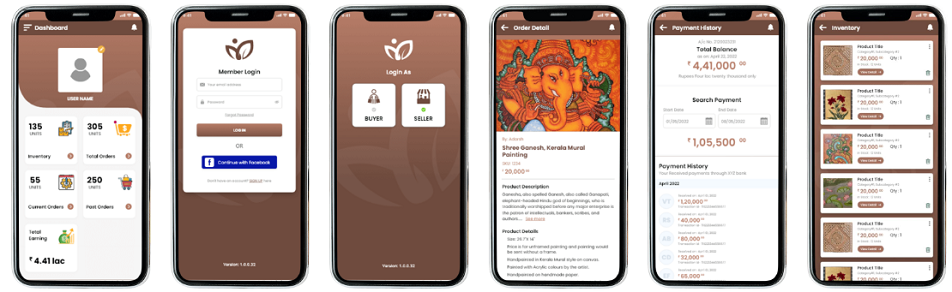
Now, Gen Z, unlike artisans, has onboarded hundreds of apps like TikTok and Instagram. These are the apps that deliver in seconds. So they begin from where you’d expect to optimize. You have roughly a two-minute window before a demanding sign-up flow loses them. Retain by doing the following:
- Give before you ask. Let users experience the core benefit before the login wall; defer account creation until they’re already invested.
- Make sign-up frictionless. Social login, passkeys/one-tap auth, or mobile-number verification; every extra form field is a measurable drop-off point.
- Design for the least confident user. Plain language, visual cues, forgiving defaults, voice/text input options (like in the MeriMitti app).
For Ongoing Value Creation and Personalization
Mobile app retention belongs to apps that adapt. Easy Ezglish, a language-focused learning app that we built, guides new learners with a step-by-step tour. It then personalizes every lesson to their pace and native language, pairing a frictionless onboarding with content and value that compounds over time.
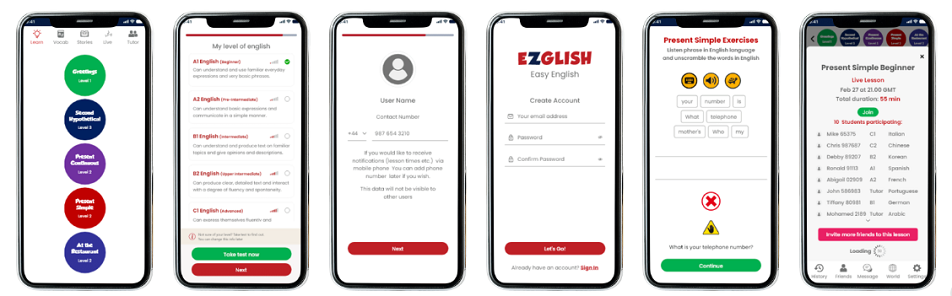
The payoff was a 37% lift in mobile app retention!!
With Gen Z, this can be tricky. Because retention for them isn’t about loyalty, but re-earning their interest. They will cut an app the moment it goes stale or something better appears. So
- Build adaptive personalization. Use behavioral signals (and ML where it earns its keep) to tailor content and recommendations so the app feels made for them and improves with every use.
- Replace notification spam with value loops. Fewer, smarter, well-timed nudges, personalized and user-controlled.
- Reflect progress back to the user. Streaks, insights, visualizations, and milestones tap into Gen Z’s love of seeing their own data and growth.
- Ship fresh value visibly. Regular content, features, and seasonal moments give a recurring reason to return; make “what’s new” obvious.
Beyond Performance Issues: Mobile App Uninstalls Also Vary by Platform, Category, and Region
Performance and the seven failure modes above are near-universal, but the odds of an uninstall are not evenly distributed. Data shows that the same app can meet very different fates depending on where and how it runs.
Android vs. iOS
Mobile app abandonment rates also vary depending on whether the app is on an Android or iOS device. However, most publicly available data is benchmarked on Android because Apple’s policies, since the iPhone 15’s launch, have made uninstall tracking far more challenging.
Per the consensus, Android has historically shown uninstall rates roughly double those of iOS, largely due to storage constraints. Android devices, especially the budget models common among Gen Z and other younger users in emerging markets, tend to have less of it. So mobile apps get culled sooner to make room.
Application Category
This is an aspect where the abandonment rates vary drastically. Dating apps are consistently the most-uninstalled category, with non-organic dating uninstalls reaching around 62%. Games churn hard, too, especially under storage pressure, since users will delete a game long before they choose to sacrifice their photos.
At the other end, News & Magazines (~27%) and Travel (~29%) retain the highest numbers of subscriptions and habitual users. Plus, their real-world relevance creates stickiness. Next come Shopping and Finance, both of which rely on brand familiarity as the reason behind retention, extending beyond the app’s actual performance.
Health and Wellness Apps sit in a precarious middle: strong intent to download, but among the weakest sustained engagement of any category. That’s exactly the challenge we set out to beat when we built our own AI-Powered Digital Diary App for Mental Wellness. You’ll see more on that shortly.
Regional Abandonment Rates
Mobile app uninstall rates are known to climb in developing markets, where limited storage, slower connectivity, and higher sensitivity to heavy apps all bite harder. Industry data puts Bangladesh (65.6%), Nepal (65.3%), and Pakistan (64.6%) at the top of the global list, while developed markets, including the United States, sit well below. The lesson for anyone building for a global Gen Z audience is, hence, the lightweight, low-bandwidth, storage-conscious build that is non-negotiable.
One more thread runs through all of it: Acquisition Means. It was found that users acquired through paid channels are about 22% more likely to uninstall than those acquired organically. But, at the same time, overpromising in an ad just to get users to download is one of the fastest ways to earn a Day-1 deletion.
The practical takeaway is that there is no single app abandonment rate to optimize for. Benchmark against your own platform, category, and region, and remember that in some categories, deletion isn’t an accident at all. It is becoming a deliberate choice.
Mobile App Abandonment, Reconsidered
Return to that nineteen-year-old and her verdict. The app she deleted and the app she kept may have looked nearly identical in the store. The difference was never her attention span. It was about whether the product delivered enough value in the few seconds it was given. Or whether it loaded fast, earned its permissions, and gave her a reason to come back.
That is the whole game. Gen Z isn’t abandoning apps because they cannot focus. They are abandoning those who fail the test and rewarding the rare few who pass it with exactly the loyalty every product team is chasing. As AI-driven personalization and other features mature, the mobile apps that adapt to their users will pull further ahead, widening the gap between the kept and the deleted. The teams that internalize this ideology, of treating a short attention span as a quality filter, will be able to navigate mobile app abandonment.
How SunTec India Can Help You Build Apps That Gen Z Keeps
Winning Gen Z doesn’t come down to a single feature; it comes down to a discipline: proving value before the filter closes, then re-earning it every session. That is the principle our mobile app developers build into every project, from wellness apps and marketplaces to fintech and field-service platforms.
We engineer against the things that actually drive app abandonment: performance that never stutters, onboarding that delivers a first win in seconds, privacy handled transparently and by design, and AI-driven personalization that makes an app feel made for each user. Across hundreds of products, we’ve turned the failure modes in this article into deliberate design decisions.
If you’re building for the most discerning audience in mobile, or rescuing an app that’s quietly bleeding installs, our team can help you ship something Gen Z opens, keeps, and comes back to. Let’s talk about your app.


Rohit Bhateja, Director - Digital Engineering Services & Head of Marketing
Rohit Bhateja, Director of Digital Engineering Services and Head of Marketing at SunTec India, is an award-winning leader in digital transformation and marketing innovation. With over a decade of experience, he is a prominent voice in the digital domain, driving conversation around the convergence of technology, strategy, customer experience, and human-in-the-loop AI integration.