
Digital convenience is no longer a differentiator; it has a baseline expectation. From personalized apps to interconnected web platforms, businesses are under constant pressure to deliver faster, more innovative, and more intuitive digital experiences that users can access at any time, anywhere, and on any device.
Artificial Intelligence (AI) sits at the center of this shift. No longer limited to chatbots or recommendation engines, AI is now embedded across the entire digital engineering lifecycle, from design and development to testing, deployment, and ongoing optimization. It enables businesses to automate what was once manual, predict what customers need before they ask, and engineer platforms that continuously improve themselves.
In short, AI is not just a tool; it is becoming the foundation of modern digital engineering, redefining what digital convenience means for both businesses and their customers. Let’s dig into AI’s utility in detail.
Notable Contributions of AI in Digital Engineering
AI’s impact on digital engineering can be viewed through two lenses: the developer side, where it streamlines software development lifecycles (SDLCs) by automating and optimizing critical processes, and the user side, where it enhances digital convenience with more innovative and personalized experiences. Both perspectives highlight how AI is transforming the way platforms are built, delivered, and consumed.
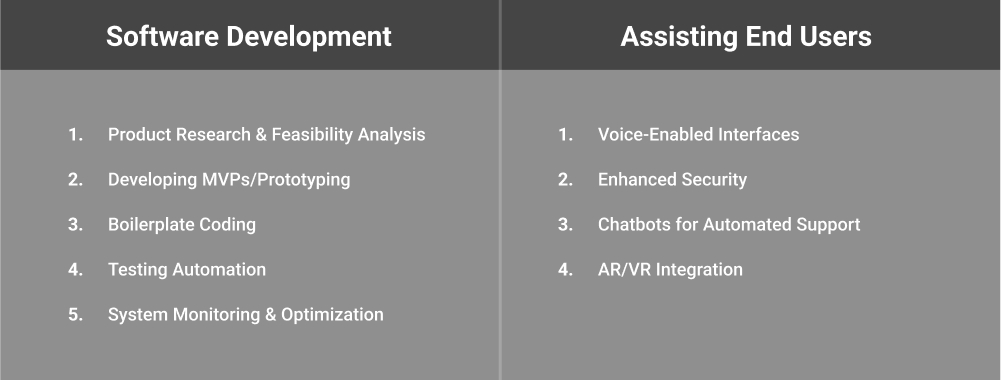
How AI Has Enhanced Software Development Lifecycles: Empowering Developers
In traditional development, development teams often spend significant time managing repetitive coding, API & third-party integrations, as well as maintenance tasks. AI changes this equation. AI has primarily automated and accelerated:
- Product Research & Feasibility Analysis: AI-powered analytics platforms scan large volumes of market data, competitor strategies, and user behavior to identify opportunities and risks. This shortens the discovery phase and provides data-backed validation of product ideas.
- Developing MVPs/Prototyping: AI-driven design tools (Adobe XD, Figma, Balsamiq, Proto.io, etc) automatically generate wireframes, mockups, and user journey flows. This accelerates the concept validation stage, enabling stakeholders to visualize and refine product direction.
- Boilerplate Coding: Intelligent coding assistants suggest and auto-generate reusable blocks of code for everyday functions. By reducing time spent on repetitive tasks, developers can concentrate on building complex, differentiated features.
- Testing Automation: Instead of manually creating test cases, AI analyzes historical bug data and user interaction patterns to generate smart tests that catch errors earlier. This not only speeds up QA cycles but also raises the overall reliability of the product.
- System Monitoring & Optimization: AI-driven observability tools continuously monitor performance, detect anomalies, and even self-correct issues before they impact users. This proactive approach improves uptime and reduces the burden on operations teams.
Read More: The Rise of AI-Enabled SDLCs: How to Build Smarter, Faster Software.
How AI Has Improved User Experiences: Assisting End Users
On the user-facing side, AI elevates digital convenience by creating interactions that are smarter, safer, and more immersive. Some of the most impactful contributions include:
- Voice-Enabled Interfaces: AI-powered assistants, such as Siri and Alexa, enable seamless hands-free navigation and conversational interactions, setting a new benchmark for accessibility and user convenience.
- Enhanced Security: AI enhances protection through advanced methods, including facial recognition, biometric authentication, and more. These features safeguard sensitive information while maintaining a frictionless user experience.
- Chatbots for Automated Support: Intelligent chatbots provide context-aware, real-time support. By automating repetitive queries and improving response times, they ensure users receive instant assistance, enhancing satisfaction and trust.
- AR/VR Integration: AI enhances immersive technologies by enabling more intelligent and dynamic interactions. This creates engaging, interactive environments, particularly for operations in industries like retail (virtual property tours), healthcare (digital, hands-on surgical practice), and entertainment applications (virtual gaming).
Beyond the SDLC: Forward-Looking AI Contributions in Digital Engineering Processes
While AI’s role in the software development lifecycle (SDLC) is already transformative, its impact extends further into the daily workflows of engineering teams. Beyond prototyping, coding, and testing, AI today strengthens digital engineering in several advanced areas:
1. Intelligent Code Audits
Developers are no longer restricting AI’s usage to code generation; they are utilizing intelligence for detailed code reviews and gap analyses. They use specialized tools to review pull requests, flag vulnerabilities, identify performance bottlenecks, or detect code smells (signs that indicate deeper issues, even if the code works).
This not only improves code quality but also reduces the time engineers spend on manual peer reviews.
2. DevOps & Deployment Automation (AIOps/MLOps)
DevOps approaches have already streamlined traditional software development, bridging the gap between dev and ops teams. However, these approaches are not designed for AI/ML-integrated workflows that deal with extensive data integration, model training, and continuous deployment.
To achieve DevOps-like efficiency in AI/ML workflows, developers utilize AI to optimize CI/CD (Continuous Integration and Deployment) pipelines. These tools predict failed builds, dynamically allocate cloud resources, and automate rollbacks in the event of errors.
3. Documentation & Knowledge Management
For the majority of developers, over 15% to 50% of their time is spent on managing and maintaining codebases. However, with AI, developers can auto-generate documentation, API references, and guides directly as they code.
Additionally, instead of static notes, AI tools can explain code behavior in plain language, helping new developers quickly understand unfamiliar modules. These tools have NLP (natural language processing) capabilities that enable new developers to query documentation conversationally (e.g., “show me how payment gateway retries are handled”), reducing the time spent digging through lengthy documents.
Beyond Interfaces: The Future of AI-Powered User Experiences
Besides Chatbots and immersive AR/VR experiences, AI is a key enabler of this omni-channel convenience, ensuring every touchpoint feels consistent, intelligent, and personalized.
1. Seamless Cross-Channel Journeys
Users no longer distinguish between shopping online, browsing on mobile devices, or visiting a store—they expect all touchpoints to work together seamlessly. AI enables this by unifying customer data across various platforms. For instance, adding a product to a cart on a website can trigger a push notification on a mobile device or a reminder on a wearable device.
2. Contextual Commerce
AI enables personalized buying experiences that adapt to each user’s environment and intent in real-time. Imagine scanning a product in-store and instantly receiving customized recommendations, reviews, or price comparisons on your phone.
By combining context, preferences, and location data, AI transforms commerce into a highly personalized, situation-aware experience.
3. Predictive Assistance Across Ecosystems
AI anticipates user needs by learning patterns across devices and platforms. A mental wellness app on your smartwatch might detect elevated stress levels through heart rate patterns and prompt a quick breathing exercise. At the same time, it could sync with your mobile app to recommend guided meditation sessions, journaling prompts, or connect you with a virtual counselor—all tailored to your real-time state of mind.
For instance, consider this mental wellness app.
Our developers developed an AI-powered digital diary app that enables users to log thoughts and emotions. It utilizes AI technologies, including Natural Language Processing (NLP) and machine learning (ML), to analyze user inputs, detect emotional patterns, and provide actionable recommendations.
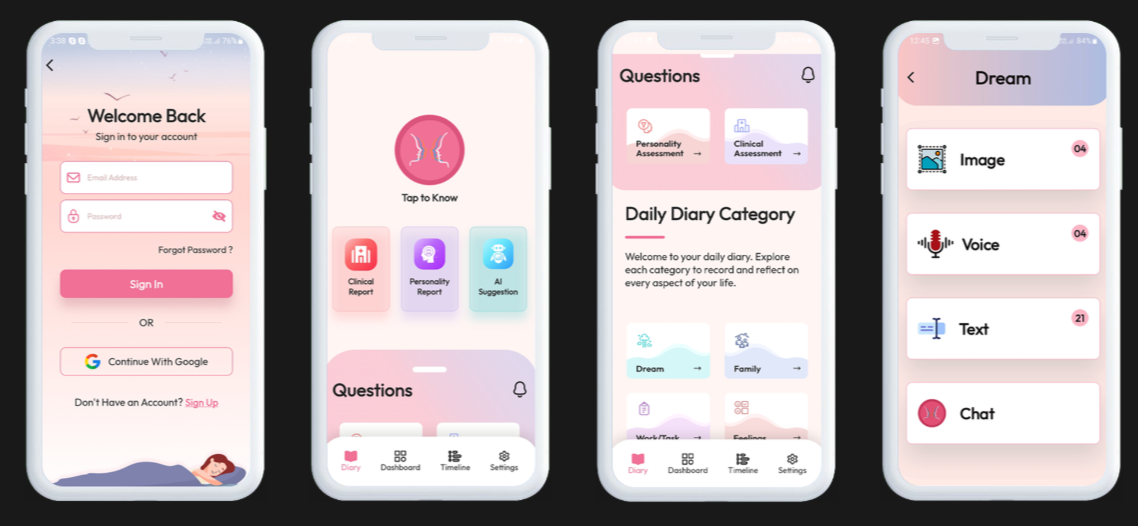
Learn More: A Mental Wellness Digital Diary
This type of proactive, predictive support makes digital experiences feel intelligent and seamlessly integrated into daily life.
4. Search Experience Optimization
AI-powered search engines inside apps and platforms improve query understanding, intent recognition, and result relevance. This goes far beyond keyword matching; AI interprets intent and context to deliver results that feel intuitive.
- In eCommerce, platforms like Amazon and Walmart use AI-driven SXO to surface relevant products instantly.
- In enterprise apps, tools like Microsoft 365 Copilot or Slack AI enable employees to retrieve documents, conversations, or insights using conversational queries, thereby reducing the time wasted on manual searches.

Future of AI in Digital Engineering: What to Expect
As enterprises move from digital transformation to digital maturity, AI will become the core engine of digital engineering. The next phase will focus less on isolated AI features and more on AI-first ecosystems that redefine digital convenience. Key developments to expect include:
AI-Powered ‘Everything-Ops’ (AIOps, MLOps, APIOps)
The future of software delivery will rely on self-optimizing pipelines for all operations. Whether it is detecting risks in builds, auto-correcting deployments, managing APIs intelligently, or proactively handling infrastructure issues, AI ecosystems will reduce the need for manual intervention.
Polyfunctional Cobots
Collaborative robots (cobots) are evolving into polyfunctional systems capable of performing multiple roles with minimal reconfiguration. Unlike traditional industrial robots that are designed for a single task, polyfunctional cobots can switch between assembly, quality inspection, logistics, and even customer-facing support.
Cognitive Digital Twins
Digital replicas of applications, platforms, or even user ecosystems will allow enterprises to simulate performance, security, and user experience scenarios before going live. This will drastically reduce risks and accelerate release cycles.
Neurological Enhancements
You can expect AI to enable advanced neurological enhancements in the future. In fact, by 2030, an estimated 30% of knowledge workers are expected to leverage neurological enhancement technologies, such as bidirectional brain–machine interfaces (BBMIs), up from less than 1% today.
Companies like Neuralink are constantly developing interfaces that enable direct brain-computer communication, potentially transforming how engineers interact with design software, control systems, and simulation platforms.
End Note
AI has already transformed digital engineering by streamlining development lifecycles, enabling intelligent automation, and reshaping user experiences across channels. What once required extensive manual effort—research, coding, testing, or monitoring—can now be accelerated and optimized with AI-driven precision. For users, the benefits are equally tangible: more secure, personalized, and predictive interactions across devices, platforms, and even physical environments.
The true significance of AI lies in its ability to continuously elevate digital convenience, setting new benchmarks for how enterprises build and how users consume. Looking ahead, AI’s advancements will propel digital engineering into an era where systems are not only adaptive but also deeply collaborative with human intelligence.
If you’re seeking a reliable partner to navigate these advancements and build truly connected, immersive digital experiences, we can help. We have over 25+ years of IT experience and remain ahead of all tech advancements, ensuring our clients deliver the most promising digital experiences. Contact us at info@suntecindia.com to get started.