Not every customer impacts your bottom line the same way—and most advertisers know it. In most cases, a small portion of your audience—roughly 20–30%—can drive up to 70–80% of total sales. Identifying and reaching these high-value segments, however, is easier said than done. Standard Amazon Advertising tools offer useful but limited targeting options, such as:
- Product category interests
- In-market behaviors
- Amazon-defined lifestyle segments
- Basic retargeting pixels
While effective for broad reach, these pre-built audiences lack the precision needed to truly optimize ad spend. The result? You might be showing premium product ads to budget-conscious browsers, or missing opportunities to cross-sell to your most loyal customers. This is where Amazon Marketing Cloud (AMC) changes the game—allowing sellers to build custom, high-value audiences defined by actual spending patterns, loyalty, and cross-product engagement.
With AMC’s High Value Audiences solution, advertisers can now granularly segment their target audience by spend percentiles, new-to-brand purchases, ASIN engagement, and even cross-category purchase paths. Let’s explore how leading brands use Amazon Marketing Cloud solutions to build high-converting audiences (without coding) that power smarter media investment and stronger customer relationships.
Table of Contents
- What Are High-Value Audiences and How Amazon Marketing Cloud (AMC) Identifies Them—Understanding the Foundation
- Types of High-Value Audiences You Must Target Using Amazon Marketing Cloud
- How to Create and Segment High-Value Audiences in Amazon Marketing Cloud (AMC): Step-by-Step Guide
- Things to Consider When Building High-Value Audiences Using AMC: Common Pitfalls & Best Practices
- DIY Approach Seems Challenging? Get Professional Amazon Marketing Cloud Agency Support for Smarter Audience Management
What Are High-Value Audiences and How Amazon Marketing Cloud (AMC) Identifies Them—Understanding the Foundation
High-value audiences (HVA) refer to a segment of customers with the highest spending potential, purchase frequency, and lifetime value to your brand. These shoppers:
- Consistently spend above average on products (have a higher average order value) in your category
- Demonstrate repeat purchase behavior and brand loyalty
- Exhibit high-intent signals (multiple product views, cart additions, wishlist saves)
- Are more likely to convert to Subscribe & Save subscriptions
- Have lower return rates and shorter time-to-repurchase/higher retention
By identifying such high-value audiences, you can understand which shopper segments are worth pursuing in the long term and allocate advertising budget more effectively. Instead of chasing every click, you can bid more aggressively on those likely to convert and retain, because:
How AMC Identifies High-Value Audiences:
Amazon Marketing Cloud (AMC) builds high-value audiences by analyzing a vast range of behavioral, transactional, and contextual signals across Amazon and beyond. It merges data from Amazon’s ecosystem, your first-party sources, and trusted third-party partners to create multidimensional audience profiles far more detailed than standard ad-platform targeting.
| Data Source | Available Insights |
|---|---|
| Amazon Ads (Sponsored Brands, Sponsored Products, Sponsored Display, and Amazon DSP) | Clicks, impressions, ASIN-level conversions, keyword interactions |
| Amazon Streaming Platforms | Ad impressions, clicks, and video views on Amazon Prime Video and Amazon Live. |
| Amazon Behavioral Insights | Product detail page views, add-to-cart actions, purchase events |
| First-Party Data | Hashed email lists, CRM data, website visitor information |
| Third-Party Providers | Higher-fidelity data from Amazon Publisher Direct partnerships. Real-time data (device type, geographic location, Website URL, etc.) from CDP platforms (Salesforce, Adobe, Tealium) |
These signals now power high-value custom audience creation across all major Amazon ad formats—a capability previously exclusive to Amazon DSP campaigns only. After the last update announced at Unboxed 2024, advertisers can create AMC audiences within Sponsored Products, Sponsored Brands, and Sponsored Display campaigns (and can integrate these AMC audiences into their active Amazon Ads campaigns for precision targeting). Additionally, Amazon Marketing Cloud solutions let advertisers set/control audience refresh frequency, ensuring that a custom list of audiences stays current and contextually relevant as buyer behaviors evolve.
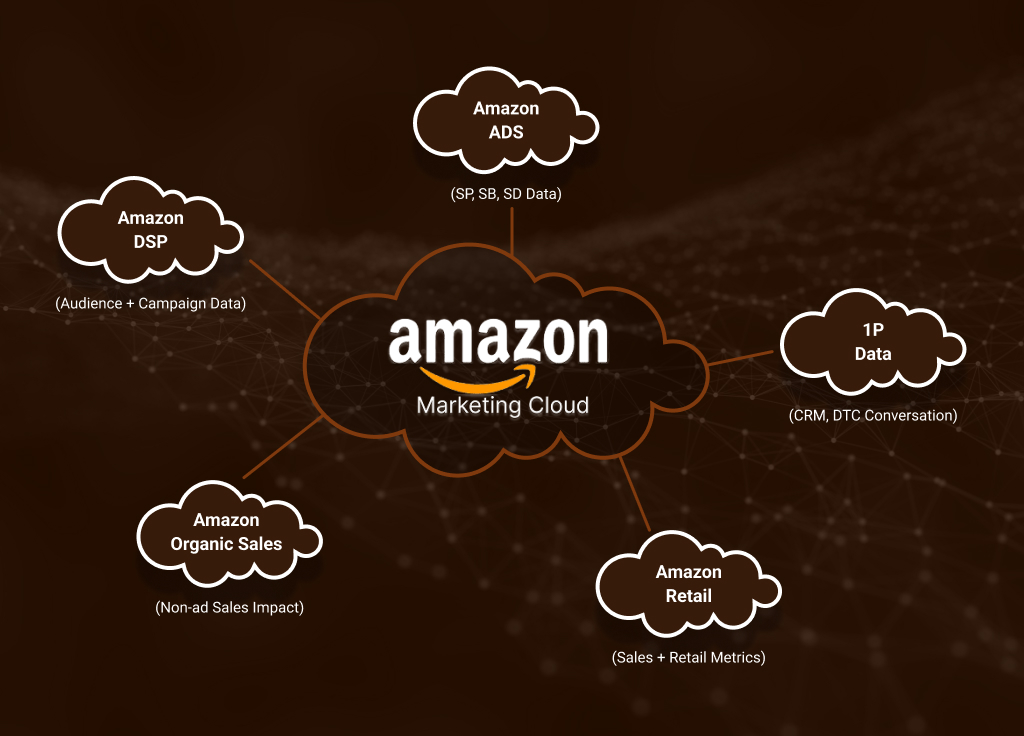
Using AMC’s query builder and “code-free” high-value audience solution, advertisers can combine any mix of these signals to build custom, high-value audiences for tailored use cases. Two core audiences created by AMC for highly-targeted advertising are:
- Rule-based audiences: Create segments defined by exact behaviors, such as “shoppers who viewed a product detail page three or more times but didn’t purchase.”
- Lookalike audiences: Identify a “seed” group of high-value customers (based on LTV, AOV, or frequency) and use Amazon Marketing Cloud Analytics to find new users who share similar attributes.
Struggling to Segment, Scale, or Refresh your AMC Audiences Effectively?
As an Amazon Marketing Cloud Consulting Partner, We Design Full-funnel Audience Strategies—Connecting AMC Insights with Sponsored Ads, DSP, and Retargeting Workflows that Drive Conversions and Lifetime Value.
Types of High-Value Audiences You Must Target Using Amazon Marketing Cloud
Understanding which audiences to build is as important as knowing how to build them. Let’s explore the most impactful audience types that every brand should leverage with Amazon Marketing Cloud advertising solutions.
| Audience Type | Description | Why They Matter | When to Target Them Ideally |
|---|---|---|---|
| Purchaser Lookalike Audiences | New shoppers who share behavioral and demographic characteristics with your existing buyers | Delivers higher ROAS compared to generic targeting; expands reach beyond your current customer base to find high-propensity buyers at scale | Acquisition campaigns, product launches, category expansion, scaling periods (Q4, Prime Day), when rule-based audiences reach saturation |
| Subscriber Lookalike Audiences | Audiences modeled after existing Subscribe & Save customers, identifying shoppers likely to commit to recurring purchases | Subscribers have higher lifetime value than one-time purchasers; these audiences prioritize long-term revenue over single transactions | Promoting subscription-eligible products, nurturing trial-to-subscription conversions, and building predictable recurring revenue streams |
| New-to-Brand (NTB) Buyers | First-time buyers who recently made their initial purchase from your brand (typically within 30-90 days) | Fresh customer acquisition is critical for sustainable growth; these customers haven’t yet developed competing brand loyalties, thus they provide the highest opportunity for repeat purchase nurturing | Post-purchase follow-up campaigns (7-30 days after first order), complementary product recommendations, Subscribe & Save conversion campaigns, and building loyalty early in the customer journey |
| Brand Loyalists | Multi-category or multi-product purchasers who have bought across different product lines within your brand portfolio | They already trust your brand and drive higher lifetime value. Offer greater conversion rates and are more receptive to cross-sell and upsell opportunities | Cross-category promotions, brand expansion into new categories, bundle offers, referral program recruitment, limited edition/exclusive product releases |
| Cart Abandoners | Shoppers who added products to their cart but exited without completing the purchase | Represents immediate lost revenue with demonstrated high intent, higher conversion rates than cold audiences | Within 24-72 hours of abandonment for maximum intent recency; during promotional periods to provide urgency; avoid targeting if the customer subsequently purchased a substitute product |
| Add to Cart/Wishlist Targets | Users who added items to cart or saved to wishlist but haven’t purchased within a defined lookback window (for example, 7-30 days) | Strong purchase intent signal—these shoppers are actively considering your product; wishlist additions indicate future purchase planning | Product-specific promotions or discount campaigns, inventory clearance events, seasonal gift-giving periods (Mother’s Day, holidays), Lightning Deals, and limited-time offers |
| Frequent Product Page Visitors | Shoppers who viewed a specific product detail page (PDP) 2-3+ times without purchasing | Multiple views indicate serious consideration but potential objections (price, reviews, features); conversion rate increases when retargeted with social proof or incentives | After 3+ PDP views within 14 days, when new reviews/ratings are added, during price reductions or coupon availability, when launching enhanced A+ content, or new product images |
| High-Value Event Purchasers | Shoppers who bought during high-traffic events (e.g., Prime Day, Black Friday, Cyber Monday) or major promotions | They have already demonstrated a willingness to buy during peak periods, making them more receptive to new offers and more likely to become repeat buyers or brand advocates when nurtured | Retarget several weeks after their purchase. Responsive to exclusive discounts, loyalty program invitations, or early access to new products |
Selecting the Right Audience Types for Your Brand
- If you’re launching a new product on Amazon: Focus on lookalikes of your best customers and ad-engagement audiences to rapidly acquire high-value buyers.
- If you’re optimizing sales for an existing brand: Focus on abandoned cart recovery, repeat purchasers, event purchasers, and loyalty building.
- If you’re preparing for a peak event (e.g., Prime Day, holiday): Use high-value event viewers & purchasers segments to maximise ROI.
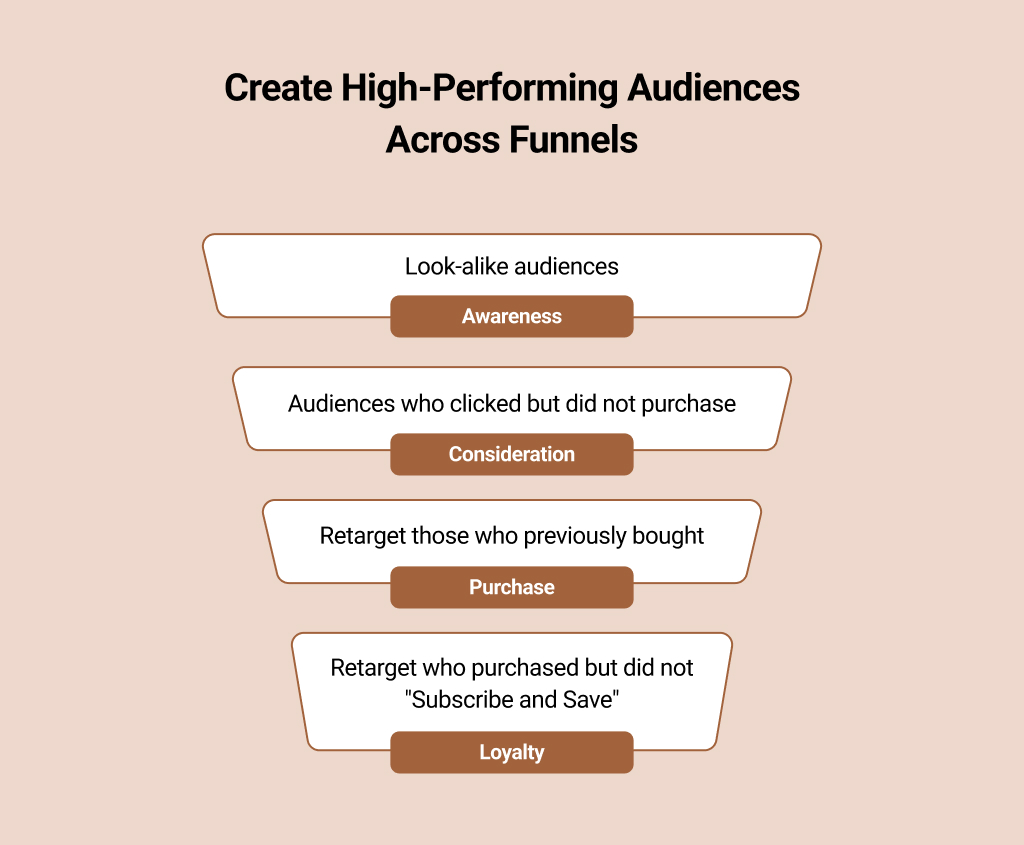
How to Create and Segment High-Value Audiences in Amazon Marketing Cloud (AMC): Step-by-Step Guide
Step 1: Define Your High-Value Criteria Based on Business Objectives and Run a Query
- Start by specifying what “high-value audience” means for your brand—this could be repeat buyers, top 5% of spenders, or fast-converting shoppers. Depending on your business objectives, the funnel stage you’re addressing, and the desired target action (purchase, repeat, upsell, category migration), you can define your target audience.
- Use AMC’s SQL-based query tool or pre-built Instructional Queries (IQs) to identify customers matching your criteria (e.g., high purchase rate, multi-product purchases, NTB shoppers)
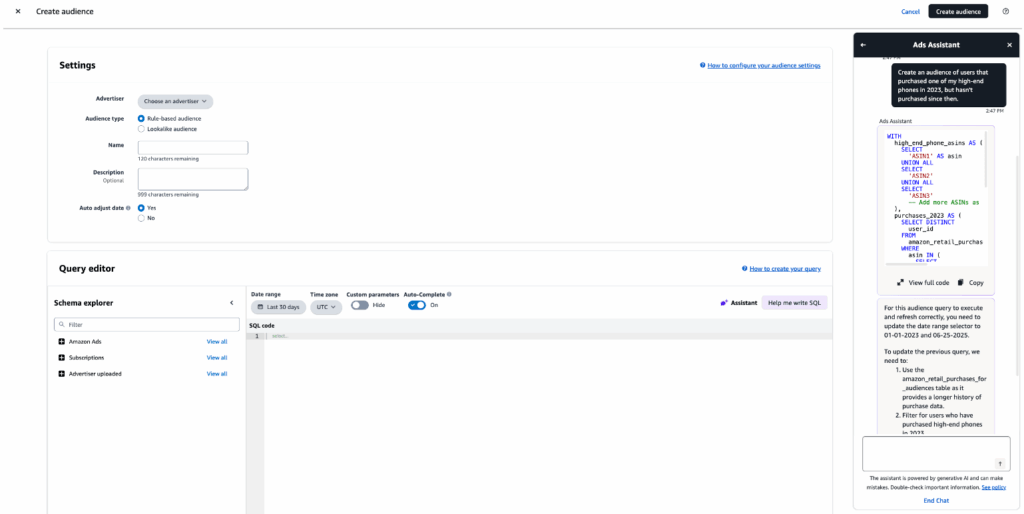
- Collect data (matching your high-value audience criteria) from all relevant sources in AMC. Also, integrate your first-party data for a well-rounded segment.
Step 2: Build & Refine Audience Segments
- Once you have your query results, leverage AMC’s Audience Builder to convert query results into a new custom segment. Also, keep the audience within their minimum size requirements (e.g., 2,000 user ids) when building queries to generate significant outcomes.
- Choose your audience type:
Rule-based for remarketing precise segments.
Lookalike to find new shoppers similar to your best customers.
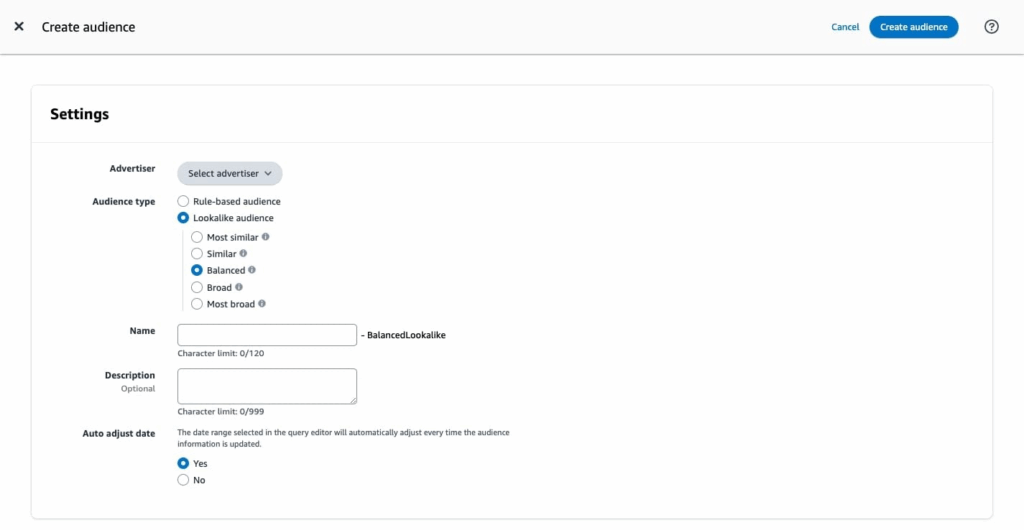
- Adjust filters: refine by spend percentile, NTB status, ASIN, date range, or exposure type as needed.
- Name and describe your segment clearly (e.g., “Q1 High Value Repeat Buyers”) for easy tracking.
Step 3: Activate & Optimize Your Audience
- Activate your new segment within Amazon DSP or Sponsored Ads—Amazon Marketing Cloud integrates the list directly to your campaign tools.
- Launch campaigns targeting your high-value audience, then continuously monitor results: watch for conversion rate, ROAS, incremental sales lifts, and other engagement metrics (click-through rate, view-through conversions, add-to-cart, and detail page views).
- Regularly review and fine-tune criteria or timeframes to keep your audience sets accurate as consumer behaviors shift.
Having Trouble Navigating AMC’s Complex Data Environment?
Let our Amazon Marketing Cloud Experts Handle Everything—From Setup to Ongoing Query Optimization, So You Can Focus on Strategy.
Things to Consider When Building High-Value Audiences Using AMC: Common Pitfalls & Best Practices
Custom audience creation using Amazon Marketing Cloud advertising solutions seems straightforward; however, during its implementation, advertisers make common mistakes that can waste Amazon PPC budget and dilute campaign performance. Understanding these pitfalls—and how to avoid them—is just as important as mastering the technical implementation.
Pitfall 1: Over-segmentation
Problem: Creating dozens of hyper-specific micro-segments that lack sufficient scale and complicate campaign management. Advertisers get excited by AMC’s capabilities and build 20+ audiences with overlapping criteria, making it impossible to gather statistically significant data or manage efficiently.
Solution: Don’t create too many niche audience segments. Start with 5-7 core audiences aligned to clear business objectives:
- 2-3 remarketing audiences (cart abandoners, lapsed customers, recent purchasers)
- 2-3 acquisition audiences (lookalikes from top spenders, NTB converters)
- 1-2 experimental/seasonal audiences (Prime Day shoppers, video-engaged)
Consolidate where possible: Instead of 5 separate cart abandonment audiences by product line, start with one and segment by creative/messaging.
Graduate to complexity: Once core audiences perform consistently, then explore atomic segmentation
Pitfall 2: Neglecting Audience Overlap and Internal Competition
Problem: Multiple campaigns targeting overlapping audiences lead to internal bidding competition, inflated CPCs, and attribution confusion. For example, running separate campaigns for “cart abandoners,” “product page viewers,” and “high-intent shoppers” when 60-70% of these audiences overlap.
Solution: Run AMC overlap analysis queries before launching campaigns.
Example Query: Compare “Cart Abandoners” vs “Frequent PDP Visitors” to identify intersection percentage
Implement hierarchical audience exclusions:
- Priority 1: Cart Abandoners (exclude from all other audiences)
- Priority 2: Recent Purchasers (exclude from acquisition audiences)
- Priority 3: High-Intent Shoppers (exclude cart abandoners)
- Priority 4: Lookalike Audiences (exclude all remarketing segments)
Establish a clear audience hierarchy based on value: Cart abandoners > Recent purchasers > Engaged browsers > Lookalikes > Cold audiences.
Pitfall 3: Not Updating Audience Segments at Regular Intervals
Problem: Creating custom audiences in AMC once and never refreshing them, causing segments to include users who’ve already converted, are no longer in-market, or whose behavior has changed significantly. You end up retargeting customers who have already purchased, wasting budget on outdated intent signals while missing fresh high-value prospects.
Solution: Regularly refresh your audience segments depending on their type:
| Audience Type | Recommended Refresh Frequency | Rationale |
|---|---|---|
| Cart Abandoners & High-Intent shoppers | Daily to 3x/week | Intent decays rapidly; hence, target them within a few days of first interaction to increase the likelihood of conversions. |
| Recent Purchasers | Weekly | Balances recency with audience stability |
| Loyal Customers/Top Spenders | Bi-weekly to Monthly | More stable segment; less frequent refresh needed |
| Lookalike Audiences | Bi-weekly | Allows the algorithm to incorporate the latest behavioral patterns |
| Seasonal/Event Audiences | One-time or event-triggered | Prime Day shoppers are refreshed annually (prior to the event) |
Pitfall 4: Testing Too Many Audience Variables Simultaneously
Problem: Launching new audiences with new creative, new bidding strategies, and new campaign structures all at once, making it impossible to identify what’s driving results (or problems).
Solution: Adopt a single-variable testing methodology
- Week 1: Test new audience with proven creative and bidding
- Week 2: Test new creative with proven audience and bidding
- Week 3: Test new bidding strategy with proven audience and creative
Maintain a testing log with dates, changes, hypotheses, and results to build institutional knowledge.
Pitfall 5: Insufficient Ad Budget Allocation to Proven Winners
Problem: Discovering a high-performing audience (e.g., cart abandoners delivering 5x ROAS) but keeping the budget capped or spread thin across too many audiences, preventing scaling of what works.
Solution: Adopt the 70-20-10 budget allocation framework:
- 70% to proven performers: Audiences consistently hitting target ROAS
- 20% to scaling opportunities: Lookalikes and expansion of proven segments
- 10% to experimentation: New audience hypotheses and atomic segments
DIY Approach Seems Challenging? Get Professional Amazon Marketing Cloud Agency Support for Smarter Audience Management
Amazon Marketing Cloud advertising solutions offer advanced measurement and targeting capabilities; however, effectively managing them requires deep analytical expertise and operational bandwidth. For brands lacking specialized expertise or resources in-house, working with an agency is the more practical solution.
By offering targeted Amazon Marketing Cloud analytics services, we help brands unlock AMC’s full potential without the learning curve. Our Amazon Marketing Cloud solutions for agencies and brands include:
- Custom audience development across Amazon DSP and Sponsored Ads
- Multi-touch attribution analysis
- First-party data integration
- Ongoing optimization, testing, and performance reporting
Whether you’re new to AMC or looking to scale, our tailored Amazon Marketing Cloud services are designed to support your business at every growth stage. We empower you to fully capitalize on AMC’s advanced features for smarter audience management and improved RoAS.