How Photo Editing Helps Businesses In Different Industries?
Businesses need eye-catching visuals to grab attention, build trust, and drive sales. These visuals are also responsible for building brand image, which offers business benefits in the long run. To get the most relevant and attractive images, businesses not only conduct photoshoots but invest in the post-production stage, which is editing.
During the editing process, many important details are added to the images that add life and relevance. This blog explores the benefits of photo editing and how it empowers businesses across industries to leverage the power of visuals and achieve their goals. From eCommerce to travel to fashion, discover how strategic image editing can elevate your brand and drive success.
Benefits of photo editing for businesses
- Building brand identity: Employing a consistent photo editing style enables businesses to establish a distinct brand identity. By focusing on elements like color saturation, composition, and visual themes, businesses can create a cohesive visual language that resonates with their target audience. This helps increase brand recognition and foster consumer loyalty.
- Boosting sales through visual appeal: Enhancing image quality through professional editing techniques can significantly impact sales. Compelling visuals attract customers and drive purchase decisions, particularly in industries where aesthetics play a crucial role, such as fashion, food, and hospitality. By presenting products or services in the best possible light, businesses can effectively stimulate consumer interest and boost sales revenue.
- Building trust and credibility: Professionally edited images contribute to building trust and credibility with consumers. In an era where authenticity is valued, businesses that use genuine, high-quality images are perceived as more trustworthy and reputable. By showcasing products, services, and brand experiences accurately and transparently, businesses can instill confidence in consumers and strengthen their brand reputation.
- Maximizing social media engagement: Strategically edited images are essential for driving engagement on social media platforms. By creating visually captivating content that stands out in users’ feeds, businesses can increase audience engagement, interactions, and brand visibility.
- Optimizing resource utilization: Repurposing edited images for various marketing initiatives maximizes resource efficiency for businesses. By leveraging existing visual assets and modifying them to suit different contexts and channels, businesses can save time and effort on content creation while maintaining a consistent brand aesthetic. This allows businesses to make the most of their resources and focus on other aspects of their marketing strategy.
- Ensuring consistent visual impact across platforms: Customizing edited images for different marketing channels ensures consistent brand representation and maximizes audience resonance. Whether it’s optimizing images for print, digital, or social media platforms, businesses can tailor their visual content to suit the unique requirements and preferences of each audience segment. This ensures that the brand message remains cohesive and impactful across all touchpoints, enhancing brand recognition and consumer engagement.
How industries are using photo editing for improved business outcomes
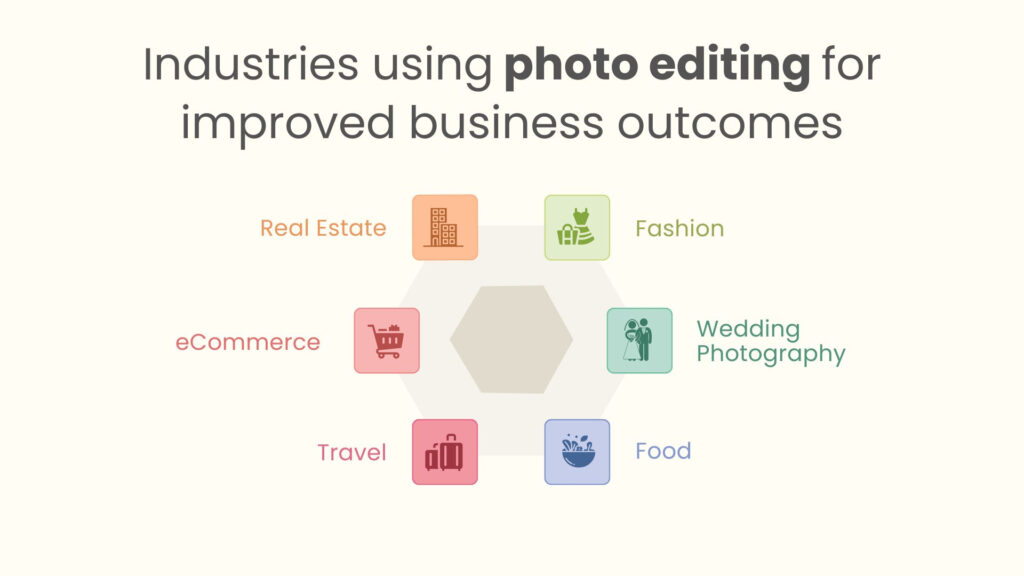
Discussed below are a few sectors wherein photo editing plays a crucial role in achieving greater results.
Real estate

In the real estate sector, visually appealing property photos have become imperative, particularly due to the prevalent use of the Internet for property searches. Consequently, it’s crucial to leave a welcoming first impression and showcase your property in the best light to stand out from thousands of other listings available online. However, capturing high-quality real estate photos can be challenging for reasons like poor lighting, empty spaces, and dull interiors. This is where real estate photo editing comes in, allowing you to achieve the desired results post-processing.
For example, photo editing techniques like color correction can make interiors look brighter and more inviting while cropping or decluttering can help you highlight key features of the property. Additionally, with some photo editing tools and techniques, you can furnish empty spaces digitally and create a more balanced visual.
The impact: Real estate listings with high-quality photos enjoy increased online visibility and engagement, leading to faster sales.
Fashion

In the fashion world, appearance matters the most, and photo editing plays a crucial role in creating the perfect look for products. Fashion photo editing includes product photo editing, such as jewelry photo editing, apparel photo editing, and many more. While fashion photography has a significant role in generating the final visual appeal, it is often not sufficient. Raw fashion photos may lack the intended appeal, have distracting background elements, and fail to highlight the unique selling propositions (USPs) of your products.
Many fashion houses deploy top-notch photo editing techniques to achieve optimal results without having to reshoot. They leverage advanced techniques such as skin retouching, digital makeup, outfit manipulation, and adjusting the skin texture to achieve the desired representation. Additionally, they experiment by adding digital makeup and jewelry to the model’s existing look or replacing outfits for better results.
The impact: Fashion brands investing in professional photo editing experience higher conversion rates, increased social media engagement, and elevated brand perception. Additionally, by presenting polished and visually stunning images, fashion businesses can differentiate themselves in a crowded market, solidify their brand identity, and establish themselves as industry leaders.
eCommerce
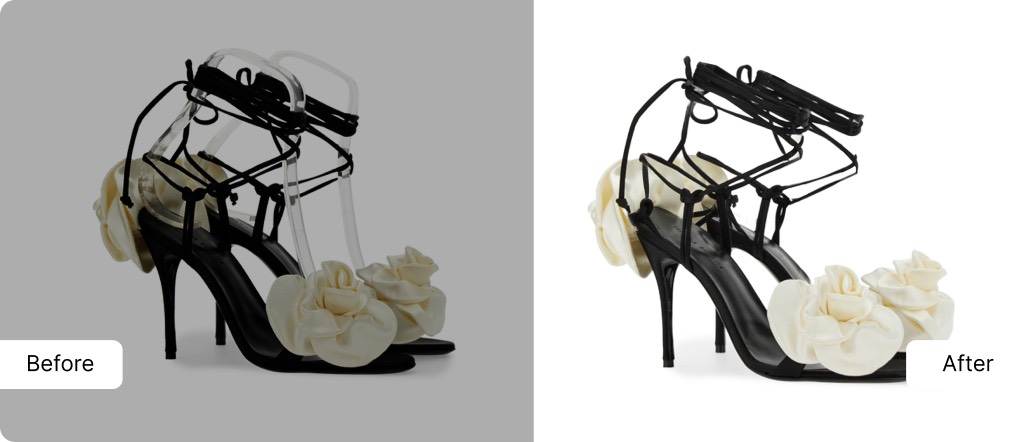
In the eCommerce sector, where visual presentation directly influences purchasing decisions, high-quality product images are non-negotiable. Online shoppers heavily rely on product photos to assess the quality, features, and overall appeal of items they’re considering purchasing. Therefore, eCommerce businesses invest significantly in product photography to showcase their offerings in the best possible light. However, even the most thoughtfully captured product images may require enhancement to meet the guidelines of different marketplaces and high standards of online shoppers.
This is where eCommerce photo editing steps in, enabling businesses to optimize their product images for maximum impact. Through techniques like background removal, color correction, and image resizing, eCommerce businesses can ensure that their product photos are visually appealing, consistent, and aligned with their brand identity. Moreover, advanced editing techniques such as image manipulation and 360-degree product views can further enhance the customer’s shopping experience and satisfaction level since they get a product that does justice to what they saw before placing the order.
The impact: Well-edited product images not only attract more potential customers but also contribute to higher conversion rates, ultimately driving revenue growth for eCommerce businesses. They also contribute to reduced return rates since customers get what they see while ordering.
Wedding photography
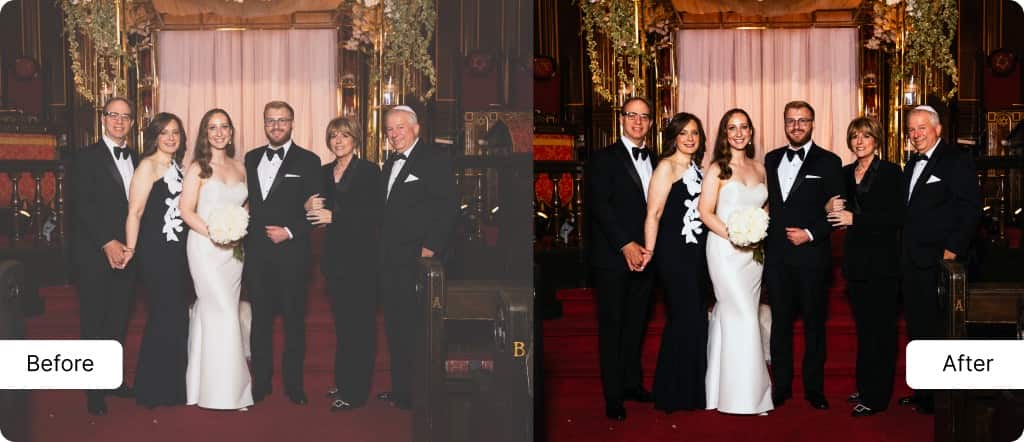
Capturing cherished moments with precision is paramount in the wedding photography industry. Couples expect their wedding photos to be timeless, capturing the essence of their special day in detail. However, achieving flawless wedding photos straight out of the camera is often challenging due to unpredictable lighting conditions, varying backgrounds, and the need to capture fleeting moments amidst the hustle and bustle of the event.
To ensure that every couple’s memories are preserved in the best possible way, wedding photographers turn to professional wedding photo editing techniques. These techniques allow them to enhance colors, adjust exposure, and remove imperfections to create breathtaking wedding albums. From subtle touch-ups to dramatic enhancements, photo editing enables photographers to transform raw captures into captivating works of art that evoke emotion.
The impact: Professionally edited wedding photos not only delight couples but also serve as valuable marketing assets, attracting new clients and solidifying a photographer’s reputation for excellence.
Publishing
In the publishing industry, where visual storytelling is key to engaging readers and conveying information effectively, the importance of high-quality images cannot be overstated. Whether it’s a magazine article, a book cover, or an online publication, compelling visuals are essential for capturing the audience’s attention and enhancing the overall reading experience.
Photo editing plays a crucial role in ensuring that images used in publications are visually striking and aligned with the content’s tone and message. Publishers rely on various editing techniques to enhance the clarity, composition, and overall impact of images, making them more appealing and memorable to readers. From adjusting lighting and colors to removing distractions and adding visual effects, photo editing enables publishers to create captivating visuals that complement their written content and leave a lasting impression on readers.
The impact: Publications’ strong visual appeal helps publishers effectively communicate their message, leading to increased reader engagement and loyalty.
Travel
In the travel industry, where the primary objectives revolve around inspiring and enticing travelers to explore new destinations, captivating images emerge as a key marketing tool. To promote these tourist attractions and accommodations, visually appealing photographs play a pivotal role in showcasing the imagination of potential travelers and fostering the motivation to book their next stay.
To create a compelling travel catalog that inspires and entices, travel companies enhance the colors, clarity, and composition of photos, bringing out beauty and uniqueness. Destination marketers leverage photo editing techniques to highlight each destination and attract more travelers. From enhancing natural landscapes to showcasing cultural experiences, photo editing enables travel brands to create visual narratives that resonate with their target audience and drive engagement and bookings.
The impact: Stunning travel photos not only attract travelers but also influence their destination choices, ultimately driving tourism revenue and economic growth for destinations.
Food
In the food industry, where visual appeal plays a crucial role in attracting diners and driving sales, high-quality food photography is essential. Whether it’s a menu, a food blog, or a social media post, mouthwatering images are key to capturing the attention of hungry consumers and persuading them to indulge in culinary delights. However, capturing appetizing food photos that accurately represent the taste and texture of dishes can be challenging, especially in less-than-ideal lighting conditions or with perishable ingredients.
To showcase their culinary creations in the best possible light, restaurants, food bloggers, and food brands rely on photo editing techniques. This allows them to enhance the colors, contrast, and composition of food photos, making dishes look as irresistible on screen as they do in person. From adjusting brightness and saturation to removing imperfections and adding artistic touches, photo editing enables food businesses to create compelling visuals that leave viewers hungry for more.
The impact: Well-edited food photos not only attract customers to restaurants and food products but also enhance brand perception and drive engagement on digital platforms like the brand’s social media pages, ultimately contributing to increased sales and customer loyalty.
Best practices of photo editing you can follow in every industry
The business world is a visually-driven world where mastering photo editing techniques can be the key to gaining a competitive edge and conquering your industry. Here are some powerful photo editing best practices you can follow to elevate your brand and stand out from the crowd.
- Ensure your images have accurate and vibrant colors that resonate with your brand identity. Adjusting color balance, saturation, and hue can significantly enhance the visual appeal of your photos and create a cohesive look across your marketing materials.
- Remove distracting backgrounds from your images to focus the viewer’s attention on the subject. Whether you’re showcasing products, properties, or people, background removal can help create clean and professional-looking images that highlight what’s most important.
- Enhance the appearance of your subjects by retouching imperfections and emphasizing key features. From smoothing skin and removing blemishes to sharpening details and enhancing textures, retouching techniques can help create polished and captivating images.
- Get creative with image manipulation techniques to produce unique and eye-catching visuals. Whether it’s compositing multiple images together, adding graphic elements, or creating surreal effects, image manipulation can help you tell compelling stories and leave a lasting impression on your audience.
- Use High Dynamic Range (HDR) imaging techniques to capture a greater range of tones and details in your photos, especially in challenging lighting conditions. HDR imaging can help you create stunning and lifelike images that showcase your products or properties in their best light.
- In industries like real estate, leverage virtual staging to help potential buyers visualize a space’s potential by digitally adding furniture, decor, and other elements. It can transform empty rooms into inviting living spaces, helping to drive interest and accelerate sales.
Summing up
Every business across industries is constantly investing in building its brands on the Internet, and images are the key. Visuals can attract and convert potential customers into regular customers. However, it is important to get professionals who can ensure the best photo results. Some businesses hire photo editors, while others get photo editing services to ensure a consistent flow of images for their websites and/or eCommerce platforms. So, analyze and choose the best-suited option for your business for improved ROI and business outcomes.

The SunTec India Blog
Brought to you by the Marketing & Communications Team at SunTec India. We love sharing interesting stories and informed opinions about data, eCommerce, digital marketing and analytics, app development and other technological advancements.