Client Success Story

Full‑Service PPC Management for a Custom Merchandising Print Solutions Provider - Meta, Google, Amazon, and TikTok Ads Management

232.15%

Conversions Increase on Google

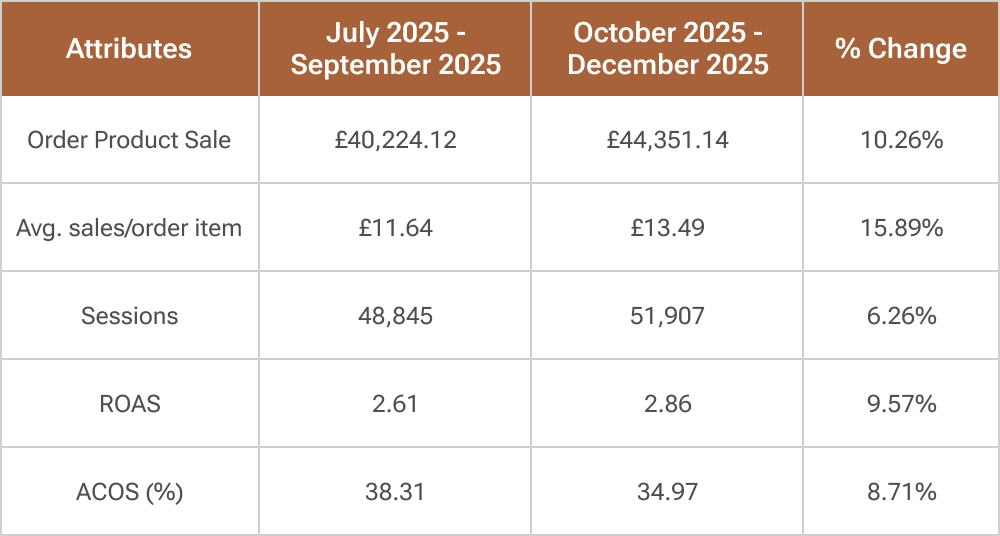
8.71%

ACoS Reduction on Amazon

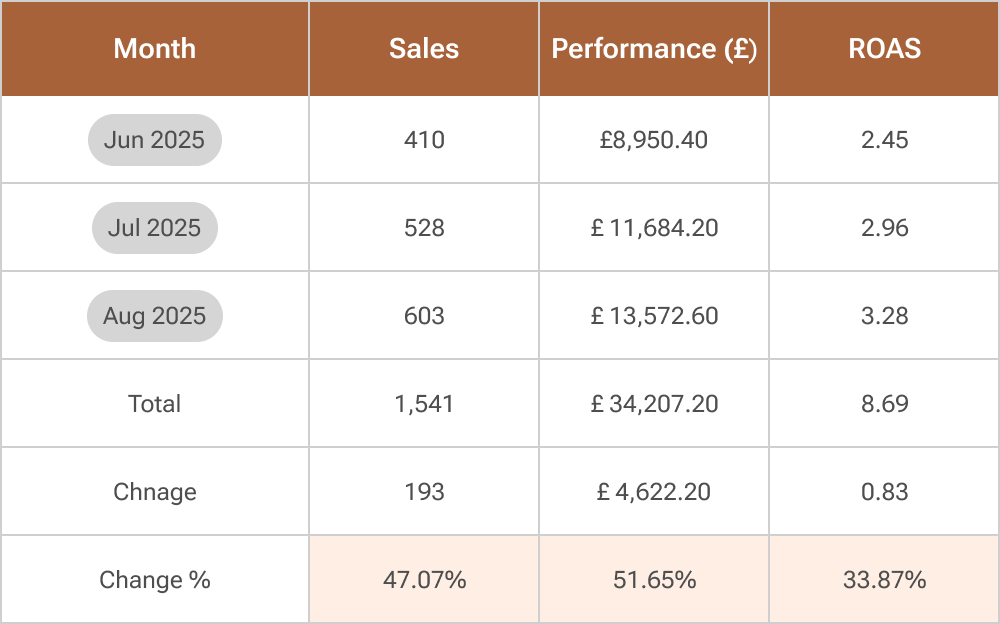
33.8%

Improved RoAS on TikTok

Platform

  • Google Merchant Center
  • Meta Ads Manager
  • TikTok Ads Manager
THE CLIENT

A UK‑Based Custom Merchandising and Printing Solutions Provider

The client is a leading provider of high-quality custom merchandising and printing solutions. Their extensive product catalog includes Direct-to-Film (DTF) transfers, 3D UV stickers, and a wide range of bespoke printing solutions used by clothing brands, promotional merchandise sellers, and enterprises to create custom-branded merchandise. Operating in a highly competitive niche, the client primarily sells through its eCommerce website and Amazon store.

Project Requirements

Scaling Online Sales Across Google, Meta, Amazon, and Social Channels Through SEO and Paid Ads Management

The client approached SunTec India primarily for their eCommerce website SEO, aiming to improve organic visibility and rankings in a competitive niche. After witnessing the initial success, the client expanded the scope to full-service PPC management, including:

Meta Ads Management

  • Creating and managing Meta ads - Brand awareness, engagement, and conversion campaigns.
  • Handling pixel setup, event tracking, and conversion rate optimization
  • Developing audience targeting strategy, including Custom Audiences (website visitors, CRM lists, engagement audiences), Lookalike Audiences, and demographic/behavioural segments
  • Launching retargeting campaigns for high-intent website visitors to recover abandoned carts and drive repeat purchases.
  • Implementing bid strategy (cost cap, bid cap, and highest-volume bidding) to reduce average CPC and improve RoAS

Google Ads Management

  • Auditing Google Ads account and restructuring underperforming campaigns— keyword bifurcation (Broad, Phrase, Exact), ad group segmentation, etc.
  • Creating Google Ad campaigns for brand awareness, remarketing, and enhanced conversions.
  • Managing Google Shopping campaigns with product-type and keyword-level segmentation
  • Improving campaign performance through bid management and landing page optimization

TikTok Ads Management

  • Building and managing TikTok campaigns across awareness and conversion objectives using UGC-style and native-format video creatives
  • Configuring TikTok Pixel for full-funnel attribution and campaign optimization
  • Monitoring campaign performance, refining audience targeting, and conducting A/B testing to improve click-through rates and CPA (cost per acquisition)

Amazon PPC Management

  • Creating and managing Amazon Sponsored Products, Sponsored Brands, and Sponsored Display campaigns
  • Conducting keyword research and devising a bidding strategy tailored to the Amazon marketplace search behaviour for custom print products
  • Optimizing listings to align Amazon product pages with PPC campaign targets for higher quality scores and conversion rates
  • Monitoring and optimizing ACoS (Advertising Cost of Sale) to ensure ad spend remained aligned with profitability goals.
PROJECT CHALLENGES

Addressing Wasted Ad Spend, Poor Keyword Strategy, and Low Conversion Rate Issues Across Multiple Channels

The client was struggling with poor revenue and eroding margins despite aggressive ad spend scaling (daily ad budget averaging around 40 GBP). The core bottlenecks hindering their growth included:

  • Inflated Acquisition Costs: The client was consistently overpaying for clicks in a highly competitive market while losing out on valuable auction bids to competitors.
  • Poor Audience Engagement: Campaigns were failing to attract the right demographic, generating surface-level traffic that did not match the ideal buyer profile.
  • Severe Conversion Drop-Offs: Even when ads successfully generated clicks, those interactions were hitting a bottleneck and failing to translate into completed sales.

A technical audit revealed a fragmented multi-channel architecture across Google Ads, Amazon, Meta, and TikTok. Below is a detailed breakdown of the core challenges our team identified and addressed.

1. Declining Sales Due to Ineffective PPC Strategy

The ad campaigns lacked a coherent strategy with no clear distinction between brand awareness, prospecting, and conversion campaigns across the four platforms. The advertising budget was not allocated based on performance potential, and campaigns were not optimised for their intended goals.

Instead of targeting people who were actively searching for products to buy, the campaigns were focused on broad audiences with little purchase intent. As a result, the ad spend was generating surface-level traffic with little to no meaningful conversions.

2. Poor Audience and Keyword Targeting Across Platforms

The existing ad campaigns across Amazon, TikTok, Google, and Meta platforms were capturing irrelevant users due to poor keyword targeting. The search terms and keywords were not segmented by match type (broad, phrase, exact), leading to ads appearing on irrelevant queries while missing high-intent, purchase-ready searches.

Without proper audience segmentation — including lookalike audiences, retargeting pixels, and CRM-based custom audiences — the campaigns were reaching to cold, unqualified traffic with bottom-of-funnel conversion messaging that was unlikely to convert.

3. Lack of Dynamic Bid Management Strategy

Bid management was inconsistent. There was no structured approach to adjusting bids based on device, location, time of day, or audience performance data. As the DTF transfer industry is highly competitive, with rapid bid fluctuations on high-volume, high-intent keywords, it requires constant, data-driven adjustments to stay competitive without inflating cost-per-click.

Without a proactive bid management framework in place, capitalizing on real-time shifts in auction dynamics while maintaining cost efficiency was an ongoing challenge. As a result, the client was either overbidding on low-value clicks or underbidding on high-converting opportunities.

4. Landing Page and Google Merchant Center Gaps

Even where ads were generating clicks, conversion rates were hampered by landing page and backend issues. Landing pages were not fully optimized for relevance and user experience — there was a disconnect between the ad copy, keyword intent, and the landing page content, which directly impacted Quality Scores and conversion efficiency.

The Google Merchant Center had not been fully optimized, leading to product feed issues that affected Shopping campaign eligibility and visibility. Product types and attributes were not properly structured, limiting the effectiveness of product matching to relevant shopping queries.

OUR SOLUTION

A Multi-Channel PPC Management and SEO Strategy Built on Keyword Precision, Audience Intelligence, and Performance Optimization

Rather than addressing each channel in isolation, we designed and implemented an integrated digital marketing strategy that treated SEO and paid advertising as mutually reinforcing disciplines. A team of 4 dedicated resources is deployed to work on this project (1 SEO specialist + 3 PPC specialists), focusing on improving both organic rankings and advertising ROI. Our solution involved:

1

Website SEO: Strengthening the Digital Foundation

The engagement began with a comprehensive website SEO audit assessing technical health, on-page optimization, keyword gaps, and content structure. We fixed crawlability issues, optimised meta tags and page titles for high-intent commercial keywords in the UK custom printing segment, and improved internal linking architecture to pass authority to key product and category pages.

Our team conducted keyword research across DTF transfers, custom stickers, heat press prints, and related terms — prioritizing keywords with clear commercial intent and achievable ranking potential in the UK market. This SEO groundwork established a strong organic foundation that would support and complement the paid campaigns introduced in subsequent phases.

2

Google Ads Management: Campaign Restructuring and Bid Optimization

Given the absence of a funnel-based campaign structure, poor keyword targeting, and reactive bid management, our priority was to overhaul the account architecture, ensuring every campaign, bid strategy, and keyword served a defined purpose within the funnel.

Our Google Ads management strategy involves:

  • Campaign type diversification — Performance Max (PMax) campaigns for brand awareness and reach, alongside manual bidding Search campaigns for direct conversion targeting
  • Multi-layered bid strategy — using Maximize Conversion Value, Maximize Conversions, Target CPA (tCPA), and Target ROAS (tROAS) across different campaign objectives
  • Keyword segmentation — bifurcating keywords by product type, match type (broad/phrase/exact), and search intent to ensure each campaign served the right user at the right stage
  • Responsive Search Ads (RSAs) — creating and testing multiple headline and description combinations to maximise Quality Score and ad relevance
  • Google Merchant Center optimization — fixing product feed issues, structuring product types correctly, and improving Shopping campaign eligibility
  • Audience targeting — leveraging in-market audiences, custom intent audiences, demographic filters, device and location bid adjustments, and remarketing lists for search ads (RLSA)
  • Ongoing performance management — campaign-level, ad group-level, and keyword-level optimizations, with regular reviews of Quality Score, impression share, CTR, conversion rate, and ROAS to guide budget allocation decisions.

Google Ads Campaign Strategy Summary

Campaign Type Bid Strategy Audience & Targeting Strategy
Performance Max (PMax) Maximize Clicks All Audience Signals — Brand, In-Market & Interest
Search Maximize Conversion Value Exact / Phrase Match Keywords — Purchase-Intent Queries
Search Maximize Conversions Broad Match Keywords Targeting for Increased Website Traffic
Search Target CPA (tCPA) Affinity & Custom Intent Audience Targeting
Search Target ROAS (tROAS) Device, Location & In-Market Audience Bid Adjustments, RLSA Remarketing + Demographics & Keyword Match Types
3

Meta Ads Management: Full-Funnel Campaign Management Across Facebook & Instagram

We built a full-funnel Meta Ads management strategy across Facebook and Instagram, covering three distinct campaign objectives: awareness, engagement, and sales conversions.

Our approach involved:

  • Meta Pixel setup and conversion event configuration to accurately track purchases, add-to-carts, and page views
  • Custom audience creation using website visitor data, CRM lists, and engagement audiences
  • Lookalike audience development based on existing purchaser profiles to expand reach to high-potential new users
  • Location and radius targeting to reach relevant UK-based business buyers and consumers
  • Bid strategy selection — Maximize Conversion Value for awareness, Maximize Conversions for engagement, and Bid Cap/Target Cost for conversion campaigns
  • Ongoing creative and audience testing to identify top-performing ad sets

Meta Ads Campaign Strategy Summary

Campaign Type Bid Strategy Audience & Targeting Strategy
Awareness Maximize Conversion Value Custom Audience — Website Visitors, CRM Lists & Engagement Audience
Engagement Maximize Conversions Demographics & Behaviour Targeting — Age, Gender, Interests
Sales (Conversions) Bid Cap Location & Radius Targeting — UK-Focused Geographic Segmentation
Sales (Conversions) Target Cost Lookalike Audience (1%–3%) Based on Existing Buyer Profiles
Sales (Conversions) Pixel-Based Retargeting Pixel-Based Website Visitor Retargeting — Re-engage Cart Abandoners & Past Visitors
4

TikTok Ads Management: Reaching New and Relevant Audiences Through Short Videos

Building on the performance gains from Google and Meta, we introduced TikTok Ads as a dedicated acquisition and awareness channel. We began with a complete TikTok Pixel setup and conversion event configuration to establish accurate tracking across the purchase funnel.

Our TikTok ad management specialists:

  • Implemented a creative-first testing framework — launching multiple UGC-style and native In-Feed video variants simultaneously to identify top-performing hooks, formats, and messaging angles before scaling spend.
  • Tracked hook retention rates across creatives to pinpoint where viewers dropped off, using this data to refine opening sequences and improve overall video completion rates.
  • Monitored creative fatigue signals at the ad set level, rotating underperforming creatives proactively to prevent engagement decay and rising CPMs.
  • Deployed Spark Ads on organic posts with strong engagement signals, amplifying existing social proof without the higher CPCs typical of standard In-Feed placements.
  • Scaled top-performing ad sets using Cost Cap bidding, maintaining CPA discipline while increasing budget incrementally — avoiding the performance volatility common with uncapped scaling.
  • Conducted daily CPA monitoring during the learning phase for optimal ad spend

TikTok Ads Campaign Strategy Summary

Campaign Objective Bid Strategy Audience & Targeting Strategy
Awareness Video Views (Reach Maximization) Broad + Interest Targeting — Print, Craft, Small Business & Creator Audiences
Consideration Traffic (Click Optimization) Custom Engagement Audience + Device & Location Targeting (UK Mobile)
Sales (Conversions) Complete Payment (Conversion Event) Custom Intent Audience + Pixel-Based Retargeting (Cart Abandoners)
Scaling Value Optimization Lookalike Audience (1%–3%) Modelled on Existing Purchasers
5

Amazon Advertising - Sponsored Ads Management for Lower ACoS, and Higher Conversion Rates

The client’s existing Amazon campaigns were broad and undifferentiated, failing to reach shoppers actively looking to buy — instead surfacing for poorly related queries that drove clicks without conversions. Our focus was on rebuilding campaigns from scratch, improving keyword and audience targeting to capture high-intent demand, and establishing the controls needed to scale spend without eroding profitability.

Our Amazon PPC strategy included:

  • Campaign creation based on keyword match type segmentation — Broad, Phrase, and Exact match keywords targeted in dedicated campaigns, preventing budget cannibalisation and allowing precise bid control
  • Search term reports analysis on fixed weekly cadence — identifying high-performing search terms and continuously adding new negative keywords to avoid irrelevant traffic
  • Bid adjustments at the keyword level based on conversion data, not impressions — prioritized keywords with strong ACoS and paused underperforming keywords before they could negatively impact overall campaign performance
  • Product targeting campaigns implemented to appear on competitor and complementary product listings — capturing buyers already in a purchase mindset, browsing directly relevant categories
  • Dayparting and placement bid modifiers applied based on performance data — Top of Search placement bids adjusted to defend high-converting ad positions without inflating cost across lower-performing placements
  • ACoS targets defined for each SKU based on margin— ensuring profitability thresholds were respected at the product level rather than averaged out across the catalogue

Our Core Optimization Focus Areas: Key Metrics We Tracked and Focused on to Maximise Paid Advertising ROI Across Channels
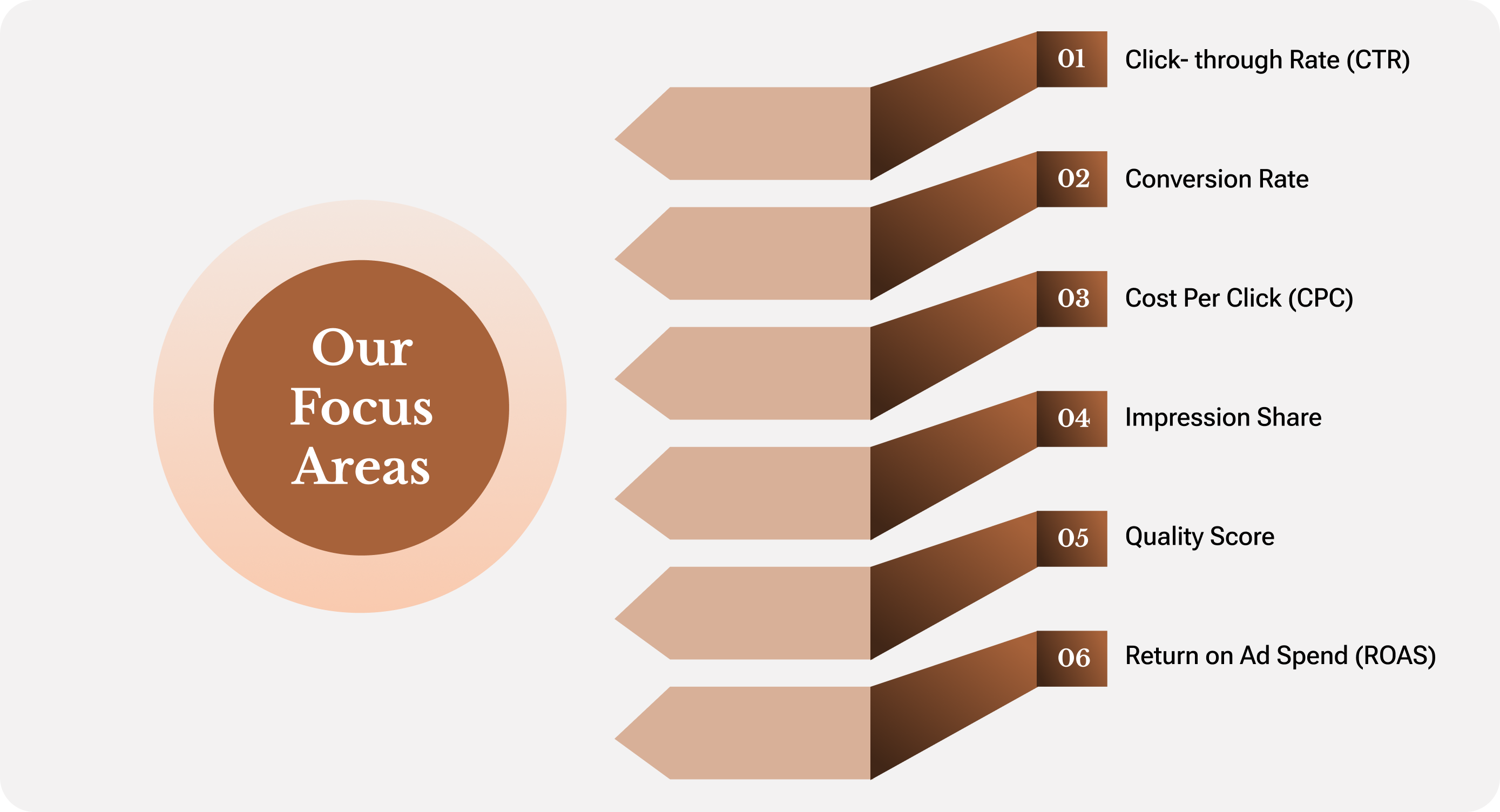
Across all paid channels, our approach went beyond campaign setup and routine management. We identified six critical performance metrics that directly influence advertising efficiency and implemented optimization practices around each to improve revenue.

Click-Through Rate (CTR)

  • Rewrote ad copy across campaigns with benefit-led messaging and clear CTAs
  • A/B testing of multiple ad formats to identify top-performing combinations by placement and audience

Conversion Rate

  • Optimized landing pages for enhanced user experiences
  • Implemented retargeting campaigns to target users who have previously shown interest

Average Cost Per Click (Avg. CPC)

  • Replaced broad, high-cost keywords with high-intent, lower-competition alternatives identified through layered keyword research
  • Implemented ad scheduling to concentrate spend during peak conversion windows and reduce bids during low-performing hours

Impression Share

  • Optimized keyword targeting to capture a broader set of relevant, high-intent search queries
  • Improved Quality Scores and ad relevancy to get more impressions in competitive auctions without increasing bids

Quality Score

  • Improved ad relevancy by optimizing high-intent keywords in ad copies and landing page content
  • Refined landing page elements for conversion rate optimization

Return on Ad Spend (RoAS)

  • Pixel implementation for accurate conversion tracking across all platforms and attribution analysis
  • Conducted keyword, ad group, and campaign-level performance analysis to identify and scale top-revenue-generating segments
  • Continuously reallocated budget away from underperformers toward the highest-ROAS combinations
PROJECT OUTCOMES

Consistent Month-on-Month Growth in Conversions, Revenue, and Ad Efficiency Across All Targeted Channels

Google Ads Performance

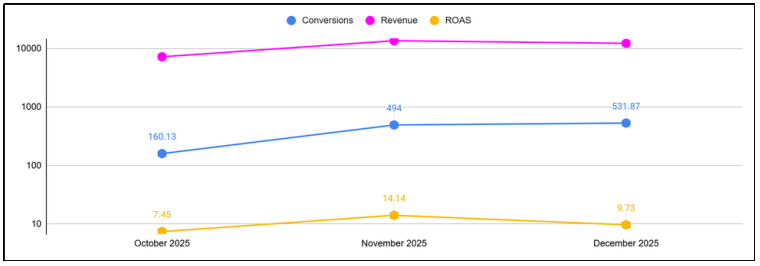
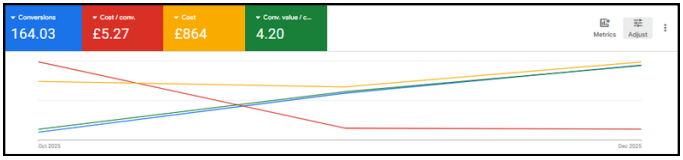
Google Ads Performance table Google Ads Performance data Google Ads Performance chart

Meta Ads Performance

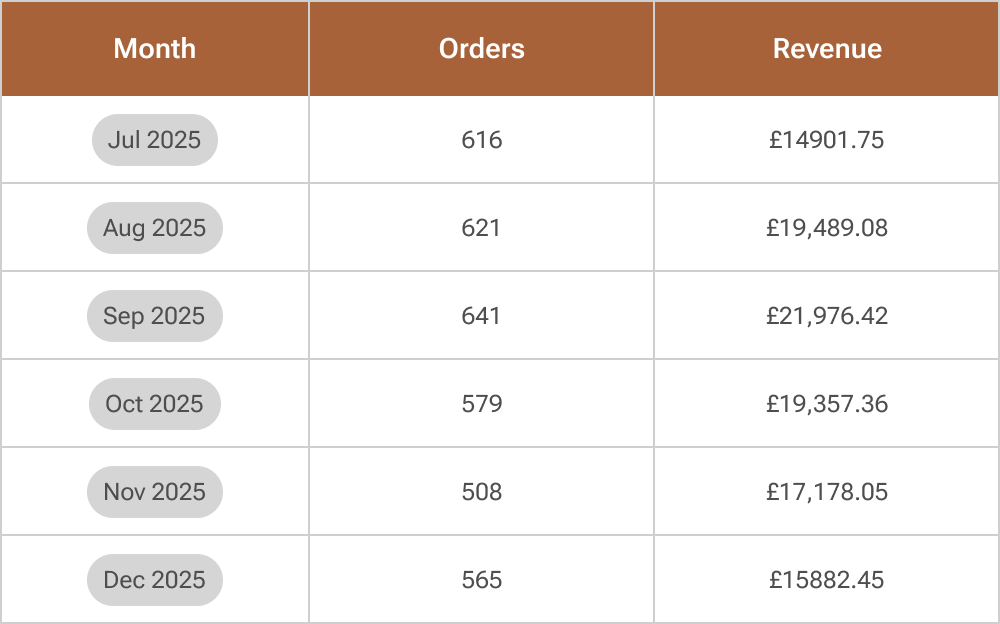
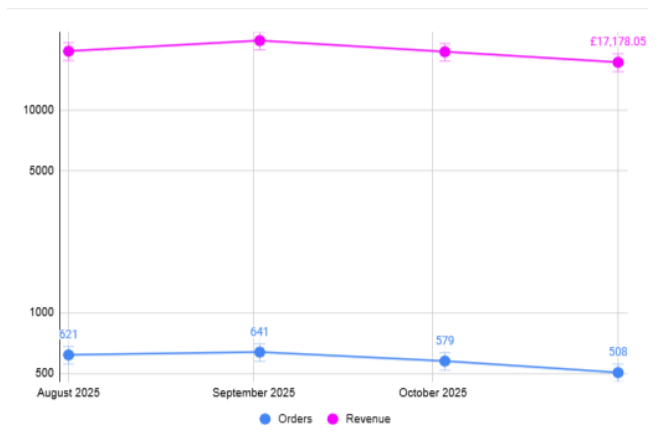
Meta Ads Performance table Meta Ads Performance chart

TikTok Ads Performance

TikTok Ads Performance table

Amazon Ads Performance

Amazon Ads Performance table Amazon Ads Performance chart

Overall Impact Summary

Key Results Achieved

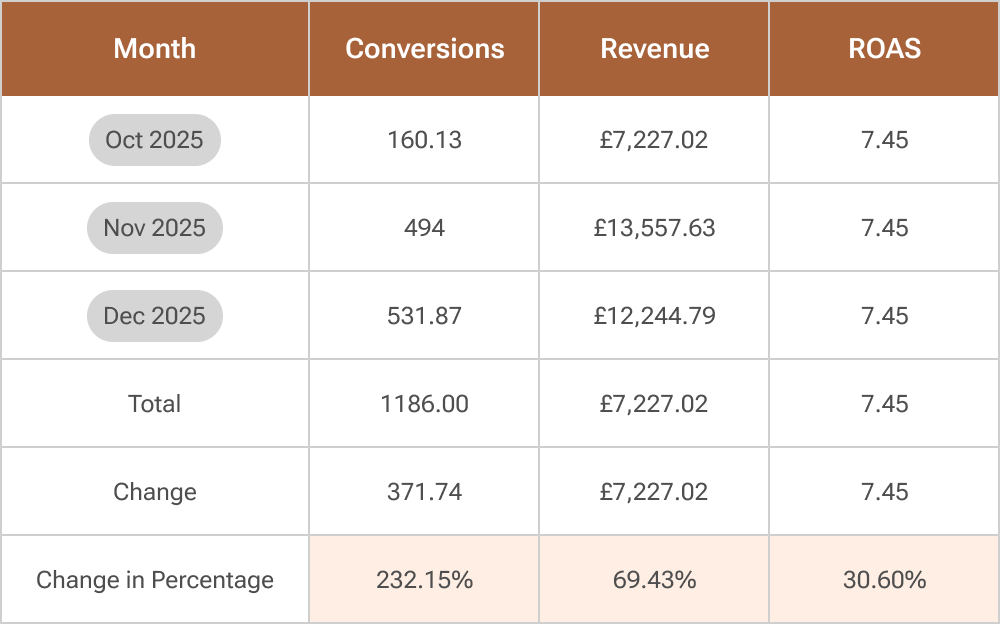
  • On Google, sales increased by 232.15% and revenue by 69.43% within three months of campaign restructuring.
  • On TikTok, ROAS improved by 33.87%, exceeding the client's stated performance benchmarks.
  • On Meta, a total of £108,785 revenue was generated over six months (July–December 2025), with revenue growing by 47.5% from July to September. Even during non-peak seasons (November–December), monthly revenue held above £15,800 — indicating strong audience retention and campaign stability.
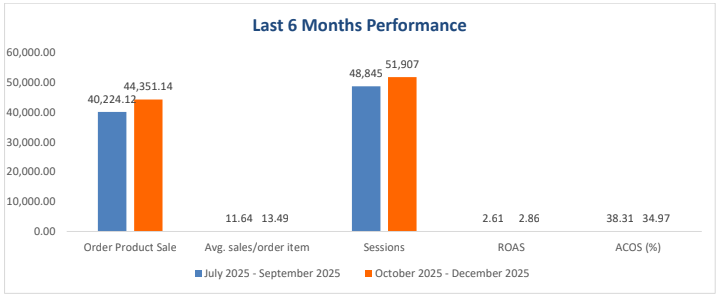
  • On Amazon, sales grew by 15% (July 2025 - September 2025) compared to the previous period (October 2025 - December 2025), with a significant decline in ACoS (8.71%) due to precise keyword and audience targeting.
  • Every platform showed a clear upward trajectory in both orders and revenue, with no channel plateauing across the measurement window.
  • Ad spend efficiency improved consistently across channels — reflected in rising ROAS on Google and TikTok, and declining ACoS on Amazon.
CONTACT US

More Conversions. Better Targeting. Higher ROI. Let's Make It Happen With a Team That Specializes in eCommerce Advertising

Partner with SunTec India for full-service digital marketing — from SEO and Google Ads to Meta, TikTok, and marketplace management. We bring data-driven strategies, dedicated resources, and proven domain expertise to help your business grow online. Share requirements at info@suntecindia.com.