Explore Detailed Findings
01
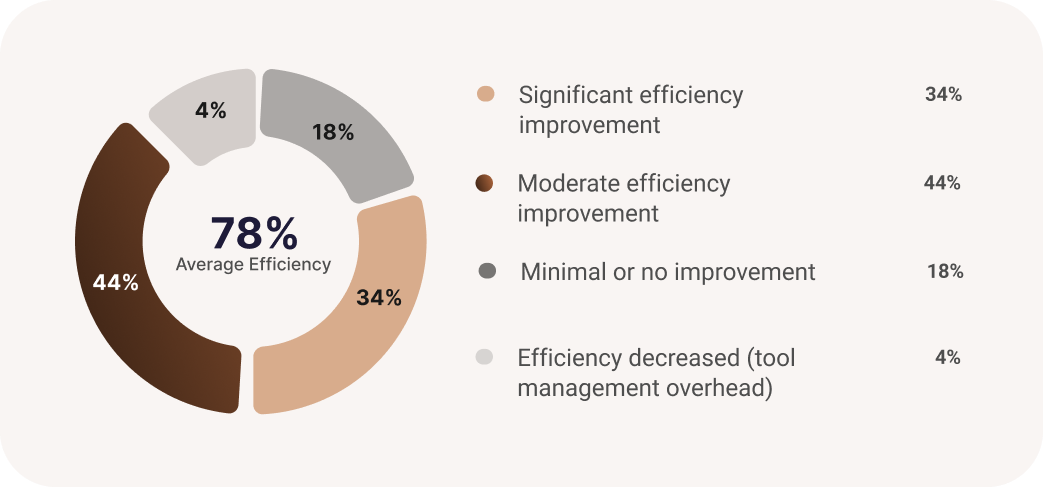
87% of Marketers Now Use AI Tools in their Daily Operations, with 78% of Them Reporting “Efficiency Gains.”
AI adoption in marketing has moved decisively from pilot to scale, with nearly 9 in 10 survey participants incorporating AI tools into their daily workflows.
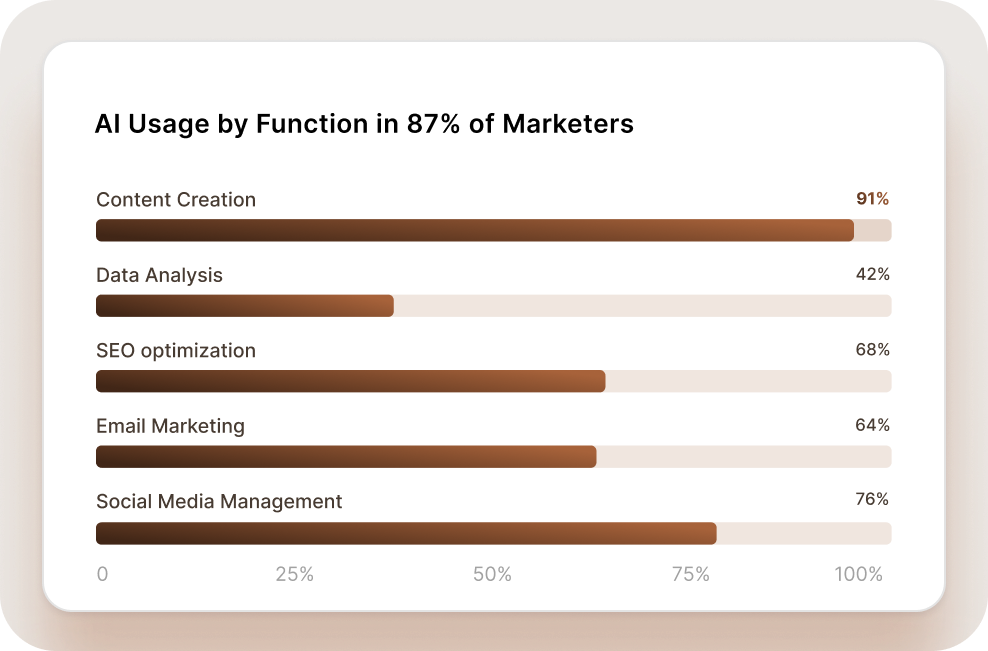
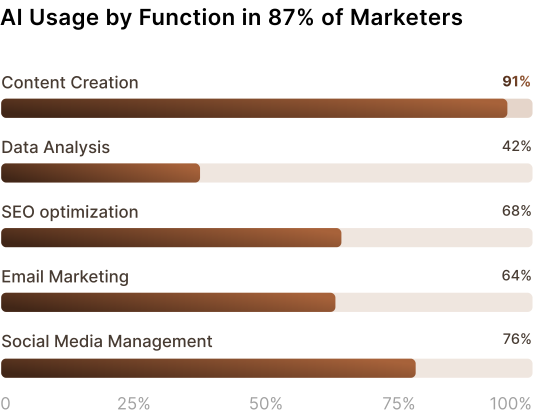
The 87% daily usage rate indicates that AI advanced from early experimentation to enterprise production, with tools now commonplace across marketing functions. However, the adoption pattern reveals a critical gap: AI usage concentrates overwhelmingly on executional tasks rather than strategic applications. Content generation dominates at 91%, while predictive analytics and advanced data analysis trail at just 42%.
Reported Efficiency Gains:
“AI transformation reveals productivity for most, business reimagination for a few.”
Our client survey indicates that marketers primarily save time at the execution layer, with an average of 6.3 hours per week reclaimed through AI‑assisted workflows. These gains cluster around routine production tasks rather than higher‑order strategy:
- Blog post drafting: 73% faster
- Social media scheduling: 68% faster
- Email copywriting: 61% faster
This execution-heavy deployment model yields productivity improvements but leaves strategic value creation largely untapped. Organizations are automating what they already do rather than reimagining what they could accomplish with AI-augmented capabilities.
In other words, AI has become a dependable execution co-pilot, accelerating routine marketing tasks and removing bottlenecks in content workflows. What remains less evident is whether organizations are reinvesting this reclaimed capacity into higher-order strategic work or simply producing greater volumes of the same outputs.
02
Marketing ROI Declined 12% Year-Over-Year Despite 78% Reported Efficiency Gains
AI delivers efficiency but not enterprise value, exposing a fundamental preparedness gap between tactical execution and strategic outcomes. Most organizations are deploying AI models only to optimize existing workflows rather than to reimagine transformative strategies.
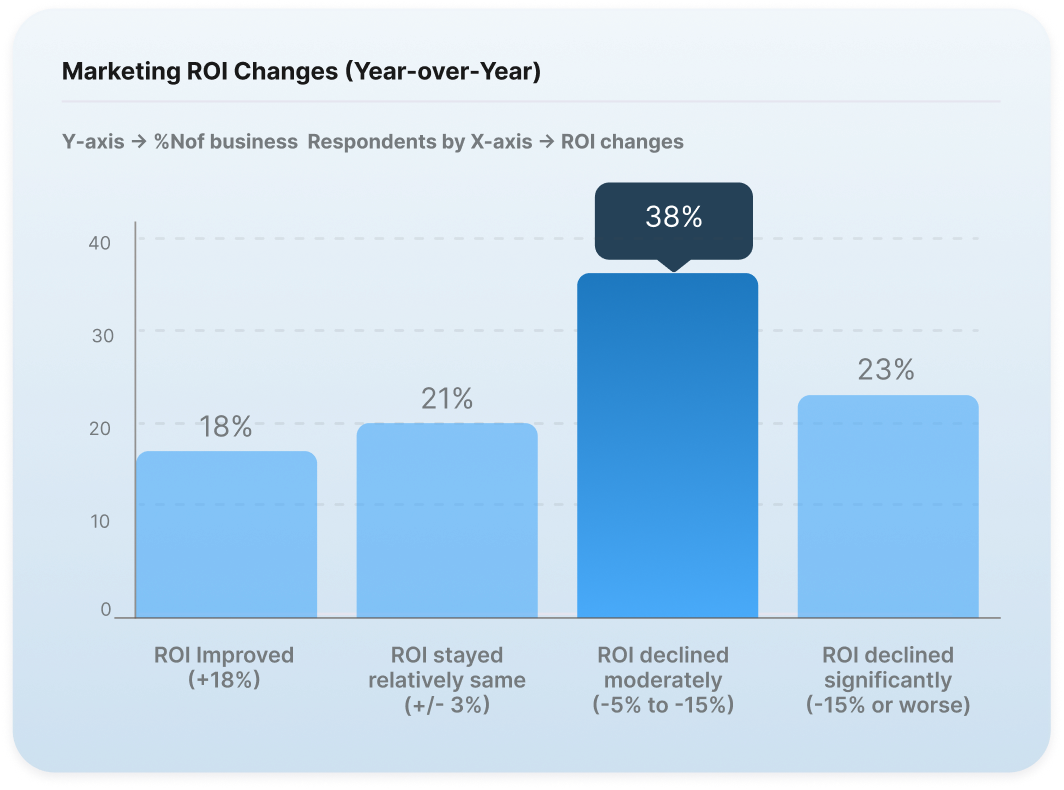
Of the 78% of marketers who reported noticeable efficiency gains, only 18% achieved a meaningful year-over-year ROI uplift, while 61% experienced moderate to significant declines. Does this mean AI fails to deliver business value?
The answer is more nuanced. The underlying issue is not that AI “doesn’t work”, but that it is being concentrated in executional layers—content production, asset variation, workflow automation—without equivalent upgrades to strategy, data foundations, or attribute measurement.
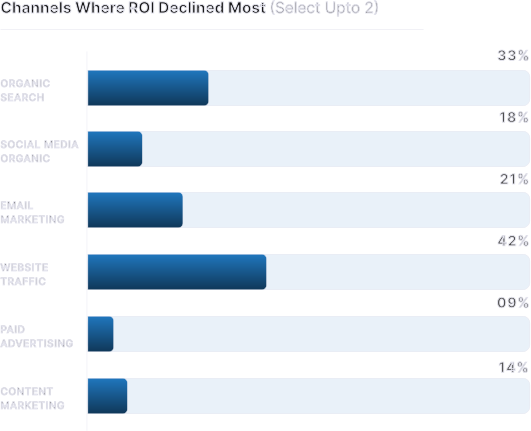
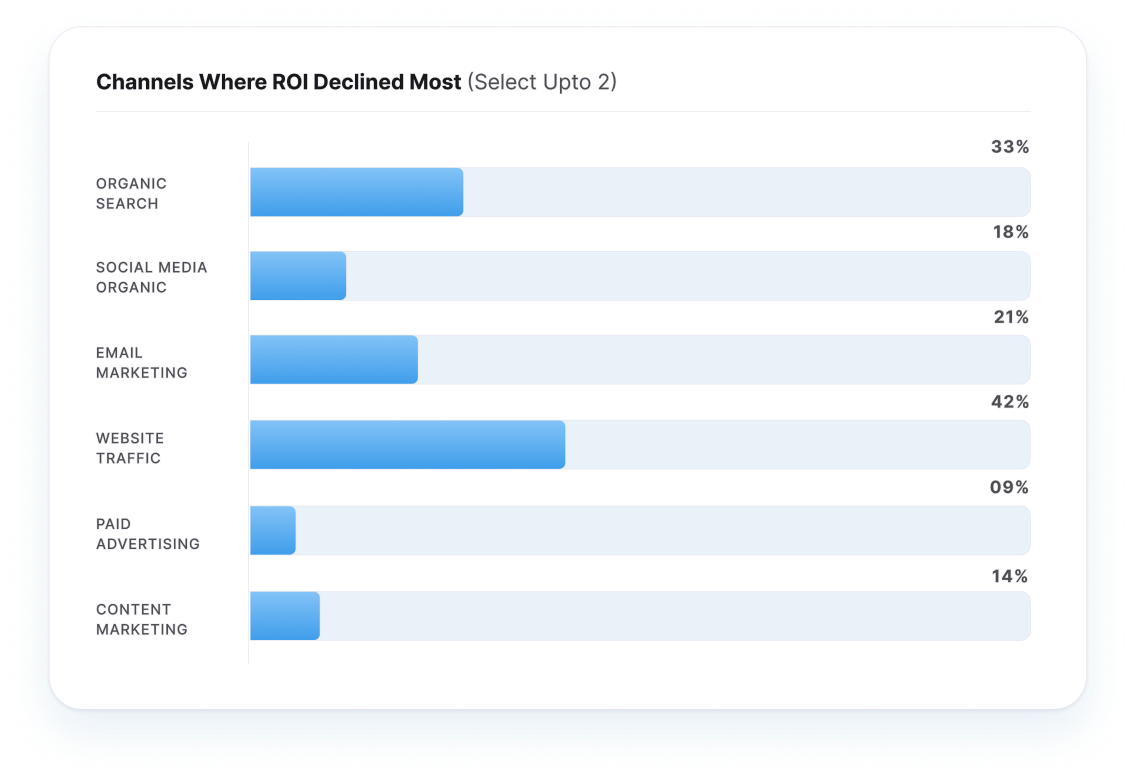
The second chart makes this clear. ROI erosion is most pronounced in organic-heavy, owned channels: content marketing, SEO, organic social, email, and website traffic, while paid advertising shows far less degradation. This doesn’t mean paid is immune or that organic has “stopped working,” but rather that:
- AI has reduced content-creation costs for everyone, intensifying competition in organic channels without proportionate differentiation.
- Many teams scaled volume before addressing core issues such as brand positioning, funnel architecture, and data quality, so AI simply accelerated the flattening curve.
At the same time, nearly 4 in 10 marketers report no decline in ROI, and almost 1 in 5 report improvement. The 18% of organizations that have improved their ROI after AI adoption are:
- Not just focusing on creating more content or campaigns. They are treating efficiency gains as “capacity” to reinvest in better research, experimentation, and creative strategy.
- Investing in data hygiene, attribution measurement, and funnel clarity so they can see where AI is actually improving ROI and where it is just enhancing efficiency.
One of Our Clients Achieved a 25% Increase in Gross Profit after We Improved the Data Foundations of their Pricing intelligence Tool
The client’s AI‑driven competitive pricing engine could technically match products at scale, but inconsistent catalog data and mismatches reduced confidence in its recommendations
Our product data specialists performed catalog cleaning, attribute standardization, and data validation to improve the AI model’s accuracy and recommendations
99.2% accuracy across matched SKUs, 40% faster time‑to‑market, and 25% uplift in gross profit
Read Success Story →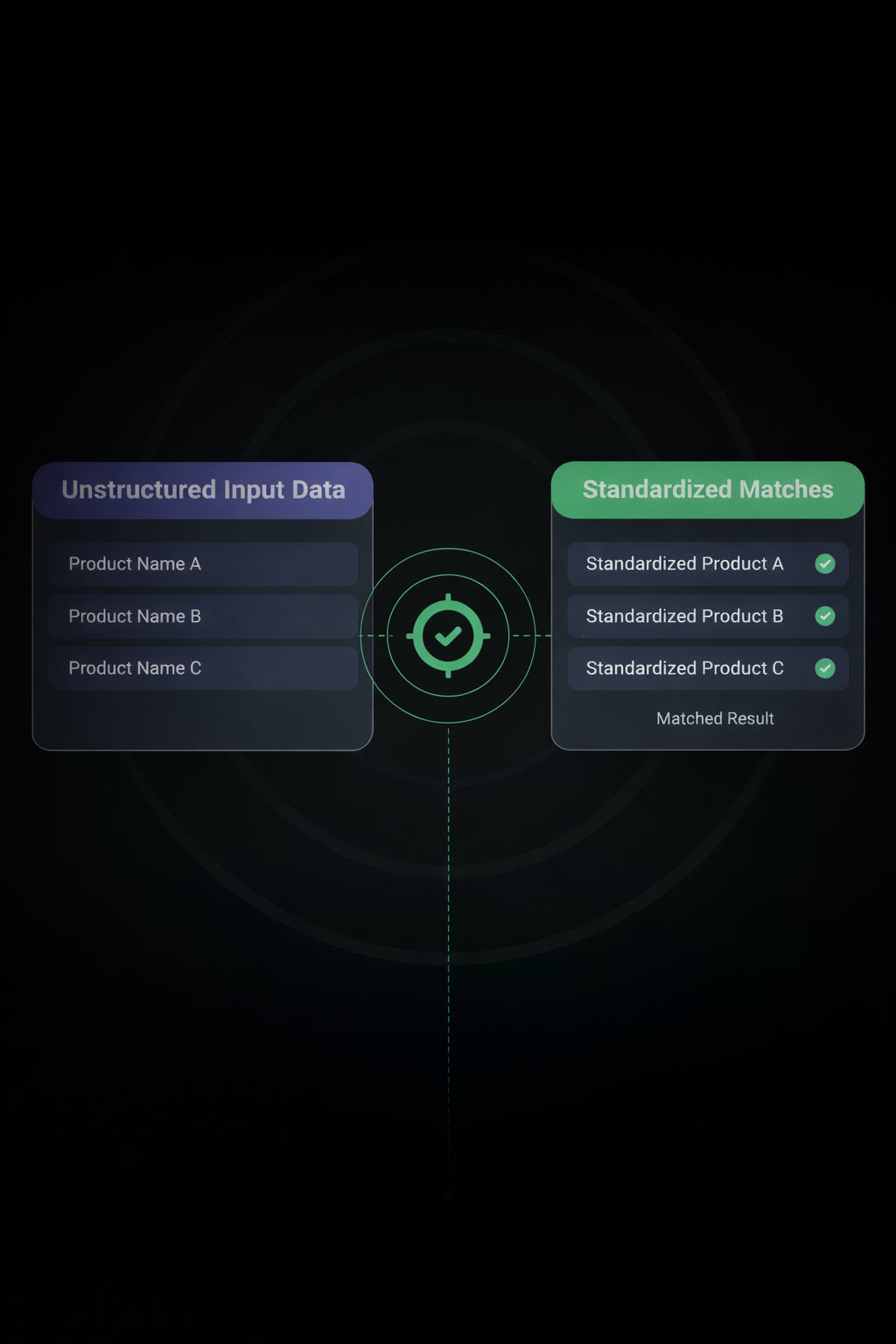
03
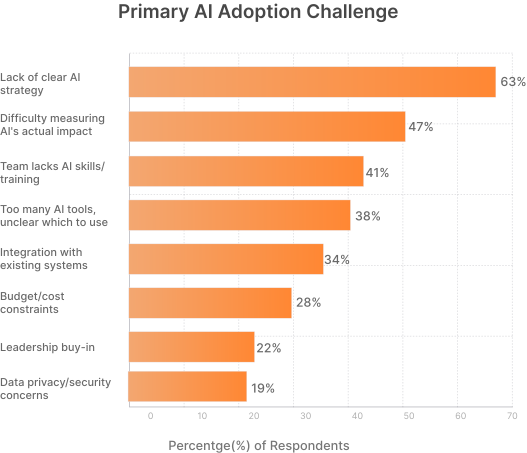
63% of Organizations Report "Lack of Clear Strategy" as the Biggest Challenge in the Adoption of AI Agents
Despite being overambitious with AI agents, more than half organizations are not strategically and operationally ready. Nearly two-thirds of marketers identify the absence of a coherent AI strategy—not tool limitations or budget constraints—as their primary barrier to realizing AI's transformative potential.
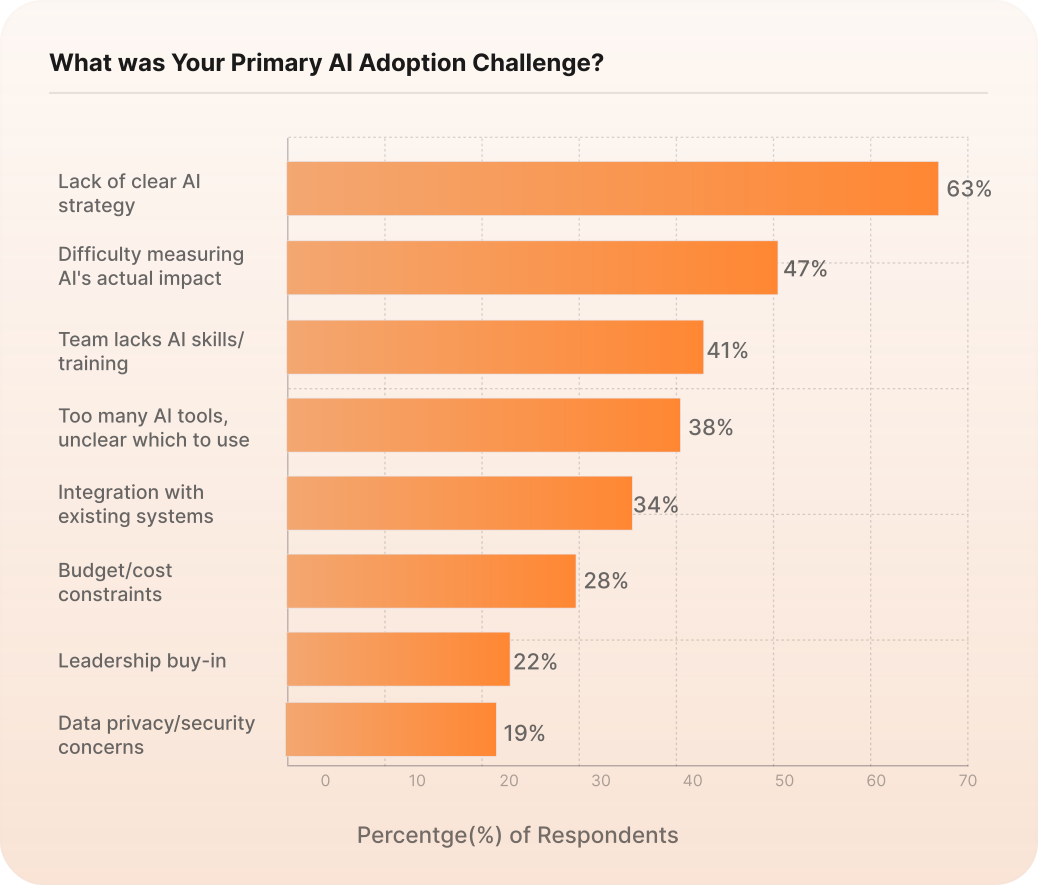
The absence of a coherent strategy framework creates AI fluency gaps that hinder workforce readiness and ethical practices at enterprise scale. Marketers are investing in AI agents reactively without strategic intent. 68% of survey respondents report adopting AI tools due to competitive pressure or vendor marketing, rather than defining the problems AI should solve or how it aligns with business objectives. They are using AI agents without governance frameworks, clear guidelines, or strategic direction, resulting in poor outcomes and pilot proliferation with scalable value creation.
Without a coherent AI strategy, organizations experience what we term "pilot fatigue"—a cycle of enthusiastic experimentation followed by disappointing results and eventual disillusionment. Everyone is chasing AI pilots with an aim to achieve something transformative, but the majority of them don’t even have a foolproof strategy or plan to scale their proof-of-concept.
Before adopting or implementing AI agents, organizations must ask these questions:
-
What problems should an AI agent solve? (Not "what can AI agent do?")
-
Where will humans add irreplaceable value? (Define the human-AI boundary)
-
How will we measure success? (Outcomes, not activity)
-
What safeguards ensure quality? (Governance and oversight)
Assess Your Organization’s Agentic AI Readiness
Take this comprehensive multi-stage assessment to evaluate your digital maturity and identify where your organization stands today.
04
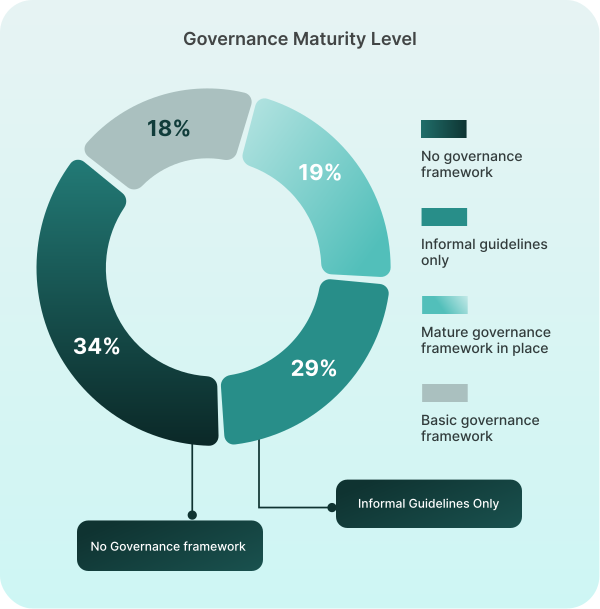
58% Plan to Deploy Agentic AI Within 2 Years, But Only 19% Are Operationally Ready for It with Governance Frameworks in Place
As organizations race to adopt autonomous AI agents for advanced marketing automation, a critical governance gap threatens both effectiveness and risk management. While deployment ambitions are high, operational readiness lags dramatically, creating substantial exposure as AI systems gain autonomy.
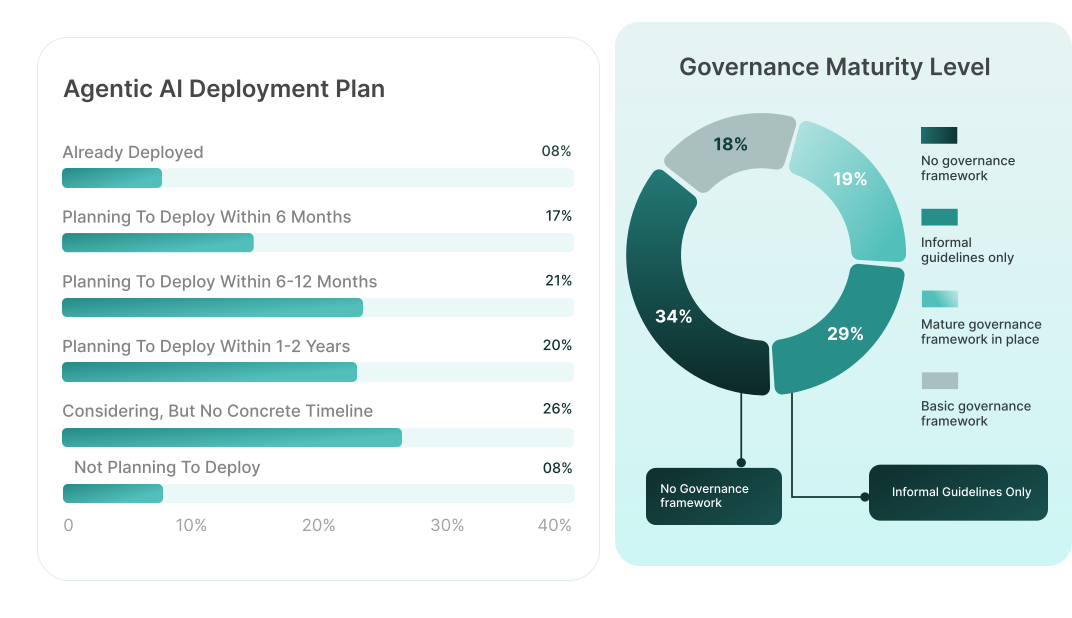
58% of organizations planning deployment within two years signal widespread recognition that agentic AI will become table stakes for competitive marketing operations. Yet only 19% have established the governance infrastructure these autonomous systems require.
This 3x readiness gap reveals that organizations are prioritizing capability acquisition over risk management—a pattern that has historically preceded enterprise technology failures.
Unlike assisted tools that performed basic rule-based tasks with human oversight, companies are now deploying sophisticated AI agents that can execute multi-step workflows, make decisions, and take actions without human intervention. The promise is compelling—true automation, not just assistance. The risk is proportional.
Why the risk scales proportionally:
-
Unbounded scope: AI agents can execute multiple tasks in a sequence without human supervision, amplifying small errors into material outcomes.
-
Opacity at scale: Autonomous reasoning chains reduce human interpretability, complicating real-time intervention.
The path forward requires three interlocking capabilities:
- Decision Boundaries: Define explicit guardrails—what agents can do autonomously vs. what requires escalation
- Audit Architecture: Develop logging and rollback mechanisms to trace agent reasoning and reverse unintended actions
- Human-in-Context Oversight Shift from reactive monitoring to proactive workflow design where humans set strategic objectives and validate critical outputs
Organizations treating governance as an afterthought risk "agent drift"—where autonomous systems evolve to be misaligned with business intent. Forward-leaning teams are building AI-native operating models from the outset, embedding controls into agent design rather than bolting on compliance after deployment.
How we built a governed AI agent that delivered $10,000 annual savings for a logistics provider
The client faced operational silos across freight forwarding, tracking, and warehouse management—manual processes led to delays, high support workload, and inconsistent customer updates.
We built a multi-agent AI system with integrated governance: predictive models for demand/routing, reinforcement learning for adaptive decision-making, and human oversight to define Agentic AI objectives.
50% reduction in customer support workload, 30% faster tracking updates, 24/7 automated support, and $10,000 annual savings through optimized operations.
Read Success Story →
05
AI Skill Gap Undermines ROI, with 76% of Organizations Having Not Redesigned Roles or Workflows to Leverage AI Capabilities
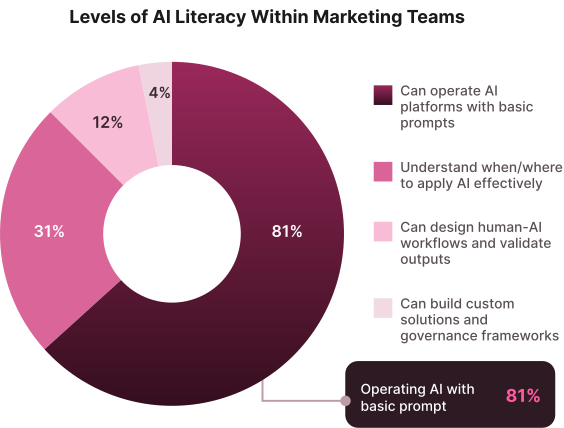
Despite AI agents becoming commonplace, AI fluency—the ability to strategically integrate artificial intelligence across workflows—remains limited. 76% of organizations have not redesigned roles or processes to capitalize on AI capabilities, leaving teams tactically proficient but strategically constrained.
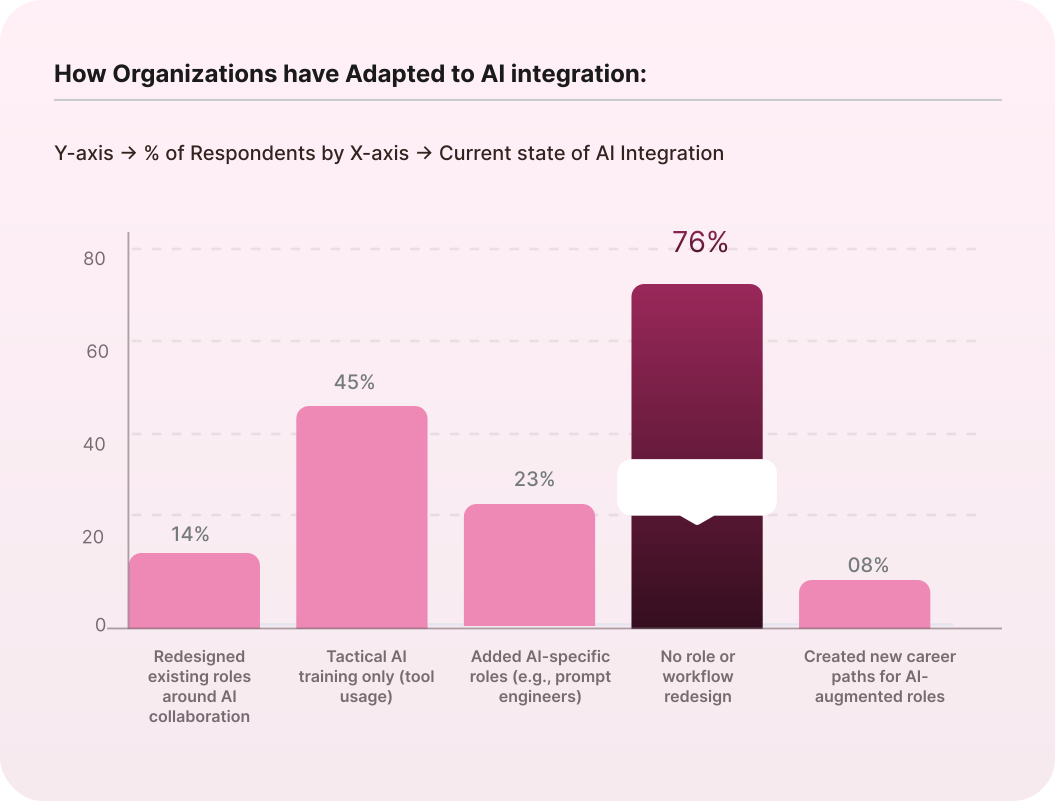
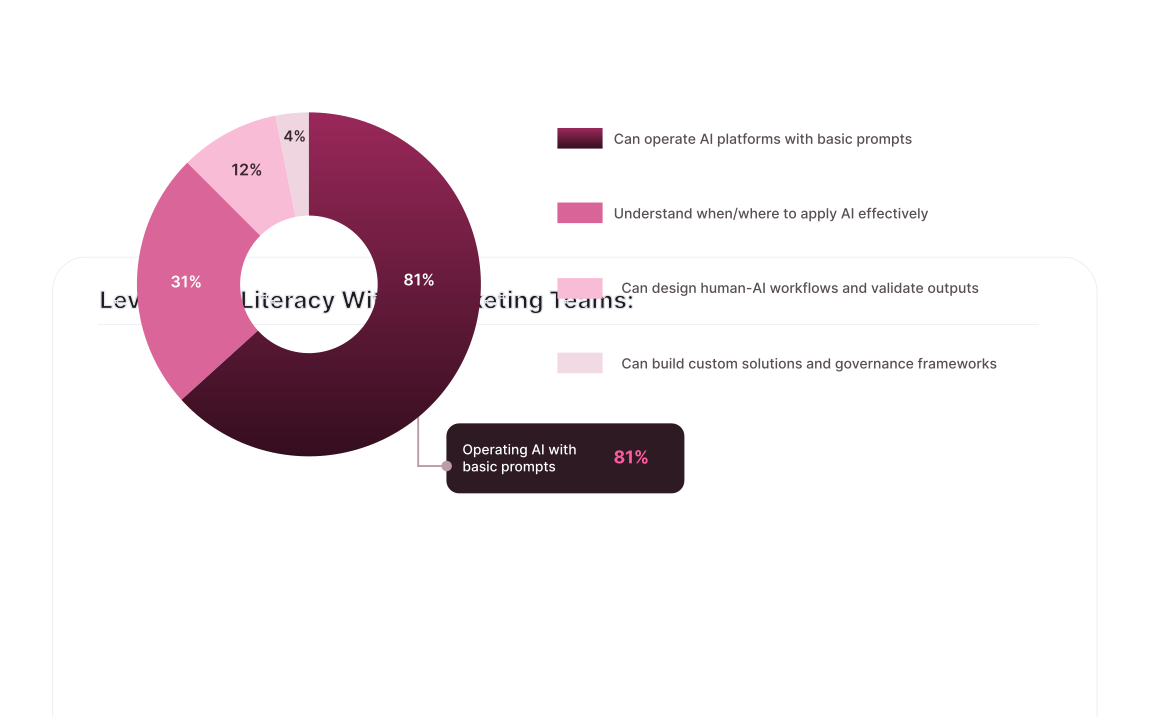
Despite AI tools achieving production status, enterprise AI literacy remains constrained. 76% of surveyed organizations retain legacy role structures, while only 14% have reconfigured existing roles for human-AI collaboration, and 8% have created AI-augmented career paths.
Almost two-thirds of organizations have focused their investments on tool access and basic training, while neglecting role redesign and process reimagination. The consequence is predictable: teams achieve task-level productivity gains but fail to compound these into enterprise-wide strategic advantage.
Forward organizations recognize AI fluency demands redesigned workflows—where humans define objectives, validate reasoning, and govern outputs—rather than merely accelerating legacy processes with better tools. Without this shift, tactical proficiency perpetuates strategic stasis.
06
91% of Marketers Use AI for Content Creation, But Only 23% Involve Human Editors in the Process
Generative AI delivers unprecedented content velocity, yet curation remains the missing discipline. Almost three-fourths of surveyed organizations scale production without equivalent investment in human-AI symbiosis, trading distinctiveness for volume in saturated channels.
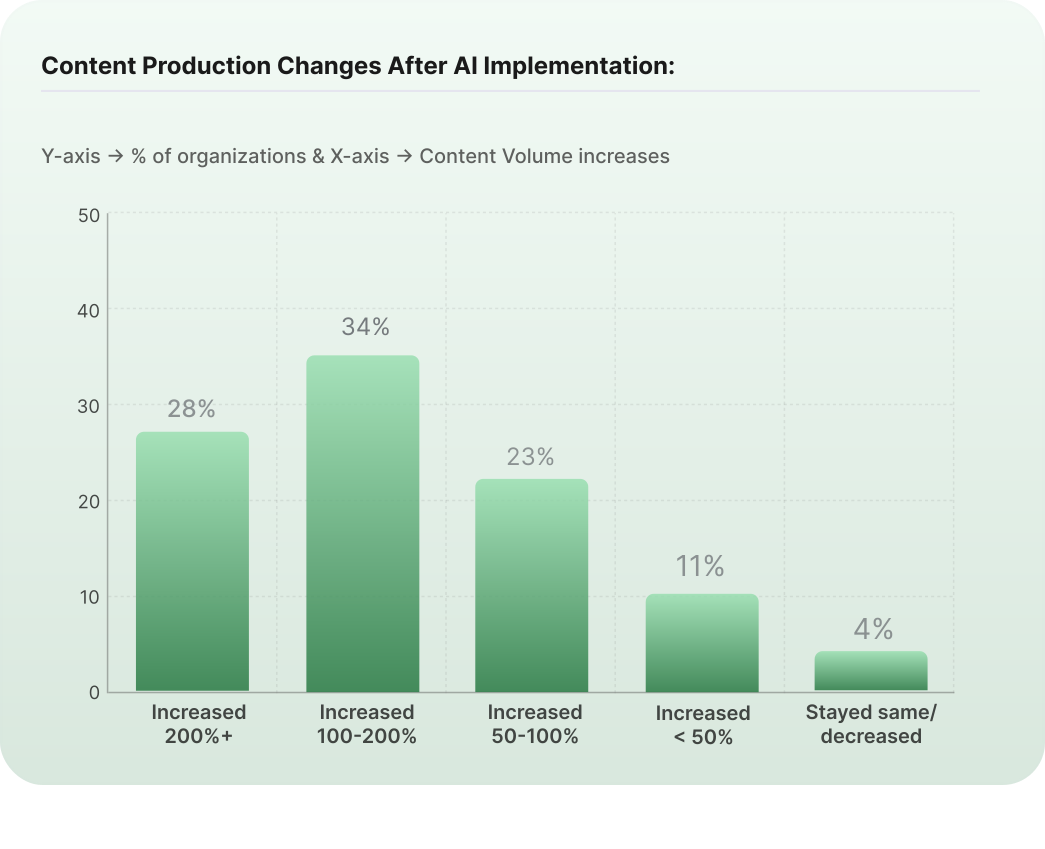
Only 23% of Organizations Are Refining AI-Generated Content with Human Editors
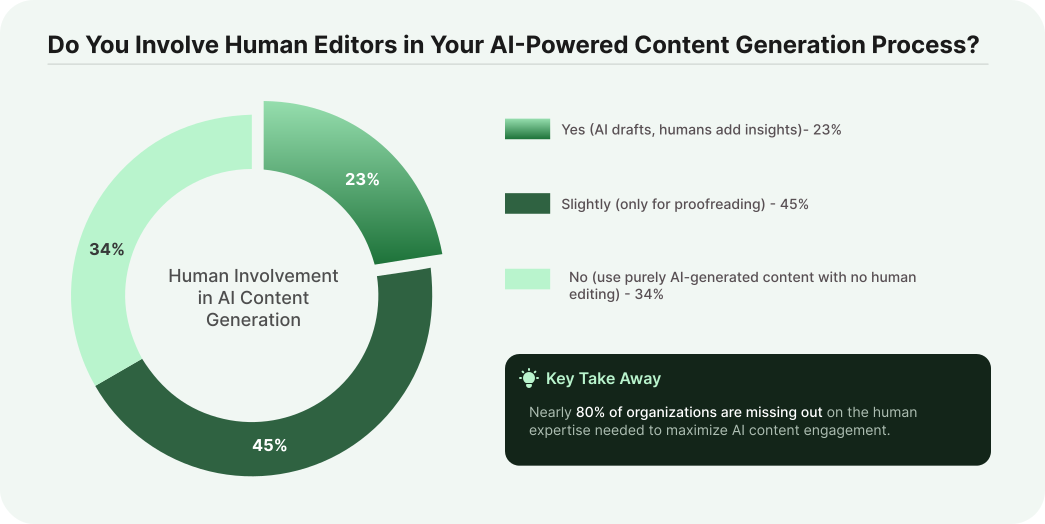
Upon asking why the majority of marketers are not using human editors for refining AI-generated content, we received mixed responses:
Reasons for Minimal Human Involvement:
- "We don't have time to edit everything": 62%
- "AI output is good enough": 48%
- "Our team is too small": 41%
- "Editing defeats the purpose of AI efficiency": 34%
Nearly 77% of surveyed organizations deploying AI tools without substantive editorial governance are systematically commoditizing their content—producing at scale what competitors can replicate instantly.
The 62% citing "insufficient bandwidth" reveal that they've scaled output without proportionally investing in the differentiation layer—the proprietary insights, market-specific context, and contrarian perspectives that AI cannot autonomously generate. They've essentially automated mediocrity.
More critically, the 34% who view editorial refinement as "defeating the purpose" have entirely misdiagnosed AI's value proposition.
AI's transformative potential lies not in eliminating human expertise but in liberating it from execution constraints.
By rejecting human oversight as friction rather than recognizing it as the value-creation point, these organizations are optimizing for the wrong metric: they're measuring content velocity while their audiences measure content relevance.
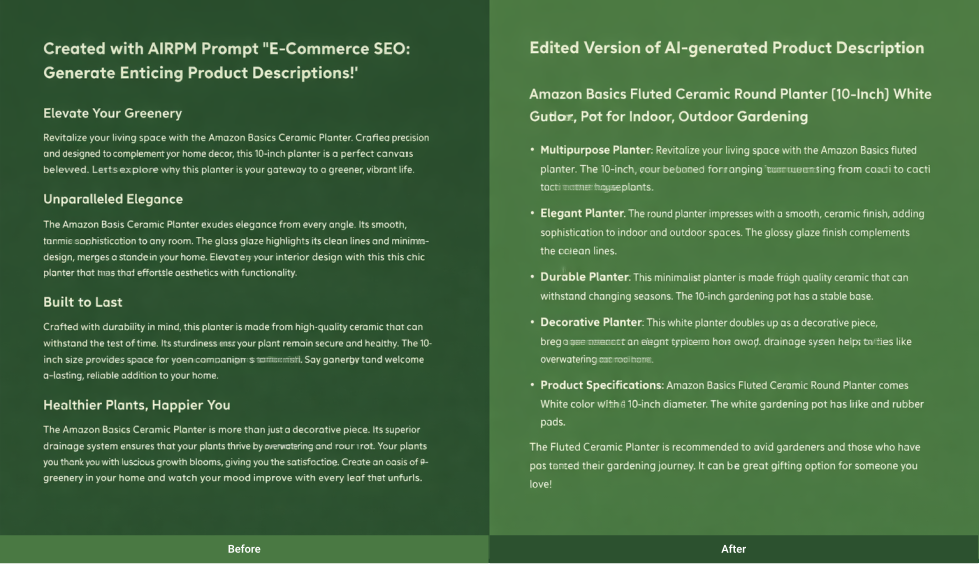
As AI content volume exploded post-mainstream adoption, several clients approached us with a common challenge: machine-generated copy that scaled production but eroded distinctiveness and engagement. With our AI content editing services, we bridge this gap—human experts refine AI drafts to ensure contextual relevance, brand voice, search optimization, and niche authority. Explore our edited samples:
07
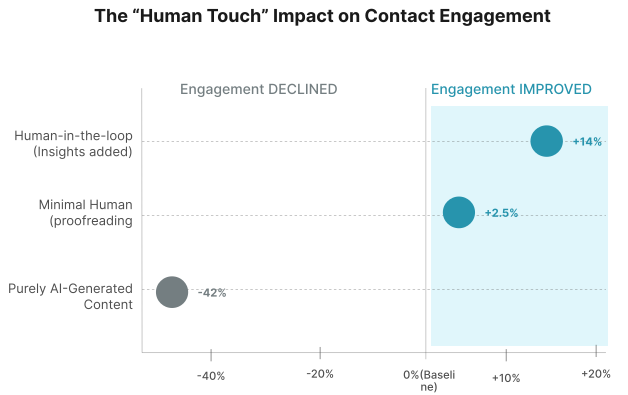
Content with Human Involvement Gets 2.7x Higher Engagement Than Purely AI-Generated Content
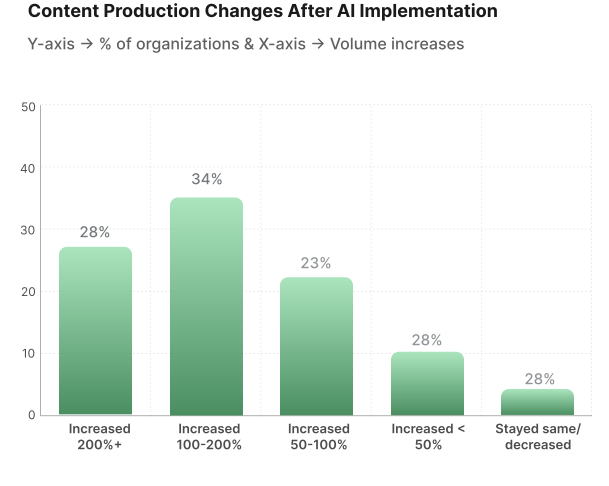
Generative AI tools such as ChatGPT, Gemini, and Claude have nearly tripled content production for marketers while reducing time and effort; however, content effectiveness has also declined significantly due to the “content saturation” problem.
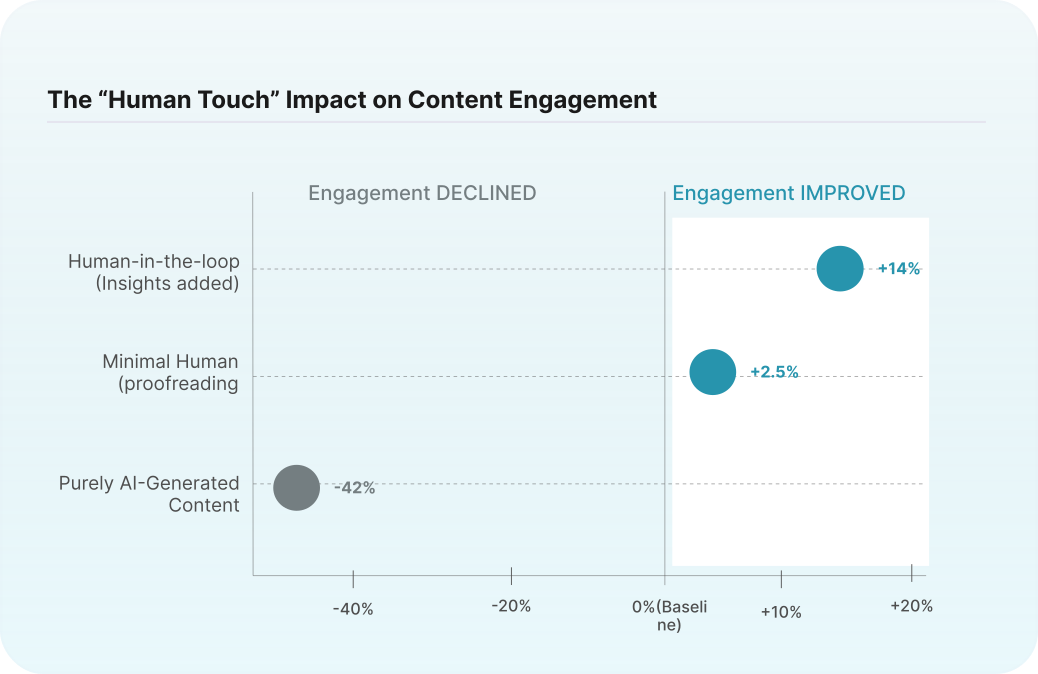
Search engines and social platforms such as Facebook and LinkedIn are flooded with AI-generated content that is quick to generate with minimal human input but reads the same, with no personal touch or unique insights. This democratization of content production has triggered two compounding crises: reader fatigue and content saturation. Audiences, already overwhelmed by information abundance, have developed sophisticated filters for generic content. They scroll past it instinctively, recognizing the patterns.
Marketers need to understand that:
- Their audience's attention span is finite
- More content competing for attention = less attention per piece
- Generic content gets ignored
- Only genuinely insightful, human-touched content breaks through
The competitive threshold has shifted from "publish consistently" to "publish distinctively," and most teams are stuck there.
Standing out now requires exceptional quality—proprietary insights, strategic narratives, grounded expertise—delivered at equivalent or higher publishing cadence. However, exceptional quality at 3x the volume demands proportional increases in expert involvement, editorial rigor, and strategic input. Instead of investing there, many organizations are seeking to maintain high output.
We’re publishing more content than ever, but so is everyone else. The problem isn’t ‘what to post’—it’s how to say something that doesn’t sound like a paraphrased top result.
– Marketing Director, B2B distributor
08
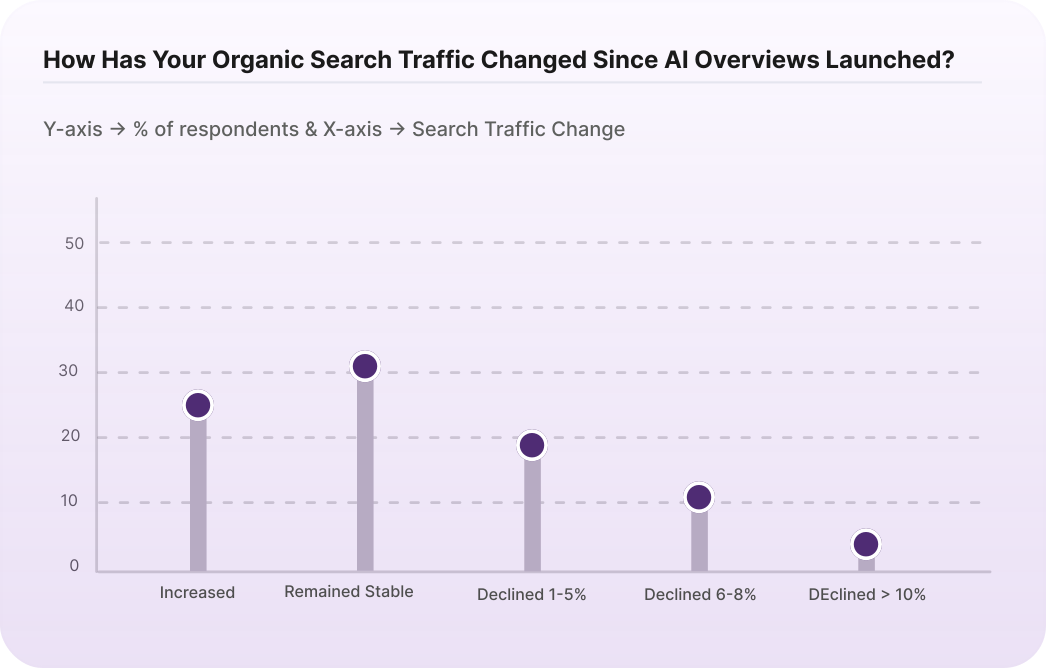
Organic Traffic from Google Declined 3-5% on Average After AI Overviews
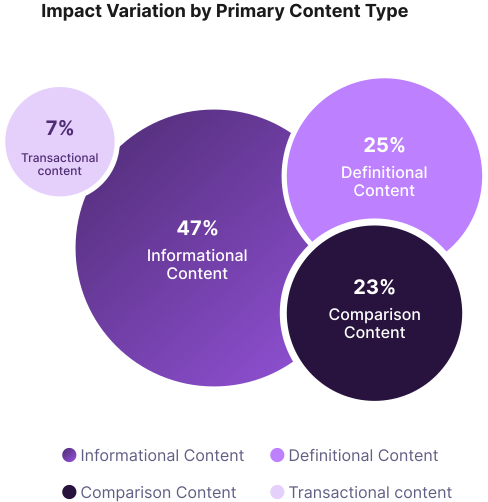
While AI overviews have not fundamentally disrupted organic search—as alarmist forecasts predicted—they have significantly transformed the dynamics of search visibility. Approximately 42% of organizations report a 3-5% decline in traffic from AI-generated summaries, with informational queries disproportionately affected compared with transactional intent.
Organic Traffic Performance Post-AI Overviews
Impact Variation by Primary Content Type
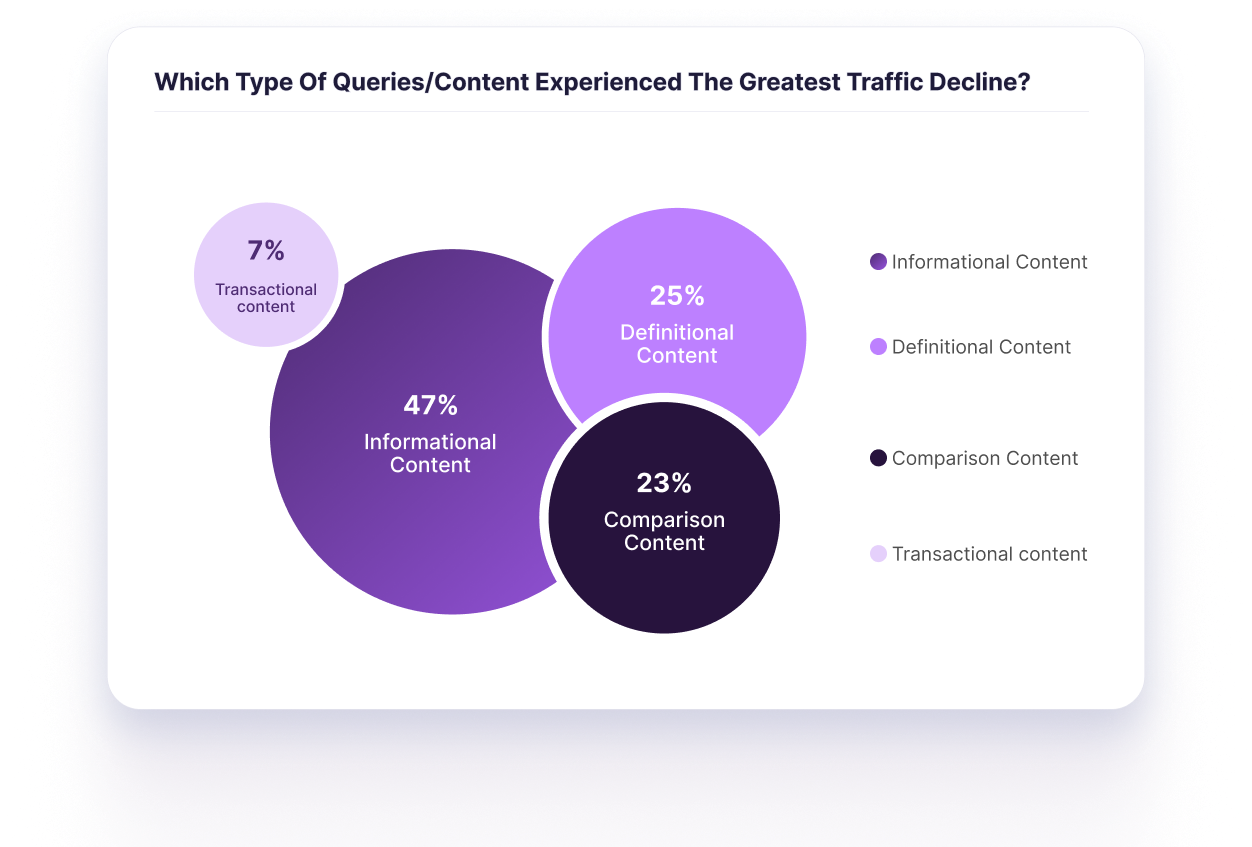
Even after the introduction of AI overviews, some of our clients' positions in search results remain stable or even improved. However, the prevailing challenge is that rankings alone no longer determine the traffic growth.
To grasp the implications of this shift, it’s essential to understand the mechanics of AI overviews:
When you search an informational query, such as "how to choose CRM software," you no longer see SERP results dominated by a list of blue links. You see:
- A comprehensive AI-generated answer (200-400 words)
- Key considerations synthesized from multiple sources
- Comparison framework
- Specific recommendations
The response is thorough—often excellent—and addresses the query in a way that precludes further exploration.
This is a zero-click search. The user got their answer without visiting a website. For informational queries—the backbone of content marketing—this shift is devastating. Why? Because the traditional acquisition funnel—attract with informational content, nurture through consideration, convert via transaction—has now lost its entry point.
Organizations can no longer rely on "answering simple questions to build audience relationships." The threshold for what merits a click has risen substantially: generic answers no longer guarantee website visits; only differentiated expertise, proprietary insights and solutions, and other trust builders justify leaving search results.
09
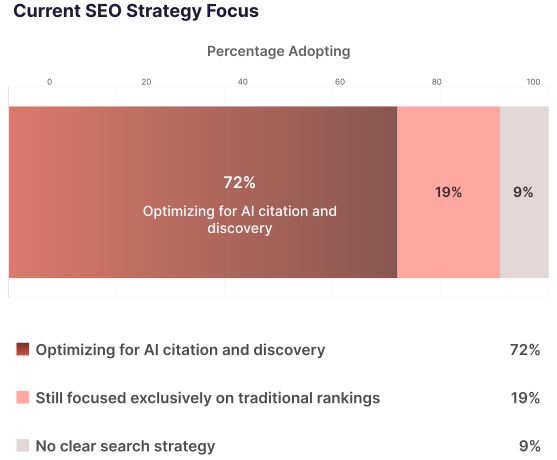
72% of Marketers Are Now Optimizing for AI-Driven Search
The AI-powered search has prompted a decisive strategic pivot, shifting the focus from SEO to AEO (Answer Engine Optimization) and GEO (Generative Engine Optimization). Nearly three-quarters of surveyed organizations now actively optimize content for AI-driven discovery and citation, rather than targeting traditional search rankings exclusively.
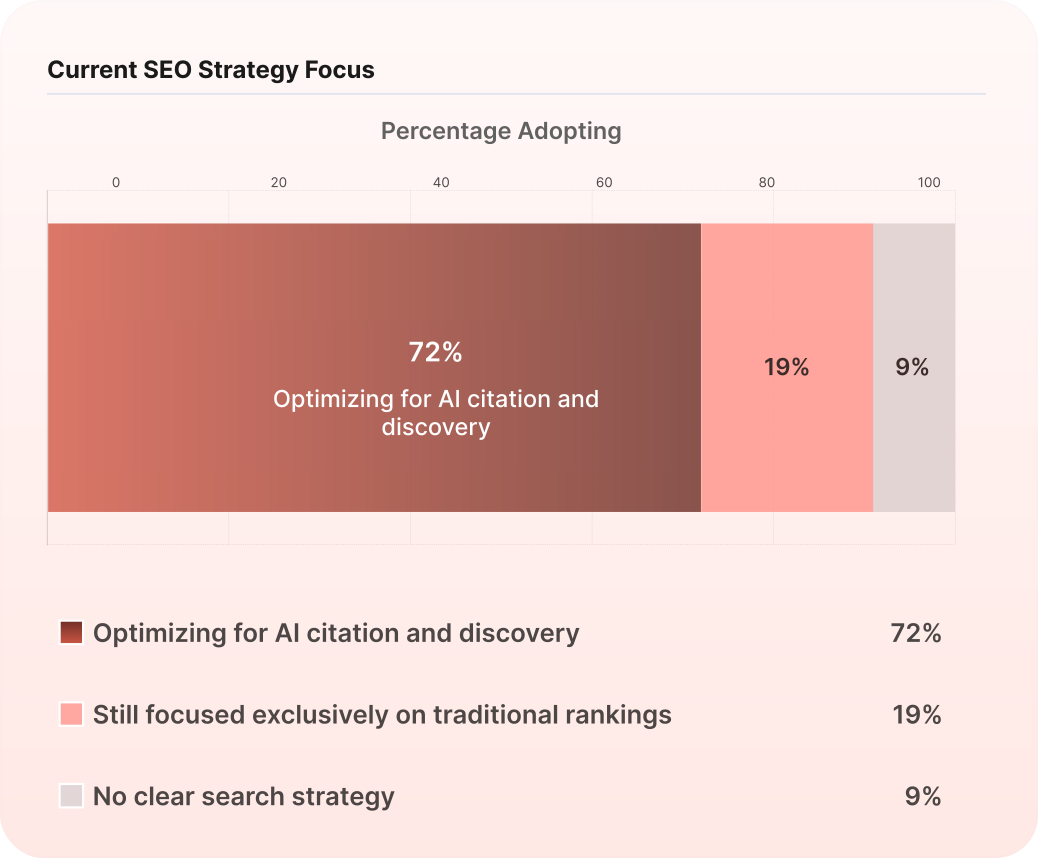
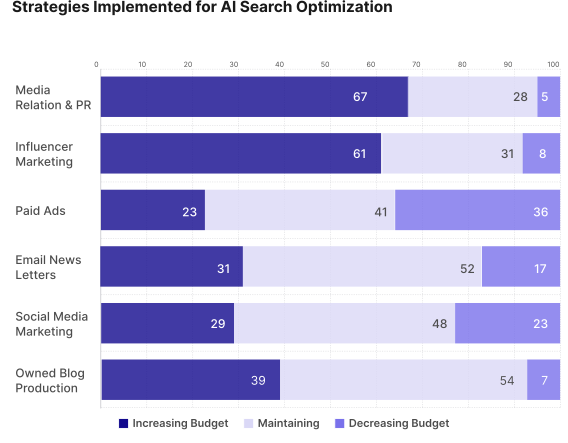
To those who are adapting their approach for AI-driven discovery, we further asked what are the strategies they are implementing:
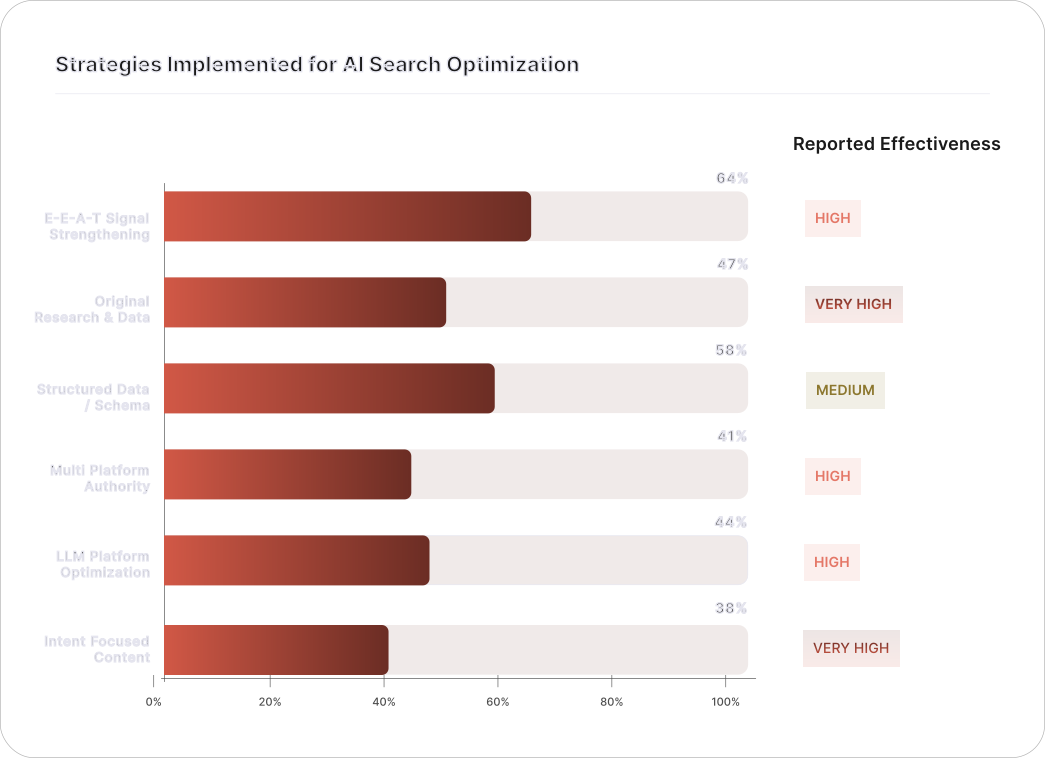
The 72% pursuing AI-driven optimization reflects strategic awareness—organizations recognize that the value exchange in search has fundamentally shifted from "provide information, receive traffic" to "establish authority, earn citations". This represents a decisive pivot from rank-focused tactics to authority-based strategy, signaling market maturation in understanding AI's search paradigm.
The tactical deployment patterns reveal a phased adaptation approach. Organizations are implementing foundational optimizations first—64% strengthening E-E-A-T signals, 58% deploying structured data—while simultaneously building toward more sophisticated authority markers.
The market is transitioning from asking "how do we rank?" to "why would AI cite us as a trusted source?" This question reframes content strategy entirely—from optimization tactics to genuine expertise development. Organizations embracing this reframe are already observing measurable advantage in both AI citation frequency and sustained organic performance.
“We're witnessing the professionalization of content marketing. The era of 'publish frequently and optimize for keywords' is giving way to 'establish genuine expertise and earn authoritative citations.' Organizations treating AI search optimization as technical SEO 2.0 will struggle. Those recognizing it as a mandate to become genuinely authoritative in their domains will capture disproportionate value. The coming years will separate content producers from knowledge leaders—and AI systems will amplify that distinction."
10
69% of Respondents Believe That Earned Media Holds More Importance Now Than Owned Media
Owned channels such as branded blogs, newsletters, and direct site traffic are no longer delivering reliable visibility or engagement, particularly in an era dominated by AI‑driven search, content saturation, and algorithmic content prioritization. The majority of marketers plan to invest in earned media (PR, mentions, and citations) to extend reach and relevance where owned channels struggle.
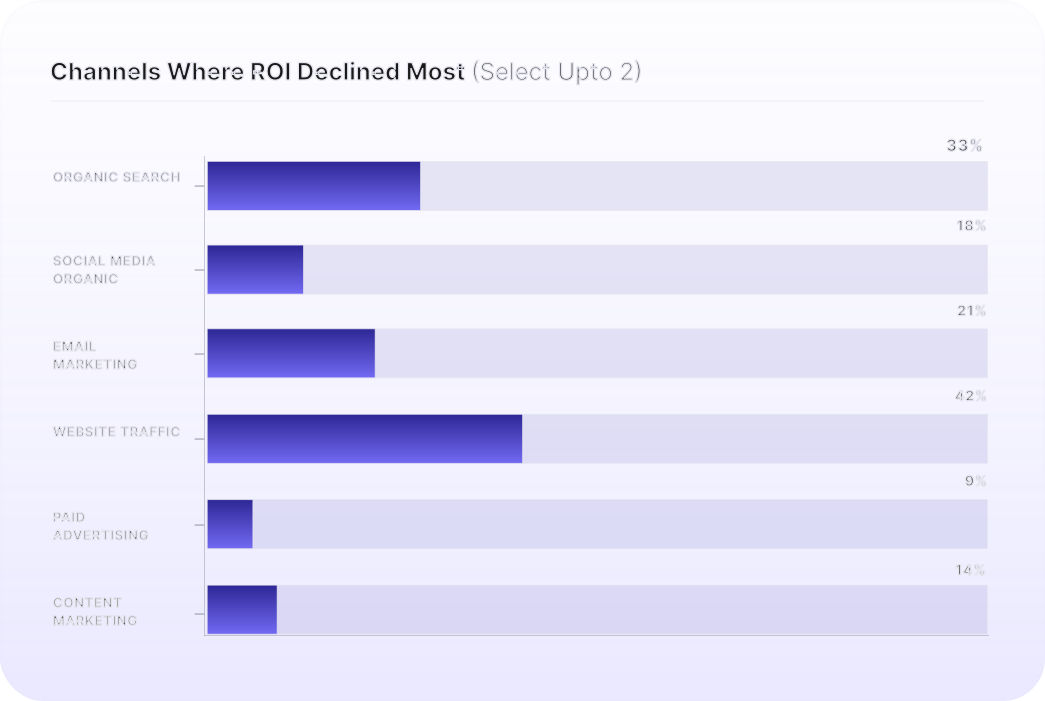
After witnessing the ROI of owned channels, 69% of our survey respondents want to invest their marketing budget in earned media in 2026:
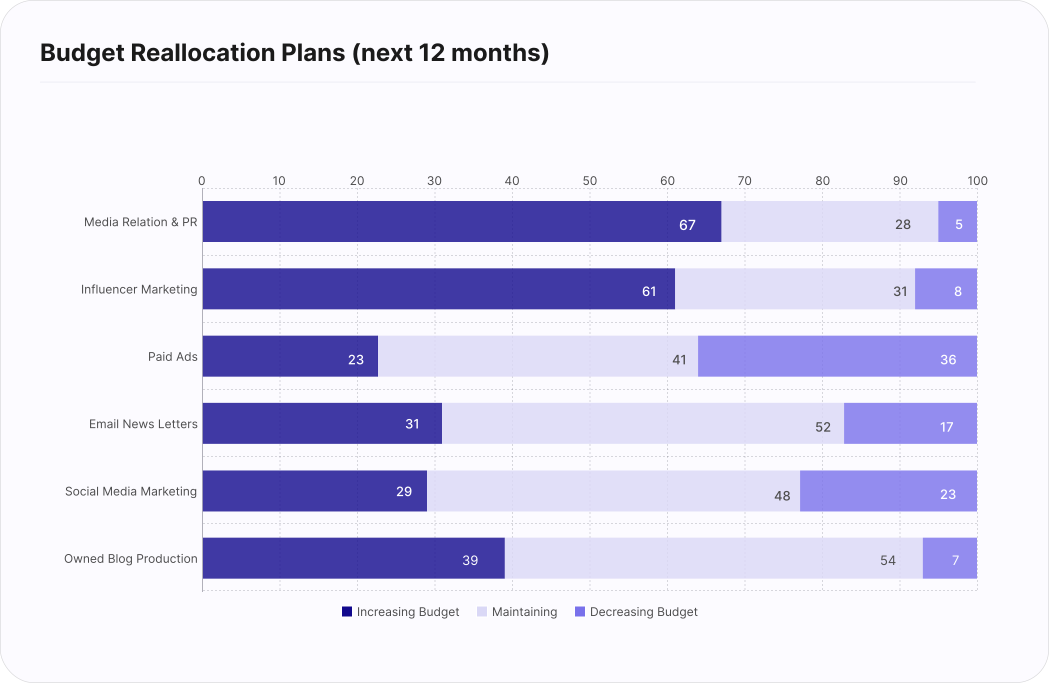
The earned-owned relationship has inverted. Previously, brands built owned audiences first, then leveraged that scale to attract earned coverage. Now, earned media credibility is a prerequisite for owned channel effectiveness, as AI systems prioritize cited authorities and audiences trust validated sources.
The budget reallocation data confirms operational commitment beyond attitudinal shift. Almost two-thirds of organizations are increasing their investments in media relations and PR to build brand credibility organically. While the shift toward earned media is vital in the AI-driven era, relying solely on these channels isn't a sustainable approach.
Earned media, by nature, demands demonstrated expertise to secure coverage, often relying on insights and authority that are traditionally built through owned media. Yet, many organizations are scaling back their investment in owned platforms, where such expertise is typically showcased. To thrive, organizations must adopt a balanced strategy in which owned media serves as the foundational pillar supporting earned media credibility.